
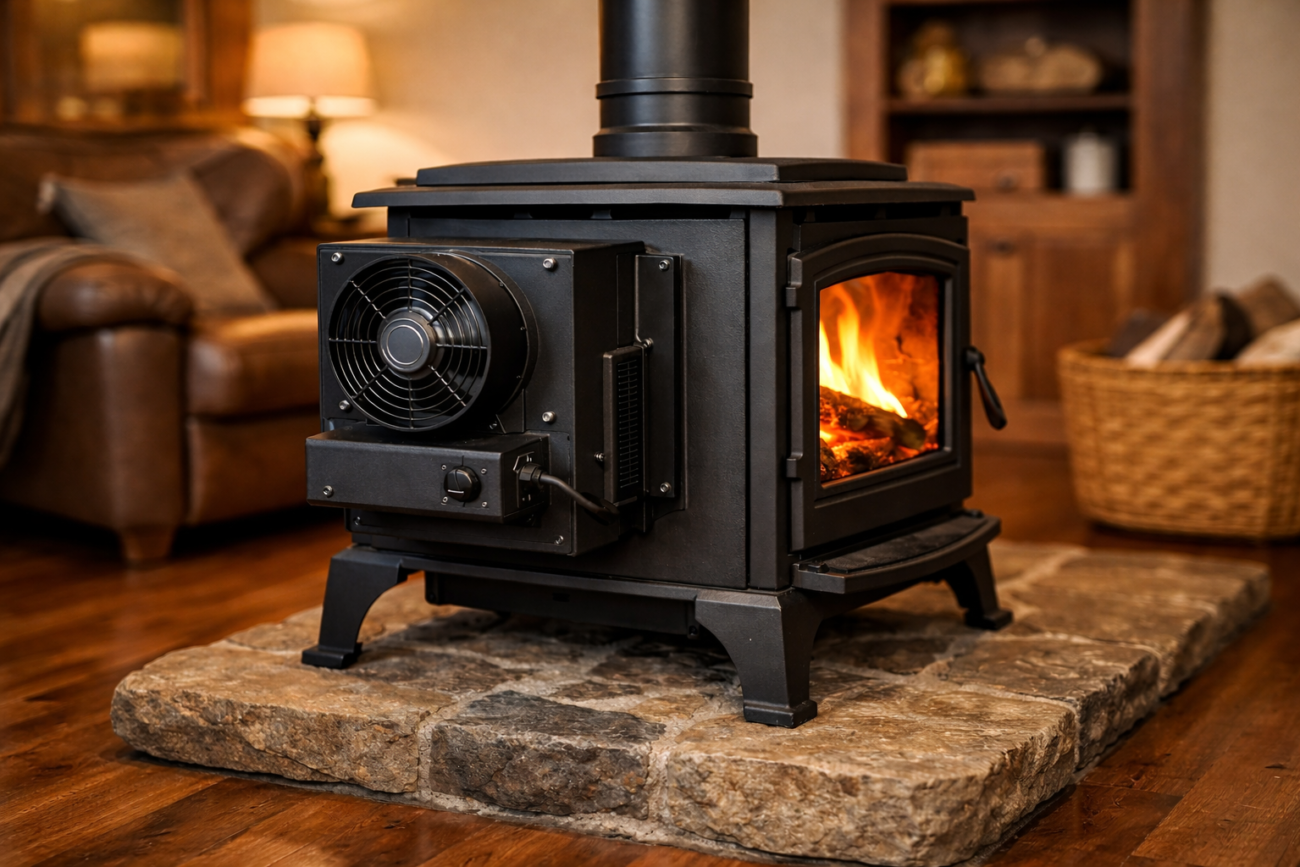
If you’ve ever stood three feet from your wood stove sweating while the far side of the room stays cold, you already know the problem. This wood stove blower guide is going to fix that. A wood stove blower (also called a convection fan or forced-air kit) mounts to your stove and actively pushes heated air into the room, improving heat distribution by 25-40% compared to relying on natural convection alone. So do you really need one? For most homeowners heating more than a single room, yes, a wood stove blower guide will show you it’s one of the smartest upgrades you can make.
Here’s the quick answer you’re looking for: a wood stove blower draws cool room air across the hot exterior surfaces of your stove and pushes warm air back into your living space. This simple addition can raise the temperature in adjacent rooms by 10-15°F, reduce the amount of firewood you burn by up to 20%, and eliminate those frustrating hot-and-cold zones that make wood heating feel inconsistent. If your stove supports a blower kit, it’s typically a $100-$300 investment that pays for itself within the first heating season.
I’ve been working with wood stoves for over 15 years, and the wood stove blower guide question comes up more than almost anything else. Homeowners love the romance of wood heat but get frustrated when the bedroom stays chilly while the living room feels like a sauna. That’s exactly the problem a blower solves, and in this wood stove blower guide, I’ll walk you through everything: how blowers work, the different types available, when you actually need one, installation basics, and the mistakes that waste your money.
Whether you’re shopping for your first wood stove or looking to get more from your current setup, this wood stove blower guide covers it all.
What Is a Wood Stove Blower and How Does It Work?
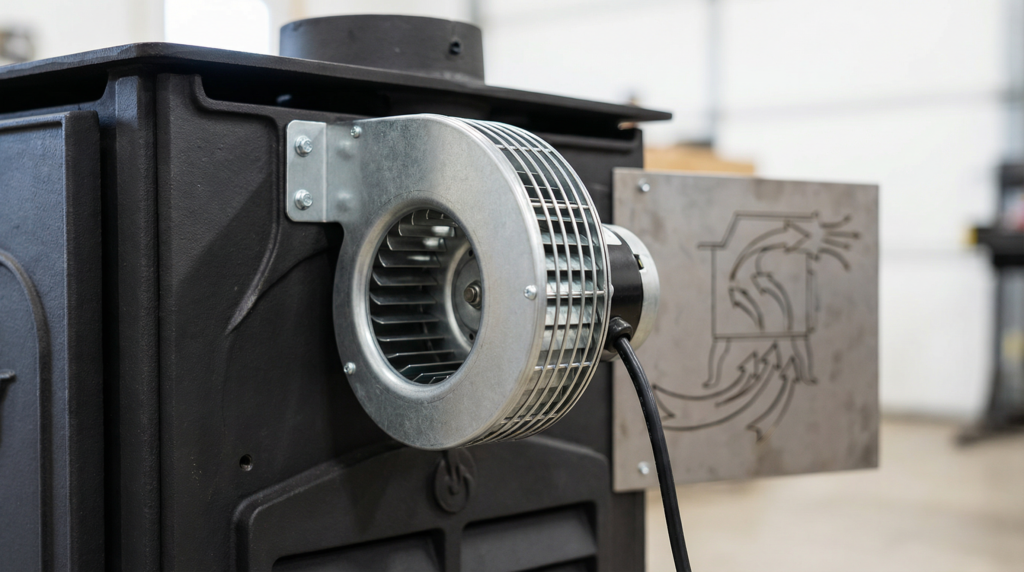
Understanding the basics is the first step in any wood stove blower guide. A wood stove blower is an electrically powered fan system designed to circulate the heat your stove produces more effectively throughout your home. Without one, your stove relies entirely on radiant heat and natural convection, which means most of the warmth stays concentrated near the stove itself.
The mechanics are straightforward. The blower unit mounts to the back, bottom, or side of your wood stove (depending on the model). When you turn it on, the motor spins fan blades that pull cool air from the room, move it across the hot outer surfaces of the stove, and then push the newly heated air back into your living space. Think of it like a forced-air furnace, except the heat source is your wood stove instead of a gas burner.
According to the U.S. Department of Energy, wood stoves rated at 60,000 BTUs can heat a 2,000-square-foot home, but that rating assumes effective heat distribution. Without a blower, much of that potential goes unrealized because hot air simply rises to the ceiling near the stove. A wood stove blower guide wouldn’t be complete without this critical point: the blower doesn’t create more heat, it moves existing heat where you actually need it.
How Natural Convection Falls Short
Natural convection works, but slowly. Hot air rises from the stove surface, hits the ceiling, and gradually spreads outward. By the time that warmth reaches the far wall of your room, it’s lost significant temperature. In a 1,500-square-foot home, you might see a 20°F difference between the room with the stove and a bedroom down the hall.
A blower changes the equation by forcing air movement at 100-200 CFM (cubic feet per minute). That’s enough airflow to circulate warm air throughout a large room in minutes rather than hours. This is why every serious wood stove blower guide recommends considering a blower if you’re heating more than 500 square feet.
Blower vs. Stove Fan: What’s the Difference?
People often confuse blowers with heat-powered stove fans, and any thorough wood stove blower guide should clarify this. A blower is an electric fan system that mounts directly to the stove and moves high volumes of air. A heat-powered stove fan sits on top of the stove and uses the temperature differential between the hot stovetop and cooler air to spin its blades, no electricity needed.
Both help with heat distribution, but blowers move significantly more air. A typical heat-powered fan moves 150-250 CFM at best, while a dedicated blower kit can push 100-300 CFM with consistent, controllable output. If you’re serious about heating multiple rooms, the blower wins every time.


Types of Wood Stove Blowers: Which One Fits Your Setup?
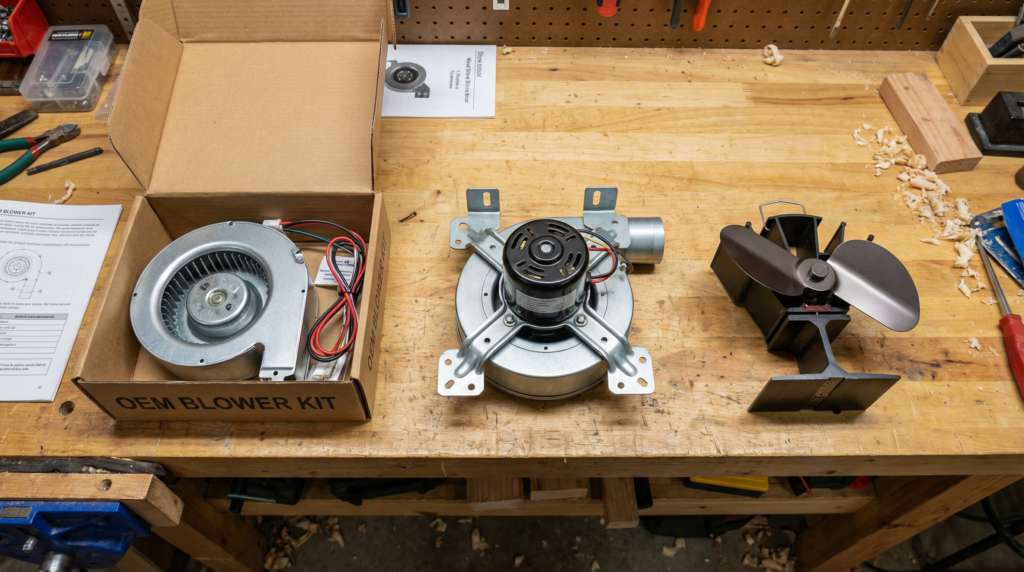
This section of the wood stove blower guide covers the three main categories you’ll encounter when shopping. Each type serves a different purpose, and choosing the right one depends on your stove model, installation, and heating goals.
1. OEM (Factory) Blower Kits
These are blower kits designed by your stove’s manufacturer specifically for your model. They bolt directly into pre-engineered mounting points and connect to built-in wiring. If your stove has a “blower-ready” designation, this is what the manufacturer intended.
OEM blower kits typically cost $150-$300 and offer the cleanest installation. The fan speed, airflow direction, and mounting position are all optimized for your specific stove. Brands like Drolet, Osburn, and Pleasant Hearth all offer model-specific kits. This wood stove blower guide strongly recommends OEM kits when available, they’re the safest and most effective option.
2. Universal Aftermarket Blowers
If your stove doesn’t have a factory blower option, universal kits fill the gap. These mount externally using brackets or magnetic attachments and work with most freestanding stoves. They’re more versatile but require careful positioning to maximize airflow across the stove’s hottest surfaces.
Universal blowers range from $80-$200 and come in various CFM ratings. The Hearth, Patio & Barbecue Association recommends matching the blower’s CFM rating to your room size for optimal performance. A good rule of thumb from this wood stove blower guide: aim for at least 100 CFM per 500 square feet of space you want to heat.
3. Heat-Powered (Thermoelectric) Stove Fans
While not technically “blowers” in the traditional sense, heat-powered fans deserve mention in any wood stove blower guide because they’re the most popular alternative. These fans use the Seebeck effect, converting heat differential into electricity to spin the blades.
The biggest advantage? No electricity required. During power outages, when your wood stove becomes your primary heat source, a heat-powered fan keeps working. They’re also silent and maintenance-free. The downside is lower airflow compared to electric blowers.
Here’s a quick comparison table for this wood stove blower guide:
| Feature | OEM Blower Kit | Universal Blower | Heat-Powered Fan |
|---|---|---|---|
| Airflow (CFM) | 100-300 | 80-200 | 150-250 |
| Cost | $150-$300 | $80-$200 | $30-$120 |
| Electricity Required | Yes | Yes | No |
| Noise Level | Low-Medium | Medium | Silent |
| Installation Difficulty | Easy | Moderate | None (sits on top) |
| Works During Outages | No | No | Yes |
| Best For | Matched stoves | Older/generic stoves | Backup or supplement |
If you’re heating a cabin or small space, check out our off-grid cabin heating options for more ideas on maximizing heat without grid power.
Do You Really Need a Wood Stove Blower? 5 Signs You Do
This is the core question of this wood stove blower guide, and the honest answer is: it depends on your situation. Not every wood stove owner needs a blower. But most would benefit from one. Here are five clear signs that a wood stove blower guide recommendation applies to you.
Sign 1: Uneven Temperatures Between Rooms
If the room with your stove hits 80°F while the bedroom stays at 60°F, you’ve got a heat distribution problem. This is the number one reason people search for a wood stove blower guide. A blower pushes warm air further from the stove, reducing temperature differentials by 30-50% in most homes.
I worked with a family in Vermont last winter who had exactly this issue. Their Pleasant Hearth stove was cranking out heat, but it all pooled in the living room. After installing a 200 CFM blower kit, the adjacent dining room and kitchen warmed up by 12°F. That’s the kind of difference that makes a wood stove blower guide worth reading.
Sign 2: You’re Burning More Wood Than Expected
When heat stays concentrated near the stove, you tend to overfire trying to push warmth further into the house. This wastes firewood and increases creosote buildup in your chimney. A blower distributes existing heat more efficiently, so you can run the stove at a moderate burn rate and still keep the whole house comfortable.
According to Penn State Extension, the average household burns 4-6 cords per heating season. A wood stove blower guide tip: adding a blower can reduce consumption by 15-20% because you’re using the heat you’re already producing instead of trying to generate more.
Sign 3: Your Stove Is in a Corner or Against a Wall
Stove placement affects heat distribution dramatically. Corner installations and wall-mounted setups naturally limit how far radiant heat can travel. If your stove sits against a wall with proper heat shield clearances, a blower becomes almost essential for pushing heat into the open room.
Sign 4: You Heat a Multi-Story Home
Heat rises. That’s physics. In a two-story home, the upstairs gets warm while the main floor stays cool, or vice versa depending on stove placement. A wood stove blower guide for multi-story homes always includes a blower recommendation because forced air circulation helps overcome the natural stratification that makes wood heating frustrating in taller spaces.
Sign 5: You Want to Reduce Your Heating Bills Further
If you’re already saving money with a wood stove and want to squeeze even more efficiency from your setup, a blower is the logical next step. It’s one of the cheapest upgrades with the highest return on investment in the wood stove accessory world.
How to Choose the Right Blower for Your Wood Stove
Picking the right blower is where most people get tripped up, so this wood stove blower guide section focuses on the practical decision-making process. You don’t want to buy a blower that’s too weak for your space or too loud for your living room.
Step 1: Check Your Stove’s Compatibility
First things first in this wood stove blower guide: find out if your stove is “blower-ready.” Check the owner’s manual or look for a knockout panel on the back or bottom of the stove. Most modern EPA-certified stoves from brands like Drolet, Osburn, Regency, and US Stove are designed to accept factory blower kits.
If your stove doesn’t have a factory option, don’t worry. Universal blowers and heat-powered fans work with virtually any freestanding wood stove. Just make sure you have adequate clearance around the stove for mounting, as outlined in NFPA 211 standards for solid fuel appliance installations.
Step 2: Calculate Your CFM Needs
CFM (cubic feet per minute) measures how much air the blower moves. This wood stove blower guide uses a simple formula: multiply your heated square footage by 0.15 to get your minimum CFM requirement.
| Room Size | Minimum CFM | Recommended CFM |
|---|---|---|
| 500 sq ft | 75 | 100 |
| 1,000 sq ft | 150 | 175 |
| 1,500 sq ft | 225 | 250 |
| 2,000 sq ft | 300 | 350 |
For homes over 1,500 square feet, this wood stove blower guide suggests pairing a blower with ceiling fans set to “winter mode” (clockwise rotation at low speed) to push warm air back down from the ceiling. The U.S. Department of Energy confirms that ceiling fans can reduce heating costs by up to 10% when used this way.
Step 3: Consider Noise Levels
Nobody wants a jet engine in their living room. Blower noise is measured in decibels (dB), and this wood stove blower guide recommends staying under 40 dB for living spaces. That’s roughly the volume of a quiet library.
OEM blower kits tend to be quieter because they’re engineered for the specific stove. Universal blowers can be noisier, especially at higher speeds. Look for models with variable speed controls so you can dial back the airflow (and noise) when you don’t need maximum output.
Step 4: Decide on Power Source
Most blowers plug into a standard 120V outlet. That’s fine for everyday use, but what happens during a power outage? Your wood stove still works, but the blower doesn’t. This wood stove blower guide recommends keeping a heat-powered fan as backup for exactly this scenario.
If power outages are common in your area, consider a blower with a thermostat-controlled on/off switch. These units automatically activate when the stove reaches a set temperature and shut off when it cools, saving electricity and extending motor life.


Installing a Wood Stove Blower: Step-by-Step Basics
This wood stove blower guide wouldn’t be complete without covering installation. The good news is that most blower installations are straightforward DIY projects that take 30-60 minutes. Here’s what to expect.
Before You Start
Make sure your stove is completely cool. This isn’t optional, it’s a safety requirement. Even residual heat can cause burns or damage electrical components during installation. The Consumer Product Safety Commission emphasizes that all maintenance and modifications to heating appliances should be done when the unit is cold.
Gather your tools: a screwdriver (Phillips and flathead), pliers, and possibly a drill if you’re mounting a universal kit. Read the installation manual completely before starting, every wood stove blower guide stresses this point because skipping steps leads to problems.
OEM Blower Kit Installation
For factory blower kits, the process follows this wood stove blower guide sequence:
- Locate the knockout panel on your stove (usually on the back or bottom)
- Remove the knockout panel using pliers or a flathead screwdriver
- Slide the blower assembly into the mounting bracket
- Secure with the provided screws
- Route the power cord to your nearest outlet
- Test the blower at low speed first, then increase
Most OEM kits come with a thermostat or rheostat control that mounts to the stove or nearby wall. This lets you adjust fan speed based on how hot the stove is running.
Universal Blower Installation
Universal kits require a bit more planning. This wood stove blower guide recommends positioning the blower where it can draw the most air across the stove’s hottest surface, typically the back panel.
Mount the blower using the provided brackets, ensuring adequate clearance from the stove surface (usually 1-2 inches). Some universal kits use magnetic mounts, which are convenient but can lose grip at very high temperatures. If your stove regularly exceeds 500°F on the surface, bolt-on brackets are more reliable.
Wiring and Safety Considerations
Every wood stove blower guide should address electrical safety. Keep the power cord away from hot surfaces, use a surge protector, and never run the cord under rugs or through walls. If your outlet is more than 6 feet from the stove, use a heavy-duty extension cord rated for at least 15 amps.
For stoves installed with reduced clearances using heat shields, make sure the blower installation doesn’t compromise those clearances. The blower housing adds a few inches to the stove’s footprint, and you need to account for that in your clearance calculations.
Maximizing Your Wood Stove Blower Performance
Once your blower is installed, this wood stove blower guide shifts to optimization. A blower only works as well as the system it’s part of, so here are proven strategies to get the most from your investment.
Use Properly Seasoned Firewood
This comes up in every wood stove blower guide for good reason. Wet wood produces less heat, more smoke, and more creosote. Your blower can only distribute the heat your stove produces, so feeding it properly seasoned firewood with moisture content below 20% is essential.
According to the EPA’s Burn Wise program, burning seasoned wood in an EPA-certified stove can improve overall efficiency by 30% or more. Combine that with a blower’s improved distribution, and you’re looking at a seriously efficient heating system.
Maintain Proper Airflow Around the Stove
Don’t block the blower’s intake or output with furniture, curtains, or stored items. The blower needs clear paths to draw cool air and push warm air. This wood stove blower guide recommends keeping at least 24 inches of clearance on all sides of the stove where the blower operates.
Clean the Blower Regularly
Dust and ash accumulate on blower blades and motors over time, reducing efficiency and increasing noise. This wood stove blower guide suggests cleaning the blower at least twice per heating season. Use a vacuum with a brush attachment to remove debris from the fan blades and motor housing.
While you’re at it, inspect the motor for signs of wear. Most blower motors last 5-10 years with proper maintenance. If you notice grinding sounds, reduced airflow, or the motor running hot, it’s time for a replacement. Check out our wood stove ash pan replacement guide for related maintenance tips.
Pair with Ceiling Fans and Floor Registers
A wood stove blower guide tip that most people miss: use your home’s existing air circulation to amplify the blower’s effect. Ceiling fans in winter mode push warm air down from the ceiling. If you have floor registers from a central heating system, opening them (even with the furnace off) creates pathways for warm air to travel through ductwork to other rooms.
Adjust Blower Speed Based on Burn Phase
Don’t run the blower at full speed all the time. During the startup phase when the stove is still warming up, keep the blower off or on low. Running it too early pulls heat away before the firebox reaches optimal temperature, which can actually slow down the fire.
This wood stove blower guide recommends this sequence: light the fire with the blower off, wait until the stove surface reaches 250-300°F (use a magnetic stove thermometer to check), then turn the blower to medium. Once the stove hits cruising temperature (400-500°F surface temp), crank it up to full speed. You can find quality stove thermometers and blower accessories at specialty retailers.
Common Wood Stove Blower Mistakes to Avoid
Every wood stove blower guide should warn you about the pitfalls. I’ve seen these mistakes dozens of times, and they’re all preventable.
Mistake 1: Buying the Wrong Size
Undersized blowers don’t move enough air to make a difference. Oversized blowers create too much noise and can actually cool the stove surface too quickly, reducing radiant heat. Use the CFM calculation from earlier in this wood stove blower guide to find the sweet spot.
Mistake 2: Running the Blower on a Cold Stove
This is the most common mistake I see. Running the blower before the stove is hot enough just circulates cold air and chills the firebox. Wait until the stove surface hits at least 250°F before engaging the blower. A thermostat-controlled blower handles this automatically, which is why this wood stove blower guide recommends them.
Mistake 3: Ignoring Maintenance
A dirty blower is a loud, inefficient blower. Ash buildup on the blades creates imbalance, which causes vibration and premature motor failure. Clean it regularly, as this wood stove blower guide outlined in the maintenance section above.
Mistake 4: Blocking Airflow
Pushing furniture against the stove to “catch more heat” actually blocks the blower’s airflow pattern. Keep the area around your stove clear. This wood stove blower guide can’t stress this enough: restricted airflow defeats the entire purpose of having a blower.
Mistake 5: Skipping the Thermostat
Manual blowers require you to remember to turn them on and off. A thermostat-controlled unit activates automatically when the stove reaches operating temperature and shuts off when it cools. It’s a small upgrade that makes a big difference in convenience and motor longevity. The Chimney Safety Institute of America recommends automated controls for any wood stove accessory that interacts with heat output.
Wood Stove Blower Guide: Cost Breakdown and ROI
Let’s talk money. This wood stove blower guide section breaks down what you’ll spend and what you’ll save, because that’s ultimately what drives the decision for most homeowners.
Upfront Costs
| Item | Cost Range |
|---|---|
| OEM Blower Kit | $150-$300 |
| Universal Blower Kit | $80-$200 |
| Heat-Powered Fan | $30-$120 |
| Installation (if professional) | $75-$150 |
| Thermostat Control (add-on) | $25-$50 |
Most homeowners spend $150-$250 total for a blower setup, including the unit and any accessories. If you’re handy, installation is free since it’s a straightforward DIY job as covered earlier in this wood stove blower guide.
Annual Savings
The savings from a wood stove blower guide recommendation come from reduced firewood consumption. If you currently burn 5 cords per season at an average cord of wood price of $300, that’s $1,500 in fuel costs. A 15-20% reduction means saving $225-$300 per year.
The blower itself costs about $15-$25 per season in electricity (running 8 hours daily for 5 months at average rates). So your net savings are roughly $200-$275 annually. That means the blower pays for itself in the first season, and every year after that is pure savings.
Long-Term Value
A quality blower motor lasts 5-10 years. Over that lifespan, this wood stove blower guide estimates total savings of $1,000-$2,750 from reduced firewood costs alone. Factor in less wear on your stove from not overfiring, reduced chimney cleaning frequency from lower creosote buildup, and improved comfort, and the value proposition is clear.
If you’re also considering the wood stove tax credit, note that blower kits installed as part of a new stove installation may qualify as part of the total installation cost under the 30% credit. That could knock another $45-$90 off your blower investment.
Wood Stove Blower Guide for Specific Situations
Not every heating setup is the same, so this wood stove blower guide addresses a few common scenarios that require different approaches.
Small Cabins and Tiny Homes
In spaces under 600 square feet, a full blower kit might be overkill. A heat-powered stove fan is usually sufficient for these compact spaces. The natural convection from a properly sized stove, combined with a thermoelectric fan, distributes heat effectively without the noise or electricity draw of a full blower.
That said, if your cabin has a loft or second level, even a small blower can help push warm air upward more effectively. Check our guide on budget-friendly wood stoves for sizing recommendations that pair well with this wood stove blower guide.
Open Floor Plans
Open concept homes are actually ideal for blowers. Without walls to block airflow, a blower can push warm air across large open spaces efficiently. In these setups, this wood stove blower guide recommends a higher CFM blower (200+ CFM) positioned to direct airflow along the longest axis of the open space.
Homes with Existing Ductwork
Here’s a wood stove blower guide trick that not many people know about: if you have central heating ductwork, you can use the furnace’s blower fan (set to “fan only” mode) to distribute wood stove heat through existing ducts. This works especially well when the stove is near a cold air return. The furnace fan pulls warm air from the stove area and pushes it through the duct system to every room.
This approach doesn’t replace a dedicated wood stove blower, but it complements one beautifully. The stove blower pushes heat into the room, and the furnace fan distributes it throughout the house.
During Power Outages
Power outages are when wood stoves really shine, but electric blowers go dark. This wood stove blower guide recommends every wood stove owner keep a heat-powered fan as backup. These thermoelectric fans activate automatically from stove heat and provide basic air circulation without any electricity.
For extended outages, a small generator or battery backup can power your blower. A typical blower draws 50-100 watts, which is well within the capacity of even a small portable generator or a solar battery system. If you’re interested in off-grid solutions, our wood pellet alternatives guide covers backup fuel options that pair well with blower setups.
Troubleshooting Common Wood Stove Blower Problems
Even with the best wood stove blower guide advice, issues can pop up. Here’s how to diagnose and fix the most common problems.
Blower Won’t Turn On
Check the obvious first: is it plugged in? Is the outlet working? If the blower has a thermostat, make sure the stove is hot enough to trigger activation (usually 110-120°F surface temperature). If everything checks out and the blower still won’t run, the motor may have failed. Most motors are replaceable without buying a whole new kit.
Excessive Noise or Vibration
Noise usually means dirty or unbalanced blades. Remove the blower, clean the fan blades thoroughly, and check for any debris caught in the housing. If cleaning doesn’t help, the motor bearings may be worn. Replacement bearings are cheap, but if the motor is sealed, you’ll need a new motor assembly.
Reduced Airflow
If your blower runs but doesn’t push much air, check for obstructions in the intake and output paths. Ash buildup inside the blower housing is the most common culprit. Also verify that the blower is properly seated against the stove, gaps between the blower and stove surface reduce efficiency significantly.
Blower Runs But Room Stays Cold
This usually isn’t a blower problem, it’s a stove problem. Check that you’re burning properly seasoned wood, your venting is correct, and the stove is reaching proper operating temperature. A blower can only distribute the heat your stove produces, so if the stove isn’t performing well, the blower won’t fix that.
According to the EPA’s guidelines on choosing wood stoves, modern EPA-certified stoves should achieve 70-80% efficiency. If your stove isn’t hitting those numbers, the issue is upstream of the blower. You might also want to review Purdue Extension’s wood heat guide for additional troubleshooting advice.
Frequently Asked Questions
Does a wood stove blower use a lot of electricity?
No. A typical wood stove blower draws 50-100 watts, which costs roughly $15-$25 per heating season when running 8 hours daily. That’s far less than the $200-$300 you’ll save in reduced firewood consumption, making it a net positive investment according to any wood stove blower guide.
Can I install a wood stove blower myself?
Yes, most wood stove blower installations are straightforward DIY projects. OEM kits take 20-30 minutes with basic tools. Universal kits may take up to an hour. This wood stove blower guide recommends reading the full installation manual before starting and ensuring the stove is completely cool.
Will a blower work on any wood stove?
OEM blower kits only work with specific stove models, but universal blowers and heat-powered fans work with virtually any freestanding wood stove. Check your stove’s manual for “blower-ready” compatibility, or choose a universal kit that mounts externally using brackets or magnets.
What is the best CFM rating for a wood stove blower?
This wood stove blower guide recommends 100 CFM per 500 square feet of heated space. For a 1,000-square-foot home, aim for 150-200 CFM. For larger spaces over 1,500 square feet, look for blowers rated at 250 CFM or higher, and consider pairing with ceiling fans for maximum distribution.
How long does a wood stove blower motor last?
A quality wood stove blower motor typically lasts 5-10 years with proper maintenance. Clean the blades and housing at least twice per season, avoid running the blower on a cold stove, and use a thermostat control to prevent unnecessary wear. Replacement motors cost $40-$80 for most models.
Is a wood stove blower the same as a stove fan?
Not exactly. A wood stove blower is an electric fan that mounts to the stove and moves 100-300 CFM of air. A heat-powered stove fan sits on top of the stove and uses thermoelectric technology to spin without electricity. Blowers move more air and are better for larger spaces, while stove fans are ideal for backup during power outages.
Should I turn off the blower when adding wood to the stove?
It’s not strictly necessary, but this wood stove blower guide recommends turning the blower to low or off when opening the stove door to add wood. The blower can create a slight positive pressure that pushes smoke into the room when the door is open. Resume normal blower operation once the door is closed and the fire is re-established.
Final Thoughts on This Wood Stove Blower Guide
A wood stove blower is one of those upgrades that seems small but makes a huge difference in daily comfort. If you’re tired of roasting near the stove while the rest of your house stays cold, a blower fixes that problem for under $300. The math works out in your favor every time: spend a little upfront, save on firewood all season, and enjoy even heat throughout your home.
This wood stove blower guide covered the essentials, from understanding how blowers work to choosing the right type, installing it properly, and avoiding common mistakes. The key takeaway? Match the blower to your space, maintain it regularly, and pair it with good burning practices like using seasoned firewood and keeping your chimney clean.
If you’re still on the fence, start with a $30-$50 heat-powered fan. It’ll give you a taste of what improved air circulation feels like without a big commitment. Once you experience the difference, you’ll probably upgrade to a full blower kit before the season’s over.
For more ways to get the most from your wood stove, explore our guides on venting mistakes that cost you heat and budget-friendly wood stoves under $1,500. Stay warm out there.
