
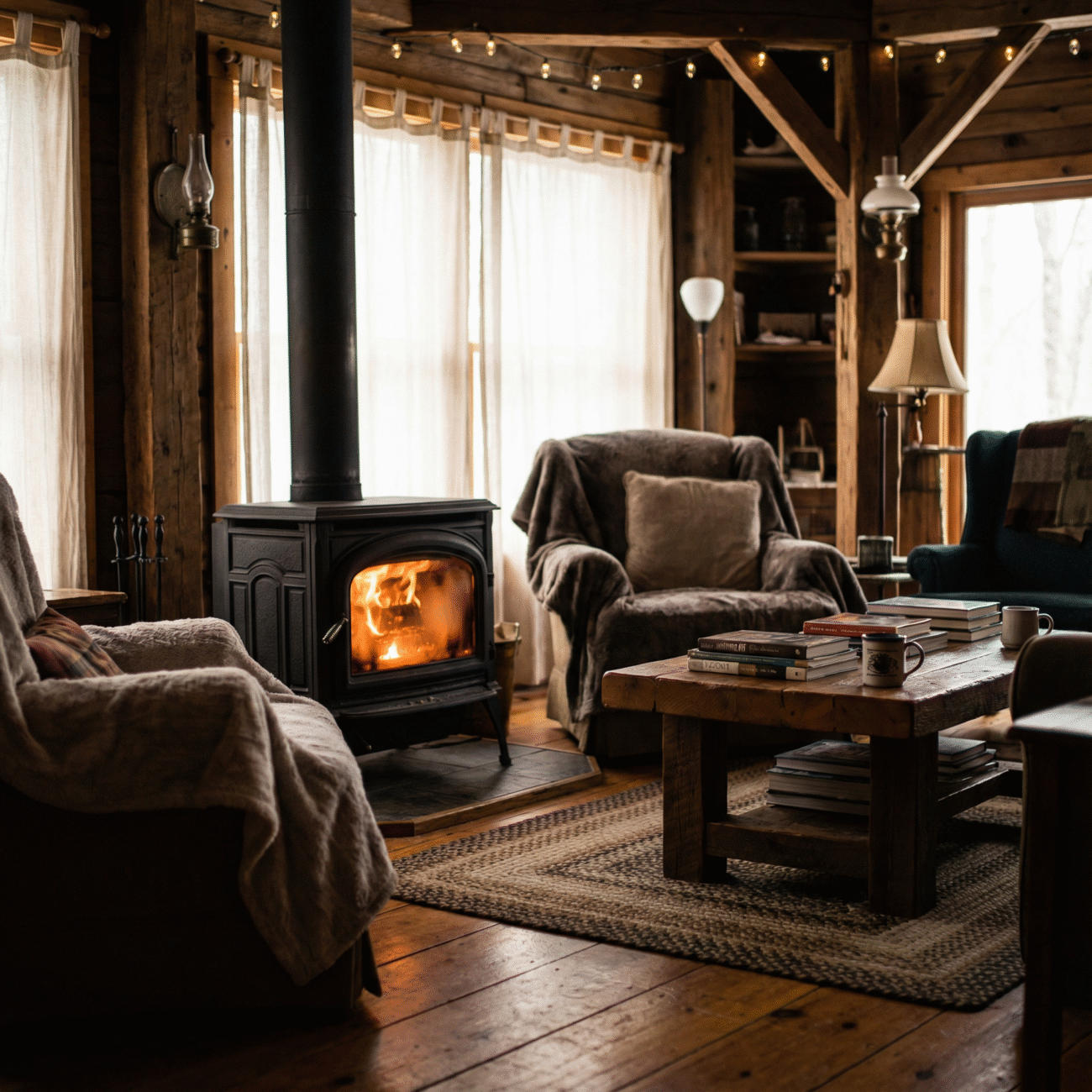
Standing in your cabin on a freezing winter morning, watching your breath fog in the air, makes one thing crystal clear: you need the right heating solution. If you’re wondering what size wood stove do i need for a cabin, you’re asking the right question at the right time.
Here’s the short answer: For most cabins, you’ll need a wood stove that produces 20-30 BTUs per square foot of space. A 400-square-foot cabin typically requires a 10,000-12,000 BTU stove, while an 800-square-foot cabin needs 20,000-24,000 BTUs. However, insulation quality, ceiling height, climate zone, and cabin layout significantly affect these numbers.
Getting this decision right means the difference between a cozy retreat and either a freezing icebox or an unbearably hot sauna. I’ve seen too many cabin owners make expensive mistakes by either oversizing (leading to constant door-opening to cool down) or undersizing (adding electric heaters that defeat the whole purpose). Let’s break down exactly what size wood stove do i need for a cabin so you can make a confident choice that keeps you comfortable all winter long.
Understanding BTU Requirements for Cabin Heating
Before you can determine what size wood stove do i need for a cabin, you need to understand BTUs, or British Thermal Units. One BTU is the amount of energy needed to raise one pound of water by one degree Fahrenheit. For wood stoves, BTU output tells you how much heat the stove can generate per hour.
The basic formula starts simple: multiply your cabin’s square footage by 20-30 BTUs. That’s your baseline. A 600-square-foot cabin would need 12,000-18,000 BTUs under this calculation. But here’s what most sizing guides won’t tell you that’s just where the math starts, not where it ends.
Climate makes a massive difference. If your cabin sits in northern Minnesota where temperatures regularly hit -20°F, you’ll want to aim for the higher end of that BTU range, possibly even exceeding it. Meanwhile, a cabin in the Pacific Northwest with milder winters can comfortably use the lower end. The EPA’s heating zone map provides excellent guidance on regional considerations for wood burning appliances.
Insulation quality might be the single most important factor that people overlook. A well-insulated cabin with spray foam, proper vapor barriers, and quality windows might only need 15-20 BTUs per square foot. An older cabin with minimal insulation and single-pane windows could require 35-40 BTUs per square foot. That’s nearly double the heating capacity for the same square footage.
Ceiling Height Adjustments
Standard BTU calculations assume 8-foot ceilings. Got cathedral ceilings or a loft? You’re heating cubic feet, not just square feet. For every foot above 8 feet, add roughly 12-15% to your BTU requirements. A 500-square-foot cabin with 12-foot ceilings doesn’t need 10,000-15,000 BTUs, it needs closer to 13,000-19,000 BTUs.
The Open Floor Plan Factor
Here’s something that trips people up: cabin layout matters enormously. An open floor plan where heat can circulate freely is far easier to heat than a cabin with multiple small rooms and closed doors. If your cabin has separate bedrooms with doors, you might need to increase your BTU estimate by 20-30% or consider supplemental heating solutions for those spaces.
Calculating Your Cabin’s Specific Heating Needs
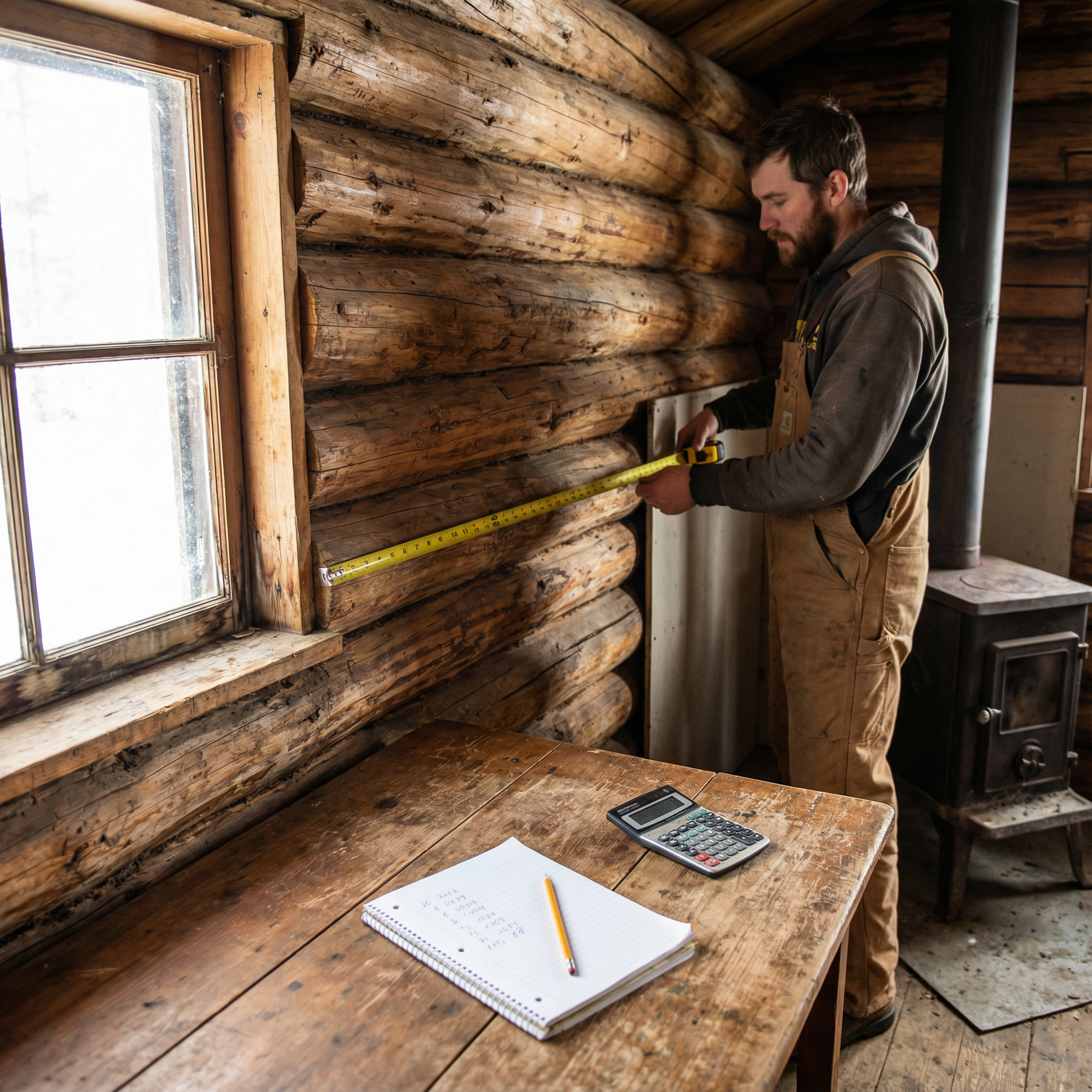
Let’s get practical with what size wood stove do i need for a cabin by working through real calculations. This isn’t complicated, but it does require honesty about your cabin’s actual conditions.
Start by measuring your cabin’s heated square footage. Don’t guess, walk it with a tape measure. Include only spaces you actually want to heat. That uninsulated mudroom? Don’t count it. Multiply length times width for each room, then add them up.
Next, assess your insulation honestly. Does your cabin have modern insulation in the walls and ceiling? Are the windows double-pane? Can you see daylight around doors? Rate your insulation as excellent (modern standards), good (adequate but not perfect), fair (some insulation but drafty), or poor (minimal insulation, lots of air leaks).
Here’s a practical sizing table based on these factors:
| Cabin Size | Excellent Insulation | Good Insulation | Fair Insulation | Poor Insulation |
|---|---|---|---|---|
| 300 sq ft | 6,000-7,500 BTU | 7,500-9,000 BTU | 9,000-10,500 BTU | 10,500-12,000 BTU |
| 500 sq ft | 10,000-12,500 BTU | 12,500-15,000 BTU | 15,000-17,500 BTU | 17,500-20,000 BTU |
| 800 sq ft | 16,000-20,000 BTU | 20,000-24,000 BTU | 24,000-28,000 BTU | 28,000-32,000 BTU |
| 1,200 sq ft | 24,000-30,000 BTU | 30,000-36,000 BTU | 36,000-42,000 BTU | 42,000-48,000 BTU |
Don’t forget climate adjustment. If you’re in USDA Hardiness Zone 4 or colder, add 15-20% to these numbers. Zone 6 or warmer? You might reduce by 10-15%.
At this point, you have a solid BTU range for your cabin. To make this even more accurate, you can factor in burn time, wood type, and seasonal usage.
Our Wood Heating Calculator helps you estimate how much firewood your stove will actually consume based on your cabin size, insulation level, and climate. This is especially useful if you want to balance stove size with fuel efficiency and avoid overheating a small space.
The Weekend vs. Full-Time Consideration
Here’s a nuance most guides miss: how you use your cabin affects what size wood stove do i need for a cabin. Weekend warriors who arrive to a cold cabin need extra capacity to heat up quickly. Full-time residents can use a more moderately sized stove because they’re maintaining temperature, not creating it from scratch.
For weekend use, I recommend adding 25-30% to your calculated BTU needs. That extra capacity lets you warm up the space in an hour or two rather than waiting half a day. For full-time living, stick closer to the calculated numbers, oversizing causes more problems than it solves.


Common Wood Stove Sizes and Their Ideal Applications
Now that you know your BTU requirements, let’s match them to actual stove categories. Wood stoves generally fall into small, medium, and large categories, and understanding what size wood stove do i need for a cabin means knowing where your needs fit.
Small Wood Stoves (Under 40,000 BTU)
Small stoves output roughly 15,000-40,000 BTUs and are perfect for cabins under 600 square feet with decent insulation. These compact units, often called “tiny house” or “small cabin” stoves, fit in tight spaces and won’t overwhelm a small area.
The advantage of small stoves goes beyond size. They use less wood, heat up quickly, and are easier to control. You’re not constantly cracking windows because you’ve turned your 400-square-foot cabin into a sauna. Brands like Cubic Mini and Dwarf offer excellent options in this category, with some models weighing under 50 pounds, making installation much simpler.
That said, small stoves have limitations. They typically have shorter burn times, often 3-5 hours, meaning you’ll be feeding them more frequently. Their smaller fireboxes can’t handle the big logs that a larger stove would, so you’ll spend more time processing firewood. For weekend cabin use where you’re present to tend the fire, that’s fine. For overnight heating, it can be frustrating.
Medium Wood Stoves (40,000-70,000 BTU)
This is the sweet spot for most cabins. Medium stoves handle 600-1,200 square feet comfortably and offer the best balance of features. They’ll burn for 6-8 hours on a good load, have enough firebox space for standard split wood, and won’t break your budget.
Most EPA-certified stoves fall into this range, which means you’re getting clean burning technology and efficiency ratings of 70-80%. Models from Jøtul, Vermont Castings, and Drolet dominate this category. These manufacturers have been perfecting medium-sized stoves for decades, and it shows in their performance.
What I appreciate about medium stoves is their versatility. You can run them hard when it’s bitter cold outside or damper them down for milder days without creating smoke or creosote problems. This flexibility matters when you’re trying to maintain comfortable temperatures across a wide range of outdoor conditions.
Large Wood Stoves (Over 70,000 BTU)
Large stoves are for cabins exceeding 1,200 square feet, poorly insulated structures, or extreme cold climates. These beasts can output 70,000-100,000+ BTUs and will heat substantial spaces. They’re also the choice for anyone wanting 10-12 hour overnight burns without reloading.
The tradeoff? You’re dealing with a heavy, expensive unit that requires serious floor protection and clearances. Large stoves often weigh 400-600 pounds and need reinforced flooring if you’re not on a concrete slab. Installation costs can easily double what you’d pay for a smaller unit.
According to the National Fire Protection Association, larger stoves also require more attention to clearance requirements and proper venting systems. You can’t cut corners on safety with these powerful heaters.
Factors That Affect What Size Wood Stove Do I Need for a Cabin
Beyond the basic square footage calculation, several factors dramatically influence what size wood stove do i need for a cabin. Ignoring these variables is how people end up with the wrong stove.
Window Quality and Quantity
Windows are thermal weak points. A cabin with lots of old single-pane windows loses heat at an alarming rate. For every 10 square feet of single-pane window, add roughly 1,500-2,000 BTUs to your heating requirement. Double-pane windows cut that loss in half. Triple-pane windows, while expensive, reduce it by 60-70%.
Large picture windows facing north are particularly problematic. That beautiful view comes with a heating penalty. South-facing windows can actually help during sunny winter days through passive solar gain, but you can’t count on sunshine in most climates.
Door Traffic and Air Leaks
How often do you open exterior doors? Every time that door swings open, you’re dumping heated air and pulling in cold. A hunting cabin with people coming and going constantly needs more heating capacity than a quiet retreat. I’ve seen cabins that needed 30% more BTU capacity simply because of high traffic patterns.
Air infiltration through gaps and cracks is even worse because it’s constant. The Department of Energy estimates that air leaks can account for 25-40% of heating energy loss. Before deciding what size wood stove do i need for a cabin, spend a day with caulk and weatherstripping. You might find you can drop down a stove size category just by sealing leaks.
Thermal Mass and Heat Storage
Cabins built with stone, brick, or concrete have thermal mass that stores and slowly releases heat. This thermal flywheel effect means you can use a slightly smaller stove because the structure itself helps maintain temperature. Log cabins have some of this benefit, though not as much as masonry.
Conversely, thin-walled cabins with minimal mass heat up quickly but also cool down quickly. They need more BTU capacity to maintain comfort because there’s nothing storing heat between firing cycles.
Altitude Adjustments
Here’s one that surprises people: high altitude affects wood stove performance. At 5,000 feet elevation, air is thinner, meaning less oxygen for combustion. Your stove won’t burn quite as hot or efficiently. Add 10-15% to your BTU requirements for cabins above 5,000 feet, and consider consulting with local stove dealers who understand high-altitude adjustments.
Matching Stove Features to Cabin Needs
Understanding what size wood stove do i need for a cabin isn’t just about BTU output. The features and design of the stove matter enormously for how well it serves your specific situation.
Burn Time vs. Heat Output
There’s an inverse relationship here that confuses people. Stoves designed for maximum heat output often sacrifice burn time. They burn hot and fast. Stoves optimized for long burn times typically have lower peak output. You need to decide which matters more for your cabin use.
Weekend cabin owners often prefer high output for rapid warmup, even if it means refilling every 4-5 hours. You’re awake and present anyway. Full-time cabin residents usually want 8-10 hour burn times to get through the night without reloading. This affects which specific model you choose within your BTU range.
Catalytic vs. Non-Catalytic Combustion
This technical difference has practical implications. Catalytic stoves use a ceramic catalyst to burn smoke and gases, achieving extremely long burn times and high efficiency. They’re perfect for full-time cabin living where you want to load the stove before bed and wake up to coals.
The downside? Catalytic stoves require more maintenance. The catalyst needs replacement every 6-10 years (costing $200-400), and you need to be more careful about burning dry wood to avoid clogging it. For casual weekend use, a simpler non-catalytic stove might serve you better even if the burn times are shorter.
Non-catalytic stoves use secondary combustion chambers and air tubes. They’re simpler, more forgiving of less-than-perfect firewood, and easier to maintain. Most EPA-certified stoves sold today use this technology, and it works extremely well for the vast majority of cabin applications.
Cooking Capability
Many cabin owners want their wood stove to pull double duty for cooking, especially in off-grid situations. Flat-top stoves let you boil water, cook meals, and heat canned goods directly on the surface. This feature doesn’t affect what size wood stove do i need for a cabin, but it might influence which specific model you choose within your size range.
Some stoves include built-in ovens or warming shelves. These are fantastic for cabin living but add cost and complexity. Understanding wood stove accessories can help you decide which features are worth the extra investment.
Heat Distribution Methods
Radiant stoves heat objects and people directly, like standing in sunshine. They create a warm zone immediately around the stove but can leave far corners cool. Convection stoves use air circulation, often with built-in fans or convection chambers, to move heat throughout the space more evenly.
For single-room cabins or open floor plans, radiant heat works beautifully. For cabins with multiple rooms or complex layouts, convection or even a heat-powered stove fan helps distribute warmth more evenly. This doesn’t change the BTU requirement but definitely affects comfort.
Installation Considerations and Clearances
Even after you’ve determined what size wood stove do i need for a cabin, installation requirements might force you into a different size. Clearances and safety regulations are non-negotiable, and they favor smaller stoves in tight spaces.
NFPA Clearance Requirements
The National Fire Protection Association Standard 211 specifies minimum clearances from combustible materials. Most stoves need 36 inches from unprotected walls, 18 inches from protected walls with heat shields, and 16 inches from floor to stove bottom (with proper floor protection).
In small cabins, these clearances can be the limiting factor. You might calculate that you need a 50,000 BTU stove, but if you can’t maintain proper clearances for a stove that size, you’ll need to downsize or modify your cabin structure. Installing heat shields on walls can reduce clearances, but you’re still looking at minimum distances that may not work in a tiny cabin.
Floor Protection Requirements
Stove weight and floor protection go hand in hand. That large stove you want might weigh 500 pounds plus another 100-150 pounds of chimney pipe. Does your cabin floor support that load? Most do, but elevated cabins on piers or older structures with questionable joists might need reinforcement.
Floor protection extends 18 inches beyond the stove on all sides for most models, more if your local code requires it. In a 200-square-foot cabin, that floor pad might consume 25-30 square feet of precious space. Sometimes the physical footprint forces you toward a smaller stove regardless of heating capacity calculations.
Chimney Height and Draft
Taller chimneys create stronger draft, which helps stoves burn more efficiently and cleanly. The general rule is chimney height should be at least 15 feet from stove top to chimney cap, and must extend at least 3 feet above the roof penetration and 2 feet higher than anything within 10 feet.
Single-story cabins with standard roof pitch usually have no problem meeting these requirements. Cabins with low-pitch roofs or those built into hillsides might struggle with adequate chimney height. Insufficient draft means your stove won’t perform to spec, effectively reducing its heating capacity. You might need a larger stove to compensate for poor draft, or better yet, improve your chimney system to achieve proper draft.
Real-World Sizing Examples for Different Cabin Types
Let’s apply everything we’ve covered to real scenarios. These examples show how to determine what size wood stove do i need for a cabin in different situations.
The Weekend Getaway Cabin
Picture a 400-square-foot single-room cabin with decent insulation, used primarily on weekends from November through March. Located in Vermont (cold climate), with south-facing windows and an open floor plan. Owners arrive Friday evening to a cold cabin and want it warm within an hour.
Calculation: 400 sq ft × 25 BTU (good insulation, cold climate) = 10,000 BTU base. Add 30% for quick warmup = 13,000 BTU total. Recommendation: A small to medium stove rated 15,000-25,000 BTU output. Something like a Drolet Spark or similar would be perfect, offering quick heat and easy operation without overwhelming the space once it’s warm.
The Full-Time Off-Grid Cabin
Now consider an 800-square-foot cabin with bedroom, living area, and kitchen. Excellent insulation, located in Montana, lived in year-round. Owners want reliable overnight heat without reloading at 2 AM.
Calculation: 800 sq ft × 22 BTU (excellent insulation despite cold climate) = 17,600 BTU base. No quick-heat premium needed since maintaining temperature. Recommendation: A medium stove rated 40,000-50,000 BTU with extended burn time, such as a catalytic model from Blaze King. The lower BTU rating seems counterintuitive, but these stoves are designed to burn low and slow, perfect for maintaining steady heat in a well-insulated space.
The Hunting Camp
An older 600-square-foot cabin with minimal insulation, multiple small rooms, fair insulation, and heavy door traffic during hunting season in northern Wisconsin. Used 3-4 weeks per year in November and December.
Calculation: 600 sq ft × 30 BTU (poor insulation, cold climate) = 18,000 BTU base. Add 20% for layout issues and high traffic = 21,600 BTU. Add another 20% for quick warmup = 25,920 BTU total. Recommendation: A robust medium stove rated 50,000-60,000 BTU. The higher capacity compensates for inefficient building envelope and usage pattern. A non-catalytic model makes sense here since it’s not being used daily and requires less babying.
The Mountain Retreat
A 1,000-square-foot cabin at 7,500 feet elevation in Colorado with vaulted ceilings averaging 12 feet high, excellent modern insulation, and used for extended winter vacations.
Calculation: 1,000 sq ft × 20 BTU (excellent insulation, moderate mountain climate) = 20,000 BTU. Add 50% for ceiling height (12 ft vs 8 ft standard) = 30,000 BTU. Add 15% for altitude = 34,500 BTU total. Recommendation: A large stove rated 60,000-70,000 BTU. The high ceilings and altitude create unique challenges that require serious heating capacity despite good insulation.
Avoiding Common Sizing Mistakes
After years of helping people figure out what size wood stove do i need for a cabin, I’ve seen the same mistakes repeated. Let’s address them head-on so you don’t waste money or create problems.
The Oversizing Trap
This is the single most common error. People think “bigger is better” and buy a stove with far more capacity than needed. In a 400-square-foot cabin, a 70,000 BTU stove becomes a problem, not a solution.
Oversized stoves force you to run them inefficiently. You can’t burn them properly at full capacity without roasting yourself out, so you damper them down and burn small fires. This creates several issues: incomplete combustion produces more creosote, you waste firewood through inefficient burning, and the stove never reaches optimal operating temperature for clean burning.
The irony? An oversized stove often performs worse than a properly sized one. You’d be warmer and more comfortable with a smaller stove running at its designed output than a large stove limping along at 30% capacity. Trust the math, even when your gut says to go bigger.
Ignoring Ceiling Fans and Heat Distribution
Some folks calculate what size wood stove do i need for a cabin, get the perfect BTU match, then wonder why the bedroom stays cold while the living room is tropical. Heat rises and stratifies. Without circulation, you’ll have 80°F at ceiling level and 55°F at floor level.
Ceiling fans running in reverse (clockwise in winter) gently push warm air down without creating a breeze. A $50 ceiling fan can make a smaller stove feel adequate by distributing heat better. Don’t oversize your stove to compensate for poor circulation, fix the circulation problem instead.
Forgetting About Seasonal Temperature Swings
Your cabin experiences a range of outdoor temperatures, not just the coldest day of the year. A stove sized only for that -20°F night will be absurdly oversized for the 35°F November evening.
Better to size for the middle range of your heating season and add thermal mass or better insulation to handle the extreme cold days. You might burn a bit more wood during a cold snap, but you’ll have a comfortable, controllable stove for the other 90% of winter.
Trusting Manufacturer Claims Blindly
When manufacturers say a stove “heats up to 2,000 square feet,” read that with heavy skepticism. That’s typically best-case scenario in a perfectly insulated, open-plan house in a moderate climate with optimal wood and perfect operation. Real-world performance is usually 60-70% of maximum claims.
Independent testing from the EPA’s certified stoves database provides more reliable BTU outputs. Cross-reference manufacturer specs with these official numbers when determining what size wood stove do i need for a cabin.


Testing and Adjusting Your Choice
Even with perfect calculations, you won’t know for sure if you’ve got the right size until you actually use the stove. Here’s how to evaluate and adjust if needed.
The First Season Test
During your first winter with a new stove, pay attention to these indicators. Are you constantly opening doors and windows because it’s too hot? You’ve oversized. Is the stove running full-blast and you’re still cold? You’ve undersized or have other issues like air leaks or inadequate draft.
Ideally, you should be able to load the stove, set the air control to about half-open, and maintain comfortable temperatures. If you’re running with air fully open all the time or dampered down to barely smoldering, something’s wrong with your sizing or operation.
Track how long burns last versus how long you need between loadings. A stove that burns out in 3 hours when you need 6-hour intervals is undersized or being operated incorrectly. One that maintains temperature for 10 hours when you only needed 6 might be oversized, though that’s a much less problematic situation.
Using a Stove Thermometer
A magnetic stove pipe thermometer is essential for understanding performance. Most stoves operate best between 300-500°F on the pipe. If you’re consistently running below this range, you’re either not burning enough wood (undersized) or not operating efficiently.
Above 600°F regularly means you’re running too hot, likely because the stove is too small and you’re burning it hard trying to keep up. The sweet spot is maintaining 350-450°F during active burning, which indicates efficient, clean combustion appropriate to the stove’s design.
Making Corrections
If you’ve truly undersized, your options are limited. You can improve insulation to reduce heat loss, add heat-powered fans for better distribution, or in extreme cases, replace the stove. Don’t try to “fix” an undersized stove by burning it dangerously hot, that’s how chimney fires start.
If you’ve oversized, you have more options. Learn to burn smaller, hotter fires rather than large, smoldering ones. Add thermal mass near the stove (fire brick, stone) to absorb excess heat and release it gradually. Consider stove efficiency upgrades to burn cleaner at lower outputs.
FAQs about What Size Wood Stove Do I Need For A Cabin
Can I heat a two-story cabin with one wood stove?
It depends on the cabin’s design. Heat rises naturally, so a stove on the first floor will help heat the second floor if there’s an open stairway or adequate air circulation paths. For a 1,200-square-foot two-story cabin with open layout, one properly sized stove (40,000-50,000 BTU) can work. Cabins with closed floor plans or poor circulation may need supplemental heat upstairs. Installing a ceiling fan near the stairway to push warm air up or down (depending on the season) improves results significantly.
What’s better for a cabin: cast iron or steel wood stoves?
Both materials work well, but they heat differently. Cast iron retains heat longer and provides steadier warmth after the fire dies down, making it ideal for cabins where you want even heating throughout the day. Steel stoves heat up faster and cool down faster, perfect for weekend cabins where you want quick warmth. For sizing purposes, material doesn’t change BTU requirements, but it affects how those BTUs are delivered. Most modern stoves combine both materials to get the benefits of each.
How do I know if my cabin’s insulation is good enough for a smaller stove?
Conduct a simple winter test. On a cold day, seal your cabin and heat it to 68°F using your current heating source. Turn off all heat and monitor temperature drop over 3 hours. Well-insulated cabins drop 5-8°F, adequately insulated cabins drop 10-15°F, and poorly insulated cabins drop 20°F or more. You can also check for drafts by walking around with a lit candle on a windy day, or hire an energy auditor for a professional blower door test. Better insulation always means you can use a smaller, more efficient stove.
Can I use the same wood stove for a cabin in different climate zones?
Yes, but you’ll need to adjust how you operate it. A stove sized perfectly for a cabin in Georgia might feel undersized in that same cabin transported to Maine. The stove itself doesn’t know the climate, but the heat loss from your cabin increases dramatically in colder temperatures. If you’re planning to move a cabin or use the same stove model in different locations, size for the colder climate and plan to run it less intensely in milder weather. It’s easier to run a stove below capacity than to constantly push an undersized stove.
What size wood stove do I need for a cabin with a loft or sleeping area above?
Loft spaces complicate sizing because warm air naturally rises and gets trapped up there. For a cabin with a loft, calculate your total cubic feet (length × width × average height) rather than just square feet. A 600-square-foot cabin with a 15-foot peak and loft might have 7,500-8,000 cubic feet of space. Use 6-8 BTUs per cubic foot as your baseline. Install a small fan to push hot air down from the loft, which can reduce your BTU needs by 15-20%. Many cabin owners find a medium-sized stove (40,000-50,000 BTU) works well for loft cabins up to 800 square feet.
How much does wood moisture content affect what size stove I need?
Dramatically. Wet or green wood (above 25% moisture content) produces roughly 30-40% less usable heat than properly seasoned wood (15-20% moisture). If you consistently burn wet wood, you’d need to oversize your stove by 40-50% to compensate, which creates a terrible cycle of inefficient burning and excessive creosote. Instead of buying a larger stove, invest in a moisture meter and proper wood storage to ensure dry fuel. Burning properly seasoned wood in a correctly sized stove vastly outperforms burning wet wood in an oversized stove, both for warmth and safety.
Conclusion
Figuring out what size wood stove do i need for a cabin comes down to honest assessment and proper calculation. Start with your cabin’s square footage, factor in insulation quality, account for ceiling height and climate, then choose a stove that matches those BTU requirements. Don’t fall for the “bigger is better” trap, and don’t ignore the practical realities of your specific cabin design and usage patterns.
The perfect stove heats your space comfortably without constantly running at either extreme of its range. It should burn clean and efficient for most of your heating season, with enough capacity to handle cold snaps without struggling. Whether that’s a compact 20,000 BTU unit for your tiny retreat or a robust 60,000 BTU beast for your mountain lodge, the right size makes all the difference between enjoying your cabin and fighting with your heating system.
Take time to calculate carefully, consider all the factors we’ve covered, and don’t hesitate to consult with experienced dealers who understand cabin heating. Your future self, warm and comfortable in a perfectly heated cabin, will thank you for getting this decision right.
