
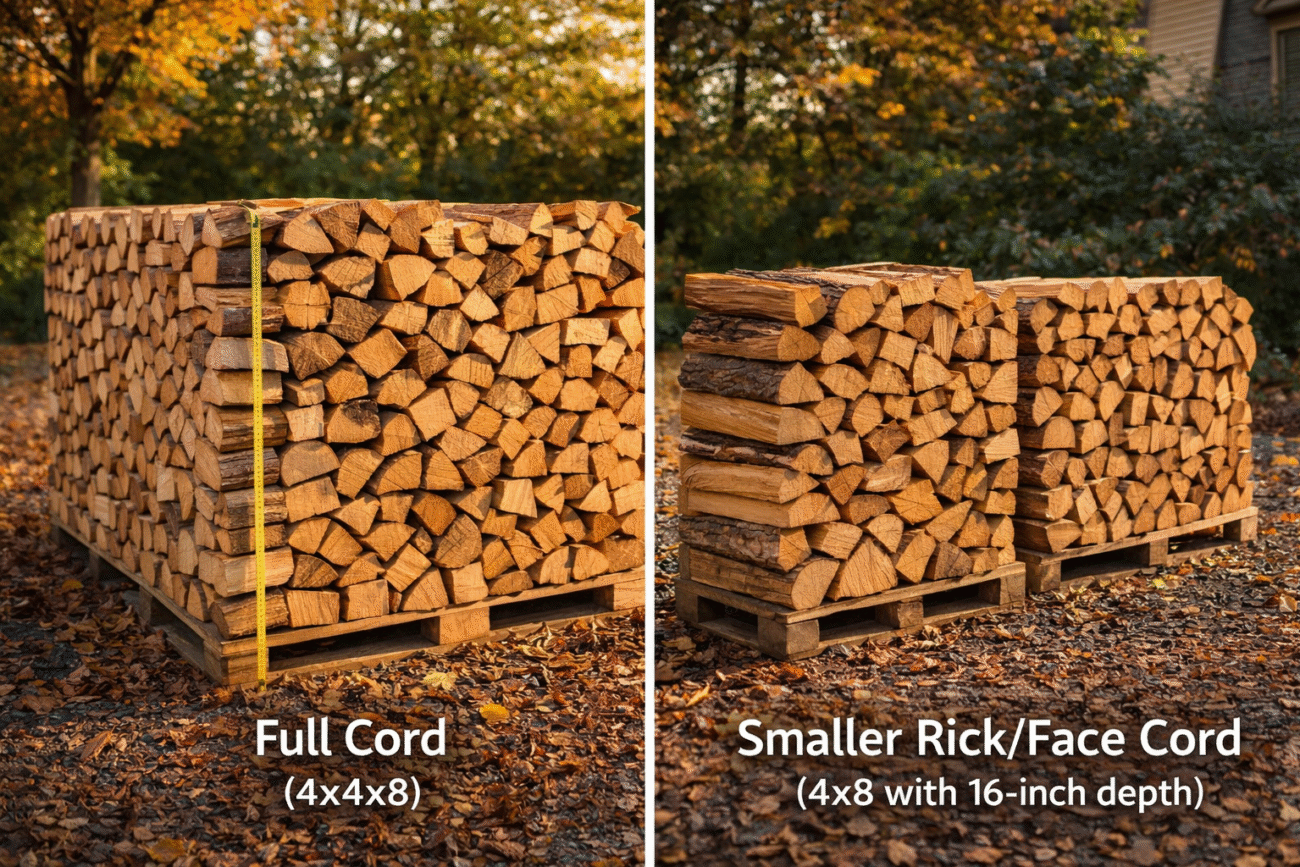
I remember standing in my driveway three winters ago, staring at what my firewood supplier claimed was a “cord” of wood. Something felt off. The pile looked smaller than I expected, and when I measured it myself, I discovered I’d been sold a rick of wood at full cord pricing. That mistake cost me nearly $150 and taught me a valuable lesson about knowing the difference before handing over cash.
When comparing rick of wood vs cord of wood, here’s what you need to know upfront: a full cord measures 128 cubic feet (4′ x 4′ x 8′), while a rick, also called a face cord, typically measures 4 feet high by 8 feet long but only 12 to 16 inches deep, making it roughly one-third of a full cord. This size difference dramatically affects both the price you should pay and how long your firewood supply will last through winter. If you’re buying firewood this year, understanding rick of wood vs cord of wood measurements can save you hundreds of dollars and prevent you from running out of fuel mid-season.
The confusion between these two measurements has frustrated homeowners for decades. Sellers sometimes use the terms interchangeably, leaving buyers uncertain about what they’re actually getting. I’ve seen neighbors pay cord prices for rick deliveries, and I’ve watched people overbuy because they didn’t understand the math. That’s why I’m breaking down everything you need to know about rick of wood vs cord of wood, from exact dimensions and pricing to which option makes sense for your specific heating needs.
Understanding Standard Firewood Measurements
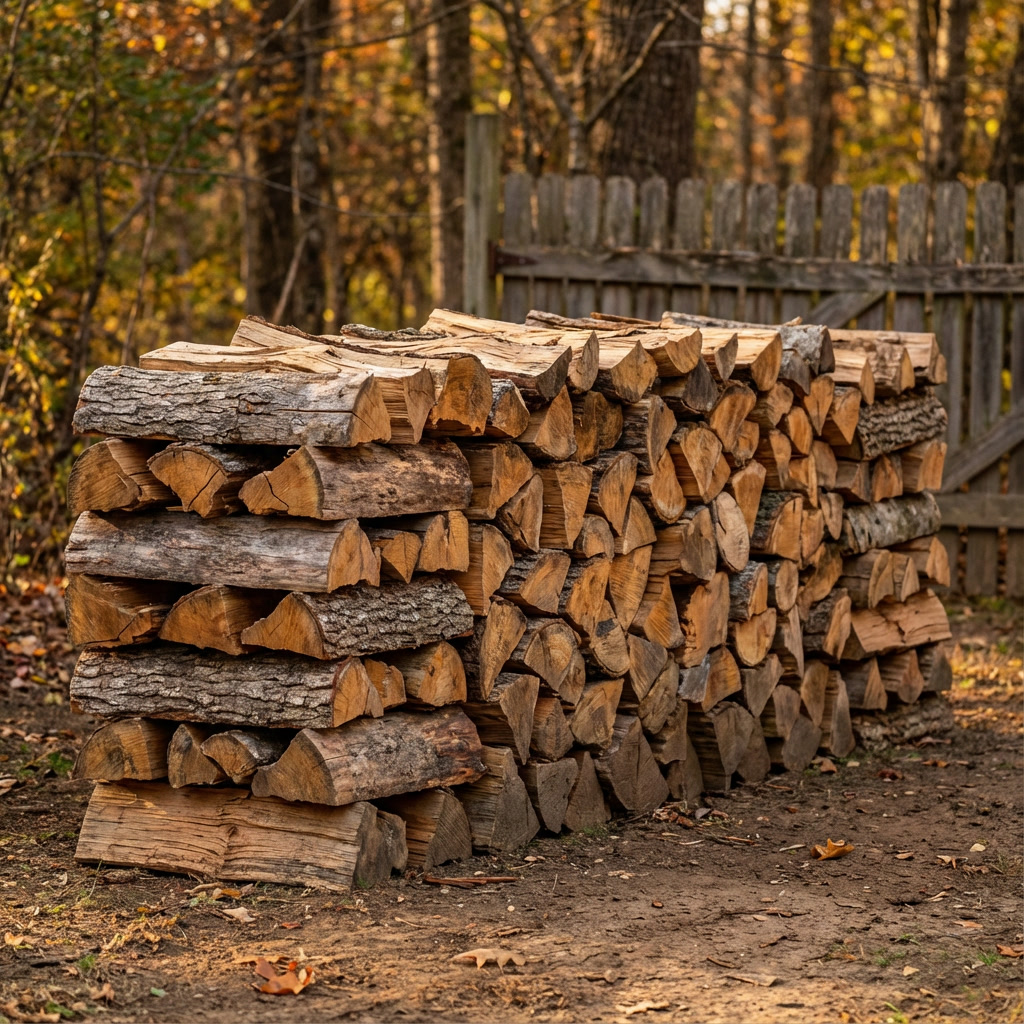
Before we compare rick of wood vs cord of wood directly, you need to understand what makes a measurement “standard” in the firewood industry. The confusion about rick of wood vs cord of wood exists partly because different regions use different terms, but the math stays the same.
A full cord of firewood represents the gold standard in the rick of wood vs cord of wood debate. It’s precisely defined as 128 cubic feet of stacked wood, including the air space between logs. The National Institute of Standards and Technology confirms this measurement as the legal standard across the United States. When someone says “cord” without any qualifier, they should mean this full measurement.
Now, here’s where rick of wood vs cord of wood gets tricky. A rick isn’t a standardized unit like a cord. The term varies by region, and the actual volume depends entirely on log length. In most cases, a rick equals one row of firewood that’s 4 feet high and 8 feet long, but the depth changes based on how long the individual pieces are cut.
Think of it this way: if you stack firewood pieces that are 16 inches long into that 4×8 configuration, you’re getting about 42.67 cubic feet of wood. That’s exactly one-third of a full cord. But if those pieces are 24 inches long, you’d have 64 cubic feet, which equals half a cord. The depth of the stack determines the total volume, and that’s precisely why the rick of wood vs cord of wood comparison confuses so many buyers.
According to the Chimney Safety Institute of America, understanding these measurements before purchasing firewood is crucial for both budgeting and safety planning. You don’t want to run out of fuel during a cold snap because you miscalculated your needs.
How Regional Terms Complicate Rick of Wood vs Cord of Wood
Different parts of the country use different names for the same measurements. In the Midwest, you’ll hear “face cord” more often than “rick.” Down South, “rick” dominates. Out West, some sellers use “run” or “tier.” They’re usually talking about the same thing, a 4×8 stack, but you can’t assume anything.
I always ask three specific questions when buying firewood: What’s the height? What’s the length? And critically, what’s the depth of individual pieces? Those answers tell me exactly what I’m getting, regardless of what the seller calls it.

Rick of Wood Dimensions and Volume Explained
Let’s get specific about what you’re buying when someone offers you a rick of wood. The standard rick measures 4 feet high by 8 feet long, creating that signature 32 square feet of face area. But the volume calculation depends entirely on piece length.
Most firewood is cut to 16-inch lengths because that size fits well in standard wood stoves and fireplaces. When you stack 16-inch pieces in a 4×8 configuration, here’s the math: 4 feet x 8 feet x 1.33 feet (16 inches converted) equals approximately 42.67 cubic feet. Compare that to a full cord’s 128 cubic feet, and you can see a rick gives you exactly one-third the volume.
But what if your wood is cut to 18-inch lengths? That same 4×8 face now contains 48 cubic feet, still less than half a cord. At 24-inch lengths, you’re looking at 64 cubic feet, precisely half a cord. Understanding these conversions is essential when evaluating rick of wood vs cord of wood pricing.
I use the cord of wood calculator whenever I’m buying from a new supplier. You enter the dimensions, and it instantly tells you how many cords you’re actually getting. That simple tool has saved me from overpaying more times than I can count.
Typical Rick Configurations You’ll Encounter
The 16-inch rick remains most common because it matches standard firebox dimensions. Most wood stoves accept 16 to 18-inch logs comfortably. When making rick of wood vs cord of wood comparisons for home heating, the 16-inch configuration gives you the most versatility and makes rick of wood vs cord of wood calculations straightforward.
However, smaller stoves, particularly those designed for cabins or tiny homes, might need shorter pieces. I’ve seen ricks cut to 12-inch or 14-inch lengths for compact installations. These contain even less total volume, maybe 30 to 35 cubic feet per rick.
Larger outdoor furnaces or commercial applications sometimes require 24-inch or even 30-inch pieces. When you’re buying these longer ricks, you’re getting more wood per stack, but you’re also paying for that extra volume. Make sure the price reflects the actual cubic footage you’re receiving.
Full Cord Dimensions and Volume Breakdown
When comparing rick of wood vs cord of wood, a full cord’s dimensions seem straightforward: 4 feet high, 4 feet deep, and 8 feet long. Stack wood in that configuration and you’ve got your 128 cubic feet. But here’s something most people don’t realize when evaluating rick of wood vs cord of wood, the actual solid wood content is only about 70 to 90 cubic feet, depending on how tightly you stack and the log shapes.
That air space matters. Irregularly shaped pieces create more gaps. Round logs stack differently than split wood. The U.S. Forest Products Laboratory research shows that even professional stacking rarely exceeds 85 percent solid wood by volume.
When evaluating rick of wood vs cord of wood, this air space factor affects both measurements equally. A rick has proportional air gaps. A cord has proportional air gaps. The ratio of wood to air stays relatively consistent, which means the volume measurements remain valid for comparison purposes.
I’ve measured hundreds of delivered cords over the years. The standard 4x4x8 stack is most common, but you can achieve 128 cubic feet through different configurations. An 8-foot-high by 2-foot-deep by 8-foot-long stack also equals a cord. A 16-foot-long by 4-foot-high by 2-foot-deep stack, same thing. The total cubic footage matters, not the specific arrangement.
Why Cord Measurements Matter for Heating Plans
Your winter heating requirements determine how many cords you’ll burn. A home using wood as primary heat typically consumes 3 to 6 full cords per heating season, according to the U.S. Energy Information Administration. That’s a big range because it depends on home size, insulation quality, climate severity, and stove efficiency.
If you’re using your wood stove as supplemental heat, maybe you’ll burn 1 to 2 cords. Occasional weekend fires? Half a cord might last all winter. Knowing these patterns helps you decide between buying by the rick or by the cord.
When I’m helping someone calculate their needs, I reference my measuring a cord of firewood guide for the detailed formulas. It walks through exactly how to estimate consumption based on square footage, insulation, and stove type.
Rick of Wood vs Cord of Wood: Direct Size Comparison Table
Let me lay this out in a way that makes the rick of wood vs cord of wood difference crystal clear:
| Measurement | Height | Length | Depth | Volume | Cords |
|---|---|---|---|---|---|
| Full Cord | 4 feet | 8 feet | 4 feet | 128 cu ft | 1.0 |
| Rick (16″ pieces) | 4 feet | 8 feet | 16 inches | 42.67 cu ft | 0.33 |
| Rick (18″ pieces) | 4 feet | 8 feet | 18 inches | 48 cu ft | 0.375 |
| Rick (24″ pieces) | 4 feet | 8 feet | 24 inches | 64 cu ft | 0.5 |
| Half Cord | 4 feet | 8 feet | 2 feet | 64 cu ft | 0.5 |
| Quarter Cord | 4 feet | 4 feet | 2 feet | 32 cu ft | 0.25 |
This table shows you exactly how rick of wood vs cord of wood measurements stack up. Notice how a standard 16-inch rick contains just one-third of a full cord’s volume. That means if you need three cords for winter, you’d actually need nine 16-inch ricks to match that volume.
I keep this rick of wood vs cord of wood table saved on my phone because it’s so useful when evaluating delivery quotes. A supplier might offer a rick at $80 and a cord at $250. Quick math: three ricks at $80 each totals $240 for one cord equivalent. That’s actually cheaper than buying the full cord directly, assuming both options are the same quality wood in your rick of wood vs cord of wood comparison.
Price Differences: Rick of Wood vs Cord of Wood
Here’s where rick of wood vs cord of wood comparisons get financially significant. Pricing in the rick of wood vs cord of wood market varies wildly by region, wood type, and season, but the proportional relationships usually hold steady when you’re evaluating rick of wood vs cord of wood options.
In my area of New England, a full cord of mixed hardwood runs $250 to $350 delivered and stacked. That same supplier typically charges $85 to $120 per rick of 16-inch pieces. Let’s do the math on that mid-range pricing: $100 per rick times three ricks equals $300 for a cord equivalent. The full cord at $300 matches that exactly, so there’s no price advantage either way.
But I’ve seen suppliers charge $90 per rick while selling full cords for $240. In that scenario, three ricks cost $270, making the full cord purchase $30 cheaper. Conversely, other sellers price ricks at $75 each (totaling $225 for three) but charge $280 for a full cord. The rick purchases save $55.
The National Firewood Association reports that 2026 firewood prices have increased about 8 percent nationally compared to last year, driven by higher fuel costs for delivery and increased demand for wood heat as energy prices climb. This inflation affects both rick of wood vs cord of wood pricing similarly.
Seasonal Price Variations in Rick and Cord Sales
Buying firewood in spring or early summer always costs less than fall or winter purchases. I’ve tracked this pattern for over a decade. April through June, you might find full cords for $200 to $275. Come October, those same suppliers charge $275 to $375.
Rick pricing follows the same seasonal pattern in the rick of wood vs cord of wood marketplace. A spring rick might cost $65 to $80, while a November rick jumps to $90 to $125. The percentage increase stays similar whether you’re comparing rick of wood vs cord of wood purchases, making spring the ideal time for either option.
Here’s my strategy: I buy my entire winter supply in May or June when prices bottom out. I stack it properly with good airflow and let it season through summer. By October, my wood is perfectly dry and ready to burn, and I’ve saved 20 to 30 percent compared to desperate late-season buyers.
The best firewood for wood stove use comes from spring purchases because you control the seasoning process. You’re not gambling on whether the seller’s “seasoned” wood is actually dry enough to burn efficiently.
Wood Quality Factors That Affect Rick and Cord Value
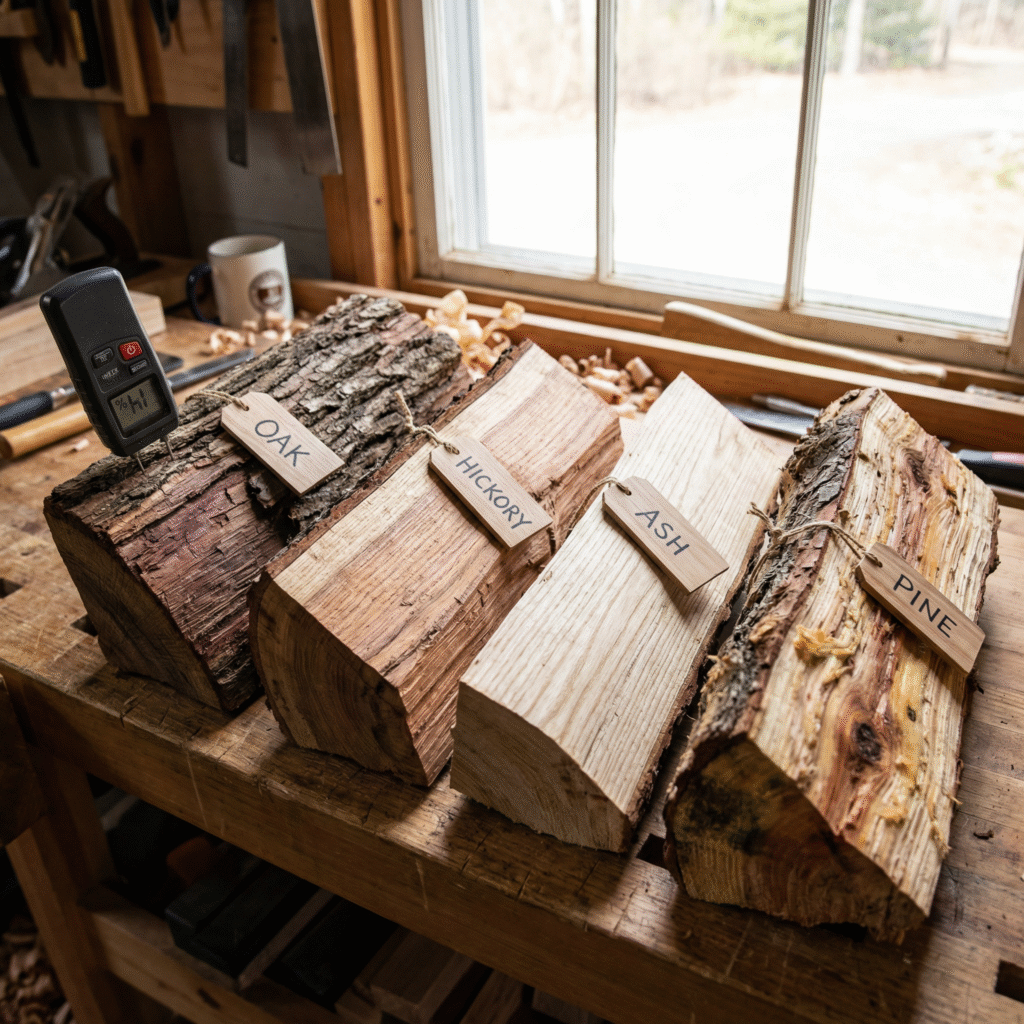
Not all firewood delivers equal heating value, regardless of whether you’re comparing rick of wood vs cord of wood measurements. Wood species dramatically impacts how much heat you’ll get from the same volume, which is why understanding rick of wood vs cord of wood goes beyond just size and price.
Oak, hickory, and ash rank as premium hardwoods, delivering 24 to 30 million BTUs per full cord. That same cord of pine or poplar might only produce 13 to 17 million BTUs. When you’re paying similar prices per cord, you’re getting nearly twice the heat energy from hardwood. The same principle applies to ricks, a rick of oak provides roughly double the heat of a pine rick.
But species isn’t the only quality factor. Moisture content matters just as much. Properly seasoned firewood tests below 20 percent moisture content. Green or wet wood might be 40 to 60 percent moisture, forcing you to waste BTUs boiling off water instead of heating your home.
I always check moisture content with a digital meter before accepting delivery. If the reading exceeds 25 percent, I reject the load or negotiate a steep discount because I’ll need to season it longer myself. Many sellers claim their wood is “seasoned” when it’s really only been sitting a few months. True seasoning takes 6 to 12 months for most species.
The cord of firewood complete guide covers exactly how to test moisture content and what to look for when inspecting delivered wood. Don’t skip these quality checks just because you trust your supplier.
Split Size and Stacking Density Matter Too
Larger splits contain more solid wood and less air space, but they’re harder to light and burn slower. Smaller splits ignite easily but create more air gaps, reducing the solid wood ratio in your stack. For most wood stoves, splits ranging from 3 to 6 inches in diameter work best.
When comparing rick of wood vs cord of wood from different suppliers, ask about split sizing. Uniform, well-split pieces stack tighter and give you more actual wood for your money. Poorly split or round logs waste space and create frustrating fires.
I’ve measured the same 128-cubic-foot cord volume with split sizes ranging from tennis-ball width to forearm thickness. The smaller splits gave me noticeably more pieces and better burning characteristics. The oversized splits looked impressive but performed poorly in my stove.
How to Calculate True Value: Rick of Wood vs Cord of Wood
Smart firewood buying requires comparing apples to apples when you’re analyzing rick of wood vs cord of wood. Here’s my step-by-step process for evaluating rick of wood vs cord of wood offers that ensures you get the best value:
- First, convert everything to cost per cord equivalent. Take the rick price, multiply by the conversion factor (usually 3 for standard 16-inch ricks), and you’ve got your cord-equivalent price. Example: $95 per rick x 3 = $285 per cord equivalent.
- Second, adjust for wood species and quality. If one supplier offers premium oak for $300 per cord and another sells mixed softwood for $220, the oak might actually be cheaper per BTU. Oak at 28 million BTUs per cord costs $10.71 per million BTUs. Pine at 15 million BTUs per cord costs $14.67 per million BTUs. The oak is the better deal despite the higher sticker price.
- Third, factor in delivery and stacking fees. Some sellers charge extra for delivery, especially to rural locations. Others include stacking in their base price while competitors dump the wood wherever. A $250 cord that arrives stacked where you want it beats a $220 cord that lands in a messy pile you’ll spend three hours stacking yourself.
- Fourth, consider storage and seasoning requirements. Buying green wood cheap might save money upfront, but you’ll need covered storage space and 6 to 12 months before you can burn it. For immediate heating needs, paying a premium for truly seasoned wood might be your only viable option.
The what is a rick of wood article provides a detailed calculator that factors these variables into your purchasing decision. I use it every time I’m shopping around for the best deal.
Hidden Costs in Rick and Cord Purchases
Watch for sellers who advertise “delivered” prices in their rick of wood vs cord of wood quotes but then add fuel surcharges, stacking fees, or “access charges” for difficult driveways. I’ve seen quoted rick of wood vs cord of wood prices jump 20 to 30 percent after these extras get tacked on.
Some suppliers offer “deals” on partial ricks or “truck loads” that sound appealing but don’t specify exact volumes. Unless you’re getting precise measurements, you’re gambling. Stick with sellers who clearly state their rick of wood vs cord of wood dimensions and honor those measurements.
Long-distance delivery obviously costs more. If Supplier A is 15 miles away and Supplier B is 45 miles away, Supplier B better offer significantly better wood or pricing to justify the extra fuel cost they’ll pass along to you.
Which Purchase Makes Sense for Your Needs?
The rick of wood vs cord of wood decision ultimately depends on your specific heating situation. Let me break down when each option makes the most sense.
- Buy by the rick if you’re new to wood burning and unsure how much you’ll actually use. Starting with two or three ricks lets you gauge consumption without committing to a full cord. You can always order more if you run low.
- Buy by the rick if you have limited storage space. Three separate rick deliveries spread across fall and winter might fit your shed better than one massive cord pile delivered all at once.
- Buy by the rick if you want flexibility to try different wood species. Order one rick of oak, one of ash, one of cherry, and see which you prefer burning. That variety isn’t practical when buying full cords.
- Buy by the cord if you’re an experienced wood burner who knows your annual consumption. The math usually works out cheaper per unit when buying larger volumes.
- Buy by the cord if you have adequate storage and can handle a large delivery. One transaction beats three for convenience, assuming you can stack and cover everything properly.
- Buy by the cord if you’re buying in spring for the following winter. Bulk purchases of green wood to season yourself save significant money, but you need space and time.
Combining Rick and Cord Purchases Strategically
My personal strategy involves buying a full cord of premium hardwood in spring, usually oak or hickory, for my primary winter heating. That wood seasons all summer and into fall. Then I buy two 16-inch ricks of mixed hardwood in early November for shoulder-season burning. The combination covers my needs perfectly.
This approach gives me bulk pricing on the main supply while adding variety for milder weather. I use the oak for serious cold snaps, overnight burns, and extended heating periods. The mixed-hardwood ricks work great for morning fires or evening warmth when I don’t need maximum BTUs.
When planning your wood heating calculator needs, think about your consumption patterns throughout winter. Do you burn steadily all season, or just during cold spells? Will you use wood as primary or supplemental heat? These questions guide whether rick or cord purchases make more sense.
Storage Requirements: Rick vs Cord
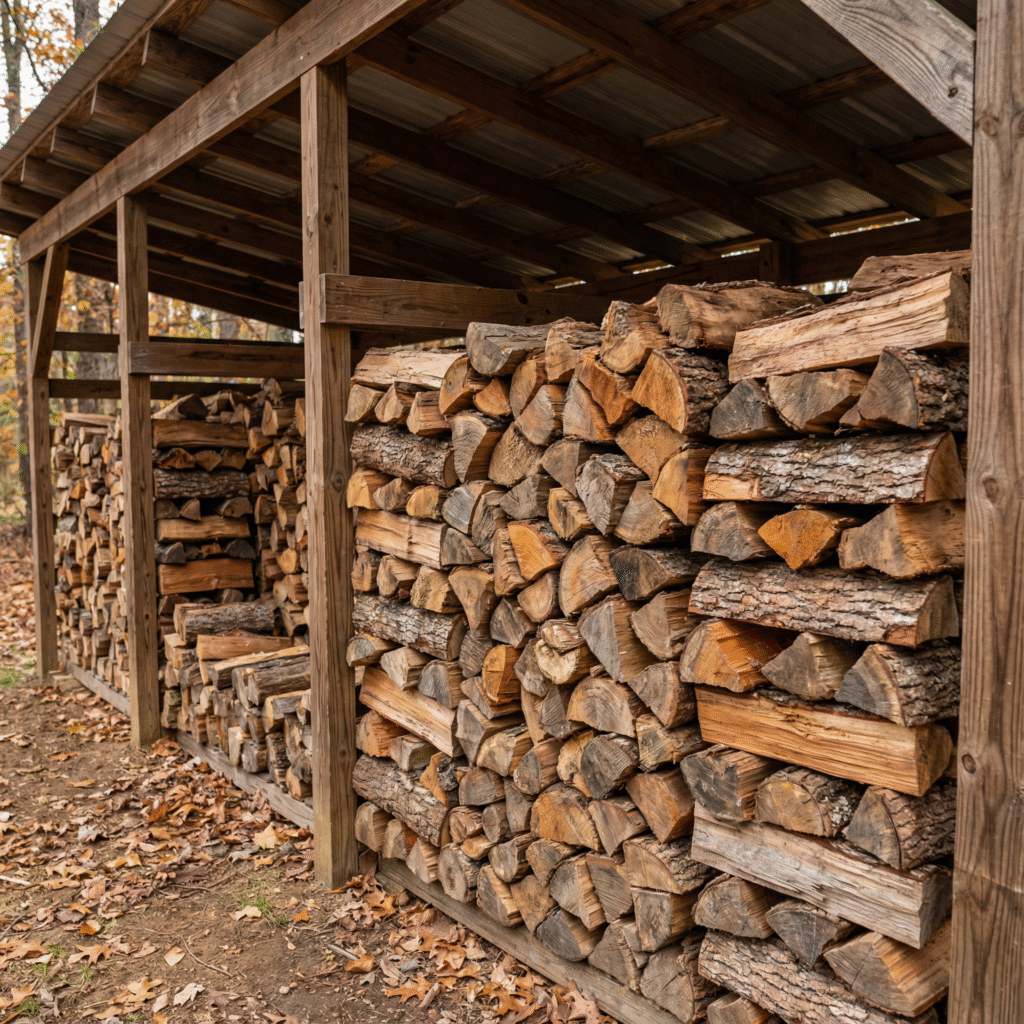
Storage planning is crucial when comparing rick of wood vs cord of wood purchases. A full cord occupies 128 cubic feet of space, but you need extra room for air circulation and weather protection.
I recommend allowing 160 to 180 cubic feet of actual shed or covered space per cord. That extra volume accounts for stacking inefficiencies and the air gaps needed for continued seasoning and drying. For a three-cord winter supply, you’re looking at 480 to 540 cubic feet of dedicated firewood storage.
A standard 16-inch rick needs about 50 to 60 cubic feet of storage space with proper circulation allowances. That’s more manageable for homeowners with limited covered areas. Three ricks require 150 to 180 cubic feet, compared to 160 to 180 for a full cord, so the space difference is minimal.
The real advantage with rick purchases comes from timing flexibility. You might have room for one rick now, another next month, and a third in December. Spreading deliveries matches available storage capacity.
Stack your firewood off the ground using pallets, pressure-treated lumber, or commercial log racks. Ground contact promotes rot and insect infestation. I use cinder blocks with 2x4s across the top, cheap and effective.
Cover the top of your stack with tarps or metal roofing, but leave the sides open for airflow. Completely covering firewood traps moisture and prevents proper seasoning. You want rain protection overhead while maintaining cross-ventilation.
How Long Rick and Cord Supplies Last
Burn-rate estimates help you decide between rick of wood vs cord of wood quantities. A typical wood stove running as primary heat consumes roughly 1 to 1.5 cords per month during peak winter, assuming you’re burning 12 to 16 hours daily.
That same usage pattern would burn through a standard 16-inch rick in about 8 to 12 days. Three ricks cover three to four weeks, a single cord lasts six to eight weeks. These rates assume properly seasoned hardwood burned at reasonable efficiency.
For supplemental heating, maybe evening fires and weekend mornings, a single rick might last three to six weeks. A full cord could carry you through an entire winter burning just a few hours daily.
I tracked my consumption for five winters to develop accurate estimates. My 1,600-square-foot home, heated primarily with a wood stove, burns 4.5 to 5 cords annually. That breaks down to about 0.4 cords per month, or roughly 1.2 16-inch ricks monthly during peak season.
Your consumption will vary based on stove efficiency, home insulation, climate severity, and personal comfort preferences. Start conservatively with your first winter and track actual usage to inform future rick of wood vs cord of wood purchases.
Common Rick of Wood vs Cord of Wood Scams to Avoid

Unfortunately, the firewood industry has its share of dishonest operators who exploit buyers’ confusion about measurements. Here are the scams I’ve encountered most frequently when dealing with rick of wood vs cord of wood sales.
The “short cord” scam involves delivering less than 128 cubic feet while charging full cord prices. I’ve seen suppliers deliver 100 cubic feet, or even 90, claiming it’s a cord. Always measure before paying or at minimum before the truck leaves.
The “green wood sold as seasoned” scam is rampant. Sellers know buyers want dry wood but don’t want to wait the required seasoning time. They’ll split wood in August and call it “seasoned” by October. Real seasoning takes 6 to 12 months for most species.
The “loose rick” scam involves throwing pieces randomly in a truck bed instead of stacking properly. The delivered pile might measure 4×8 on the face, but the pieces aren’t aligned, creating massive air gaps. You’re getting maybe 30 cubic feet instead of the expected 42.
The “mystery wood species” scam sells inferior softwood at hardwood prices. If you can’t identify wood species and the seller won’t specify what they’re delivering, assume the worst. Demand clarity before purchase.
The “hidden fees” scam advertises low per-cord or per-rick prices, then adds stacking fees, delivery charges, fuel surcharges, and weekend premiums that inflate the final cost by 30 to 50 percent.
Protecting Yourself from Firewood Fraud
Always get written quotes that specify wood species, piece length, delivery date, total volume in cords or cubic feet, and any additional fees. A verbal agreement is worthless if a dispute arises.
Measure delivered wood before paying. Bring a tape measure and calculate the volume yourself. I’ve caught short deliveries on at least five occasions by physically measuring the stack.
Test moisture content with a digital meter. Don’t trust a seller’s claim that wood is “seasoned” or “dry.” Verify it yourself. Meters cost $20 to $40 and pay for themselves the first time they help you reject unsuitable wood.
Know the going rates in your area by calling multiple suppliers for quotes. If one seller is drastically cheaper than others, be suspicious. They’re probably delivering inferior quality, short measurements, or wet wood.
Check online reviews and ask for references. Reputable firewood suppliers should have established businesses with verifiable customer feedback. Avoid fly-by-night operations and “guy with a truck” sellers unless you personally know their reliability.
The measuring a cord of firewood guide includes a section on verification techniques that have helped me avoid bad deliveries over the years. It’s worth reading before your first purchase.


FAQs: Rick of wood vs cord of wood
What is the main difference between a rick of wood and a cord of wood?
A full cord of wood measures 128 cubic feet (4′ x 4′ x 8′), while a rick of wood, also called a face cord, typically measures 4 feet high by 8 feet long with a depth of 12 to 16 inches, equaling approximately one-third of a full cord. The key difference is depth: a cord is 4 feet deep, while a standard rick is only 16 inches deep.
How many ricks equal a full cord of wood?
Three standard ricks with 16-inch piece lengths equal one full cord of wood. However, this conversion depends on the actual depth of the pieces. If pieces are cut to 24 inches, only two ricks equal a cord. Always verify piece length before calculating equivalents.
Is it cheaper to buy a rick or a cord of firewood?
Price per unit volume usually favors cord purchases, but not always. Compare the per-cord-equivalent cost by multiplying rick prices by three (for 16-inch pieces). Factor in your storage capacity, immediate needs, and whether you can handle a large delivery. Sometimes buying by the rick offers more flexibility despite slightly higher per-volume costs.
How do I verify I’m getting a full rick or cord of wood?
Measure the delivered stack’s height, length, and depth in feet, then multiply to get cubic feet. A full cord should measure 128 cubic feet regardless of configuration. A standard 16-inch rick should measure approximately 42.67 cubic feet. Use a tape measure and calculate before paying the delivery driver.
What type of wood gives the best value in a rick or cord?
Dense hardwoods like oak, hickory, ash, and maple deliver 24 to 30 million BTUs per cord, providing the best heating value. These species cost more upfront but produce significantly more heat per volume than softwoods like pine or fir, which generate only 13 to 17 million BTUs per cord.
Can I season firewood myself after buying a green rick or cord?
Yes, buying green wood and seasoning it yourself can save 20 to 40 percent compared to seasoned wood prices. Stack the wood in a single row with good airflow, cover the top but leave sides open, and allow 6 to 12 months for proper seasoning. Test with a moisture meter until readings drop below 20 percent.
How long will a rick or cord of firewood last during winter?
A full cord used as primary heat typically lasts 6 to 8 weeks, while a standard 16-inch rick lasts 8 to 12 days under the same conditions. For supplemental heating or occasional fires, a rick might last 3 to 6 weeks and a cord could last an entire winter season. Actual duration depends on stove efficiency, home insulation, climate, and burning patterns.
Making Your Rick of Wood vs Cord of Wood Decision
You’ve now got all the information you need to make smart firewood purchases. The rick of wood vs cord of wood comparison isn’t complicated once you understand the basic measurements and do simple volume calculations.
Remember the core principles: a full cord equals 128 cubic feet, a standard 16-inch rick equals about 43 cubic feet, and three ricks roughly equal one cord. Pricing should reflect these volume differences proportionally, though seasonal variations, delivery costs, and wood quality all impact final value.
Buy by the rick if you’re new to wood burning, have limited storage, want species variety, or prefer spreading purchases across the season. Buy by the cord if you’re experienced, have adequate storage space, know your annual consumption, and want the convenience of a single large delivery.
Always verify measurements, test moisture content, know your wood species, and get clear written quotes before committing to purchases. The few minutes spent measuring and calculating can save you hundreds of dollars and prevent mid-winter shortages.
Whether you choose rick or cord purchases, investing in quality firewood makes every fire more enjoyable and your heating system more efficient. Take the time to find reputable suppliers, properly store your wood, and burn it at optimal moisture levels for maximum heat output and minimal creosote buildup.
