
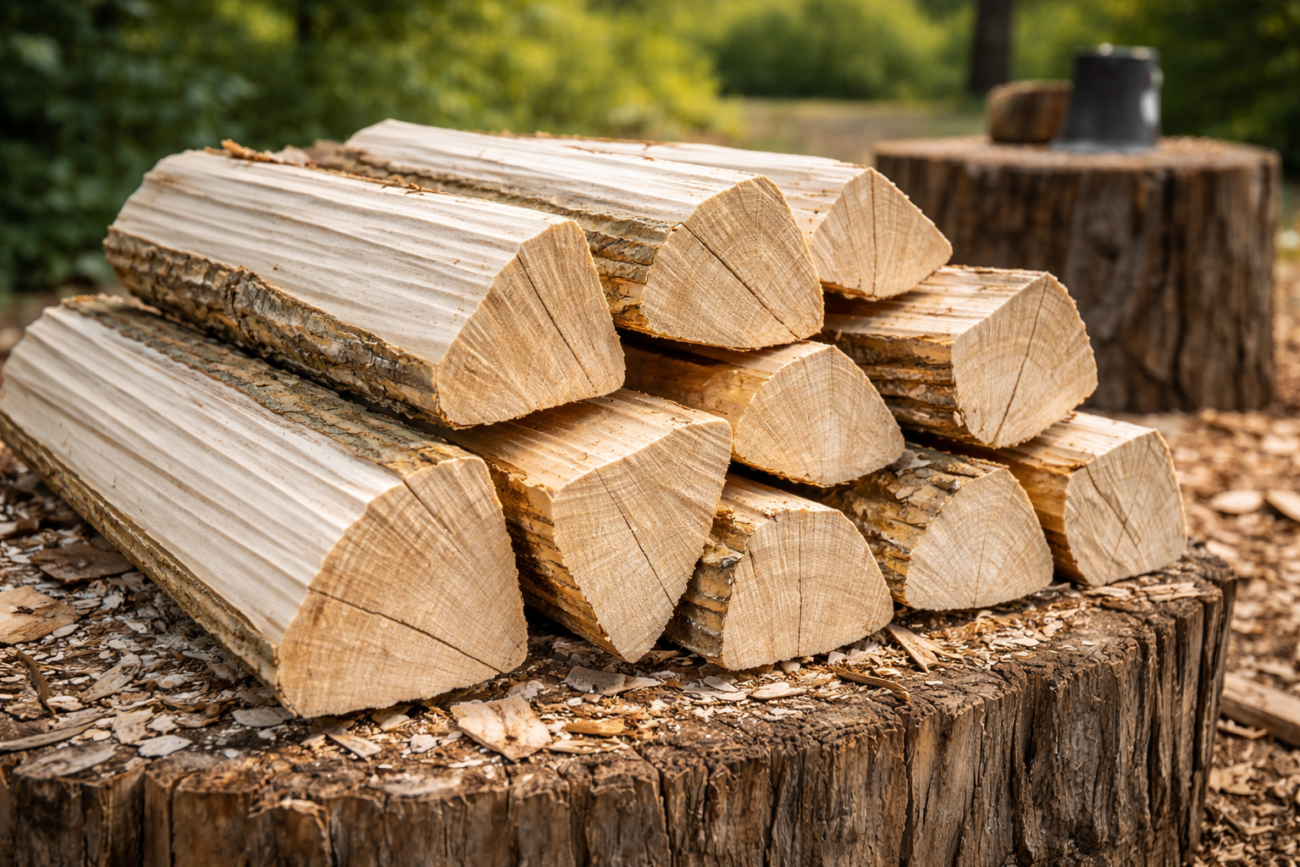
If you’re wondering whether poplar wood is a good choice for your wood stove or project, here’s the short answer: poplar wood is a fast-growing hardwood that burns quickly with moderate heat output, making it best suited as kindling or shoulder season fuel rather than your primary winter heating source. While poplar wood is abundant and easy to split, it produces less heat per cord than traditional firewood like oak or maple.
Many wood stove owners find themselves with access to poplar wood, whether from land clearing, storm damage, or simply because it’s cheaper than premium hardwoods. But is it actually worth burning? That’s what we’re going to sort out today. You’ll learn exactly what poplar wood brings to the table, when it makes sense to use it, and when you’re better off choosing something else.
Poplar wood gets an unfair reputation in heating circles. Some folks dismiss it entirely, while others swear by it for specific purposes. The truth sits somewhere in the middle, and understanding the characteristics of poplar wood helps you make smart decisions about your fuel supply.
What Is Poplar Wood and Why Does It Matter?
Poplar wood comes from trees in the Populus genus, which includes several species common across North America. You’ve probably seen these trees, they’re the fast-growing ones with triangular or heart-shaped leaves that seem to pop up everywhere. The most common types include Eastern cottonwood, quaking aspen, and the hybrid poplars that grow like weeds in wet areas.
Here’s what makes poplar wood different from other hardwoods: despite being classified as a hardwood (because it comes from a deciduous tree), poplar wood is actually quite soft. The wood density ranges from 22 to 31 pounds per cubic foot when dry, which puts it at the lower end of the hardwood spectrum. For comparison, oak weighs around 45 pounds per cubic foot.
According to the U.S. Forest Service, poplar species are among the fastest-growing hardwoods in temperate regions, which explains why poplar wood is so readily available. These trees can add several feet of growth per year under good conditions, making them popular for reforestation projects and erosion control.
The wood itself has a pale color, ranging from white to light brown, with minimal grain pattern. When you split poplar wood, you’ll notice it’s soft enough that your maul goes through easily, which is both a blessing and a curse. Easy splitting means less work, but that low density also means less heat energy stored in each piece.
Physical Characteristics of Poplar Wood
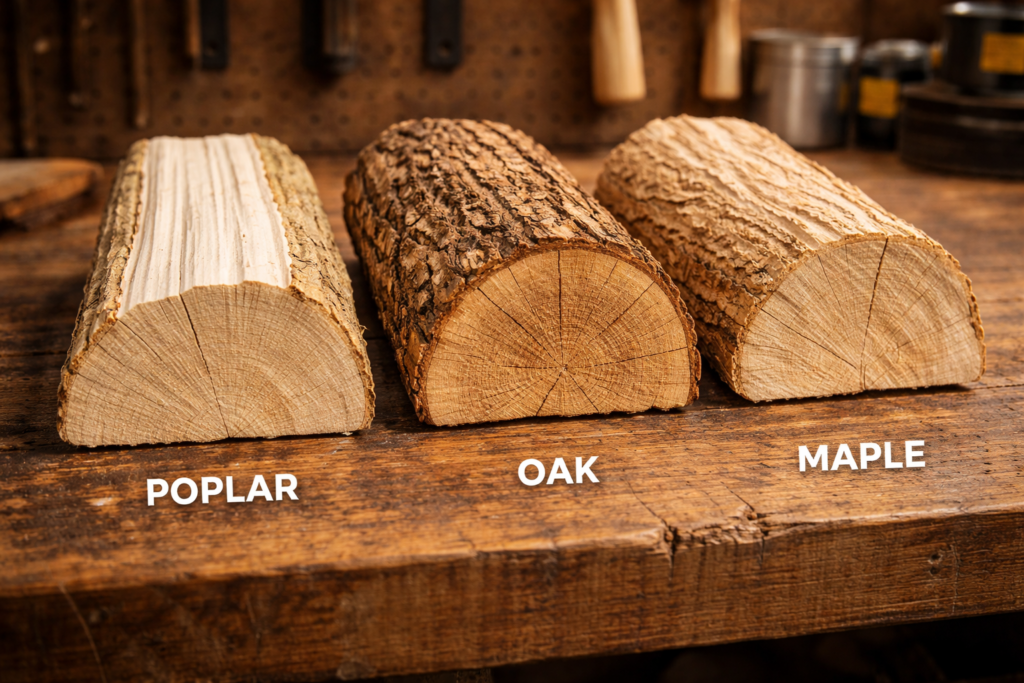
Understanding the physical properties of poplar wood explains a lot about its performance. Let’s break down what you’re actually dealing with when you stack a cord of this stuff.
Density and Weight
Poplar wood’s low density is probably its most defining characteristic. When properly seasoned, poplar wood weighs significantly less than premium hardwoods. This matters because wood density directly correlates with heat output. You’ll need roughly 1.5 cords of poplar wood to equal the heat energy from one cord of oak.
The upside? Poplar wood is much easier to handle. If you’re someone who struggles with heavy lifting or you’re trying to manage your firewood supply solo, the lighter weight of poplar wood can be a real advantage. I’ve seen older homeowners specifically choose poplar wood for this reason, even though they know it means burning more volume.
Moisture Content and Seasoning
Fresh-cut poplar wood has a high moisture content, often exceeding 60% when green. But here’s where poplar wood shines compared to denser hardwoods: it seasons remarkably fast. While oak might need 18-24 months to dry properly, poplar wood can be ready to burn in 6-8 months under good conditions.
The U.S. Department of Energy recommends burning wood with moisture content below 20% for optimal efficiency. Poplar wood reaches this threshold quicker than most alternatives, which means you can turn trees into usable fuel faster. For anyone managing their own woodlot, this quick turnaround makes poplar wood attractive despite its lower heat output.
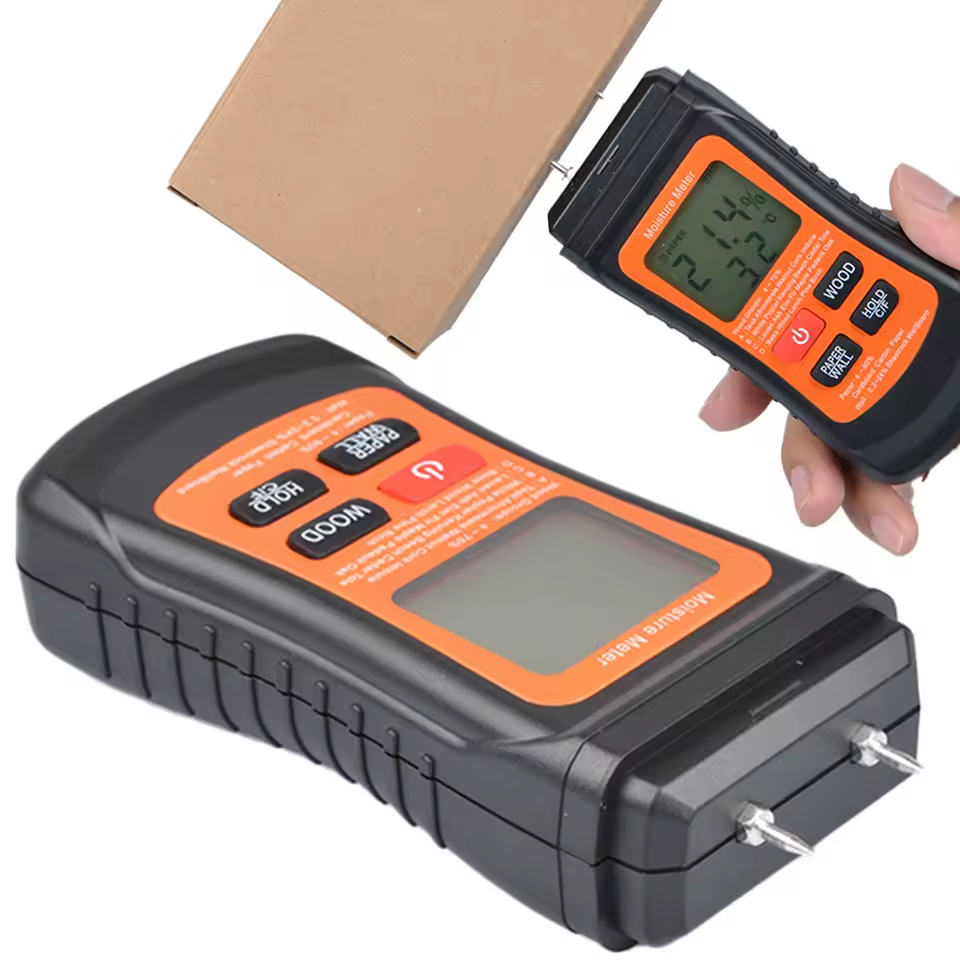
You should still use a moisture meter to verify your poplar wood is ready, just like any firewood. Don’t assume it’s dry just because it’s been sitting for six months.

Grain and Splitting Properties
Poplar wood has a straight, even grain with few knots, assuming you’re dealing with younger trees. This makes it split like a dream. Even gnarly pieces surrender to a sharp maul without much fight. If you’ve ever battled elm or sycamore, you’ll appreciate how cooperative poplar wood is by comparison.
The downside of this soft, straight grain? Poplar wood doesn’t hold together as well during burning. It tends to crumble into coals faster than harder woods, which affects burn time and heat retention.
Poplar Wood as Firewood: The Real Performance
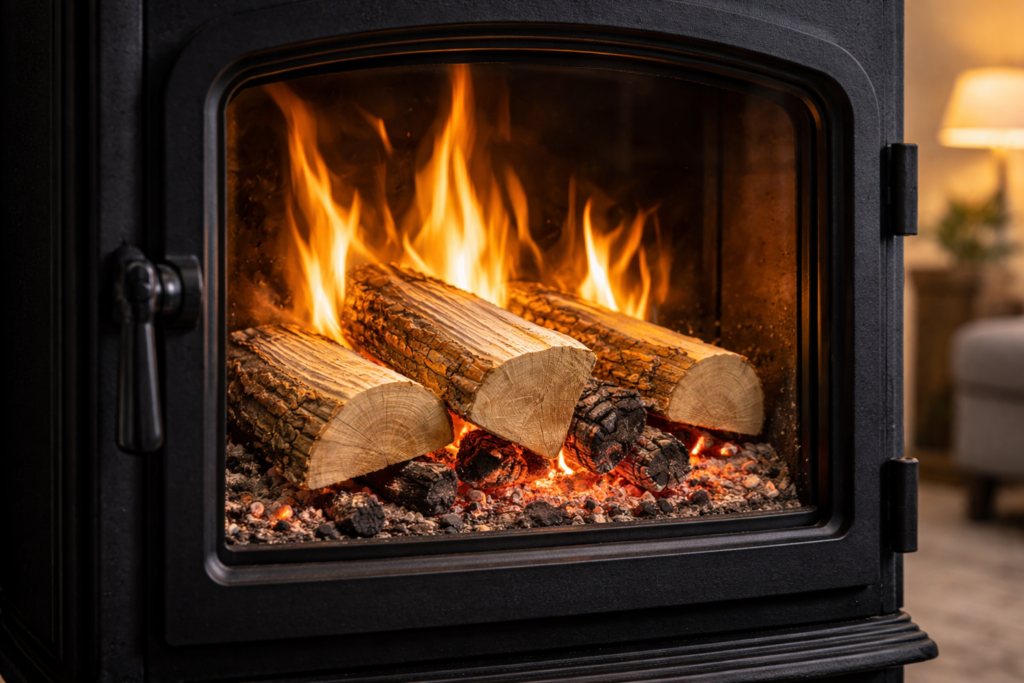
Now we get to what everyone really wants to know: how does poplar wood actually perform when you’re trying to heat your home?
Heat Output and BTU Rating
Let’s talk numbers. Poplar wood produces approximately 13-14 million BTUs per cord when properly seasoned. That’s not terrible, but it’s not great either. Compare that to oak at 24-28 million BTUs per cord, or even ash at 20 million BTUs, and you can see why poplar wood doesn’t top anyone’s preferred firewood list.
What does this mean in practical terms? You’ll burn through poplar wood roughly twice as fast as premium hardwoods to maintain the same heat output. During a cold snap, you might find yourself loading your stove every 3-4 hours with poplar wood instead of every 6-8 hours with better fuel.
Burn Characteristics
Poplar wood burns hot initially but doesn’t sustain heat well. You’ll get decent flames when you first load it, but those flames die down faster than you’d like. The coals don’t last long either, which makes maintaining an overnight burn challenging.
Here’s where poplar wood actually works well: shoulder season burning in spring and fall. When you don’t need massive heat output and you just want to take the chill off, poplar wood performs admirably. It gives you enough warmth without overheating your space, and the quick burn time means you’re not stuck with a roaring fire on a mild day.
Many experienced wood burners use poplar wood strategically. Mix it with denser hardwoods, and you can extend your premium wood supply while still getting decent performance. A load that’s 25-30% poplar wood and 70-75% oak or maple burns reasonably well and saves you money.
Smoke and Creosote Production
Properly seasoned poplar wood produces moderate smoke and creosote. The key phrase there is “properly seasoned.” Burn wet poplar wood, and you’ll create a creosote factory in your chimney. The high initial moisture content of poplar wood means you absolutely must let it dry thoroughly.
When burned correctly, poplar wood doesn’t produce significantly more creosote than other woods. You’ll still need to follow good chimney maintenance practices, but poplar wood won’t wreck your chimney if you’re responsible about seasoning and burning technique.
The Chimney Safety Institute of America emphasizes that any wood burned with high moisture content creates dangerous creosote buildup. This applies to poplar wood just as much as oak or maple.
Best Uses for Poplar Wood
Rather than dismissing poplar wood entirely, let’s look at where it actually excels.
Kindling and Fire Starting
This is where poplar wood truly shines. The low density and straight grain make it perfect for getting fires started quickly. Split poplar wood into small pieces, and you’ve got excellent kindling that catches fast and produces enough flame to ignite larger hardwood pieces.
I keep a supply of thin poplar wood strips specifically for fire starting. They’re more reliable than newspaper or commercial fire starters, and they’re free if you have access to poplar trees.
Shoulder Season Heating
From late March through May and again from September through early November, you don’t need the intense heat output of oak or hickory. Poplar wood provides exactly the right amount of warmth for these mild periods. You can burn it without cooking yourself out of the house, and the quick burn time means you’re not committed to hours of heat when temperatures fluctuate.
This is particularly useful if you’re heating a small cabin where excessive heat becomes uncomfortable quickly.
Mixing with Premium Hardwoods
Creating a blend of poplar wood and higher-BTU hardwoods extends your premium wood supply while maintaining acceptable heat output. The poplar wood burns quickly and hot initially, helping ignite the denser wood, while the hardwoods provide sustained heat.
A good ratio is one piece of poplar wood to every three or four pieces of hardwood. This gives you the quick heat you want when reloading a cold stove while ensuring you don’t burn through your wood pile too fast.
Outdoor Fire Pits and Campfires
For recreational fires where heat output doesn’t matter as much, poplar wood works fine. It produces decent flames for ambiance, and the quick burn time means you’re not stuck tending a fire for hours if you want to head inside.
Non-Burning Applications
Poplar wood has legitimate uses beyond burning. The wood is popular for:
- Pallets and crating (the low cost makes it economical)
- Interior furniture components (lightweight and easy to work)
- Pulpwood for paper production
- Oriented strand board (OSB) manufacturing
If you have quality poplar wood without rot or defects, you might actually get better value selling it to a mill than burning it. Check local markets before automatically relegating all your poplar wood to the wood pile.
Pros and Cons of Using Poplar Wood
Let’s lay out the advantages and disadvantages in clear terms so you can make informed decisions.
Advantages of Poplar Wood
- Fast Seasoning Time: Poplar wood dries in roughly half the time of oak or hickory. For anyone who needs firewood quickly or wants to turn storm-damaged trees into fuel in one season, this matters. You can cut poplar wood in spring and burn it by fall if you split and stack it properly.
- Easy Splitting: The straight grain and low density mean even someone with limited strength can split poplar wood. You won’t need a hydraulic splitter or hours of back-breaking labor. A decent maul and good technique handle poplar wood easily.
- Widely Available: Poplar trees grow prolifically across much of North America. Many landowners view them as junk trees and will let you harvest them for free. This abundance makes poplar wood economically attractive, especially if you’re heating on a tight budget.
- Lightweight Handling: Moving and stacking poplar wood requires less physical effort than denser hardwoods. For older individuals or those with physical limitations, this practical advantage shouldn’t be dismissed.
- Good for Specific Applications: As kindling, shoulder season fuel, and for mixing with premium hardwoods, poplar wood performs well. It’s not useless, it’s just specialized.
Disadvantages of Poplar Wood
- Low Heat Output: The 13-14 million BTU per cord rating means you’ll burn significantly more volume to achieve the same heat as premium hardwoods. This matters if you’re trying to heat through a cold winter or if storage space is limited.
- Short Burn Time: Poplar wood doesn’t produce long-lasting coals. You’ll reload your stove more frequently, which gets old during winter when you’d prefer to load up at bedtime and wake to a warm house.
- Higher Volume Required: The low density means you need more space to store an equivalent amount of heat energy. If you’re working with limited storage, the volume requirements of poplar wood become problematic.
- Not Suitable for Long Overnight Burns: Anyone who depends on their wood stove for primary heat knows the value of a good overnight burn. Poplar wood simply doesn’t deliver the sustained heat needed to keep your house warm through a winter night without multiple reloads.
- Quality Can Vary Significantly: Poplar wood from different species and growing conditions varies in quality. Some poplar wood burns decently, while other batches seem to disappear in your stove without producing much useful heat.
Here’s a comparison table showing how poplar wood stacks up against common firewood choices:
| Wood Type | BTU per Cord | Seasoning Time | Splitting Difficulty | Best Use |
|---|---|---|---|---|
| Poplar Wood | 13-14 million | 6-8 months | Easy | Kindling, shoulder season |
| Oak | 24-28 million | 18-24 months | Moderate | Primary winter heating |
| Ash | 20 million | 12 months | Easy | All-purpose heating |
| Maple | 18-24 million | 12-18 months | Moderate | Primary heating |
| Pine | 14-17 million | 6-9 months | Easy | Kindling, quick heat |
| Hickory | 26-28 million | 12-24 months | Difficult | Maximum heat output |
How to Source and Prepare Poplar Wood
If you’ve decided poplar wood fits your needs, here’s how to get it and prepare it properly.
Where to Find Poplar Wood
Poplar trees grow in wet areas, along streams and rivers, and in disturbed sites. Check these locations:
- Ask local landowners about clearing unwanted poplar trees
- Contact your municipality about trees removed during utility line clearing
- Check with tree service companies (they often need to dispose of poplar wood)
- Explore land clearing sites where developers are preparing for construction
- Look for storm-damaged trees after severe weather
Many people will let you harvest poplar wood for free just to have it removed. The trees grow fast and self-seed aggressively, making them nuisances in many situations.
Cutting and Splitting Poplar Wood
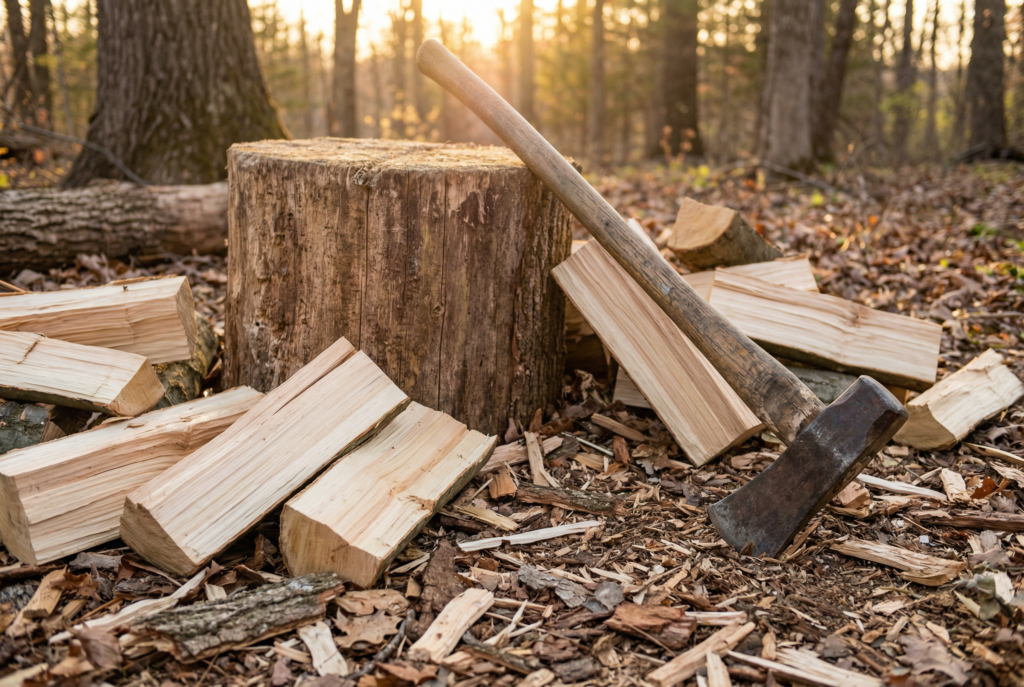
Cut poplar wood to length while it’s fresh. The wood splits much easier when green than after it starts drying. Use a chainsaw with a sharp chain, poplar wood is soft enough that a dull chain will grab and make a mess.
Split poplar wood into pieces sized for your stove. Because it’s a lower-density wood, you can go slightly larger than you would with oak. The increased airflow through the lighter wood helps combustion.
Stack your split poplar wood in a location with good sun exposure and air circulation. The faster it dries, the sooner you can use it. Single-row stacks work well for poplar wood because airflow reaches every piece.
Cover the top of your stack but leave the sides open. You want rain and snow off the wood, but you need air movement to carry moisture away.
Testing for Dryness
Don’t assume your poplar wood is ready after six months. Test it. A moisture meter takes the guesswork out of the equation. Split a piece, measure the freshly exposed surface, and look for readings below 20%.
Other indicators that poplar wood is seasoned:
- Cracks appear on the ends
- The bark falls off easily
- Pieces feel noticeably lighter
- Two pieces knocked together sound hollow rather than dull
Storage Considerations
Because you need more volume of poplar wood compared to denser hardwoods, plan your storage accordingly. If you typically burn three cords of oak per winter, you’ll need roughly 4.5 to 5 cords of poplar wood to generate equivalent heat.
Make sure your storage area can accommodate this extra volume. Some wood burners keep poplar wood separate from premium hardwoods to avoid mixing them unintentionally.
Burning Poplar Wood Safely and Efficiently
Using poplar wood effectively requires understanding how to burn it properly.
Stove Loading Techniques
Load poplar wood with more pieces than you would use with dense hardwood. The lower density means you can fit more wood in your firebox without restricting airflow. This helps compensate for the lower heat output per piece.
Start with a hot coal bed before adding poplar wood. The wood ignites quickly, but you want those initial flames catching on coals that can sustain combustion.
Mix poplar wood with hardwoods as mentioned earlier. Position the poplar wood pieces where they’ll catch first, helping ignite the denser wood around them.
Air Control Settings
Poplar wood burns best with moderate air settings. Too little air, and the quick-burning nature of the wood creates smoke without much heat. Too much air, and you’ll blow through your fuel supply without capturing the available energy.
Start with your air control more open than you would for oak, then adjust as the fire establishes. The goal is active flames that consume the wood efficiently without wasteful flaring.
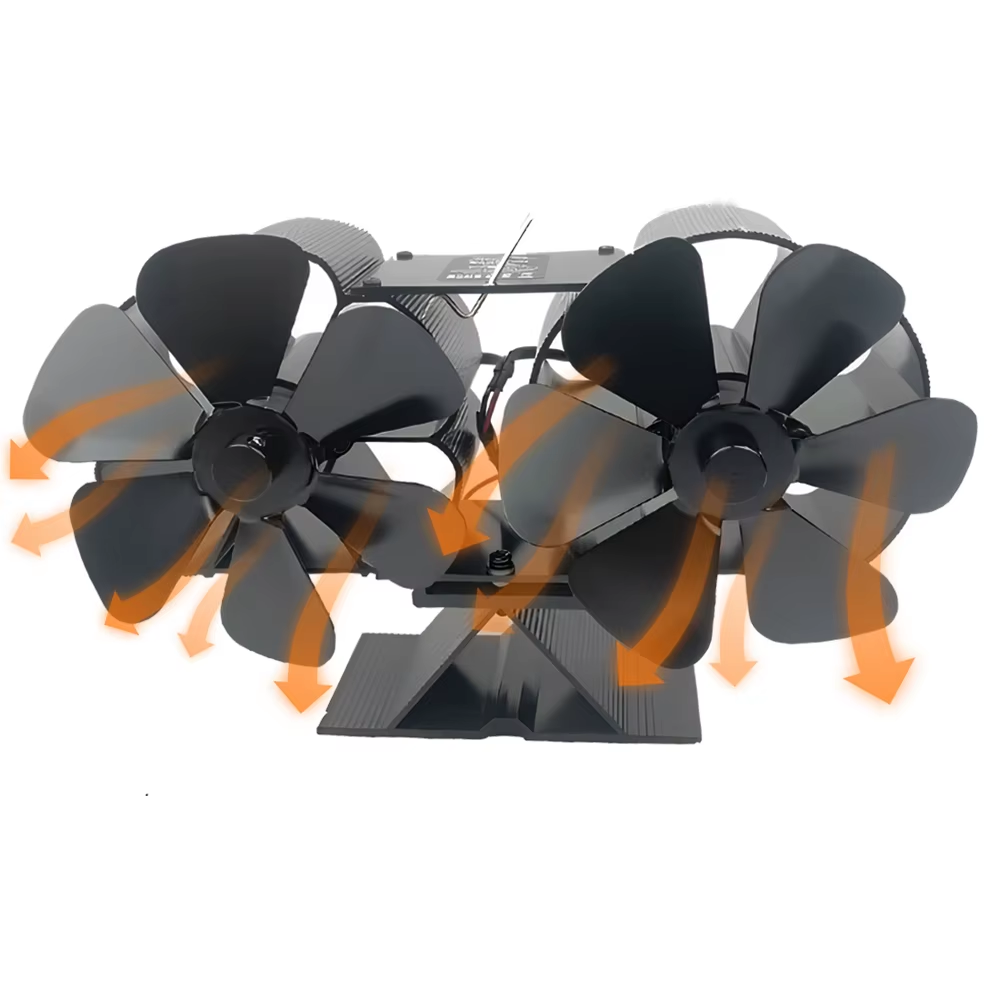
Maximizing Heat Output
To get the most from poplar wood:
- Burn it during the day when you’re around to reload frequently
- Use it in combination with thermal mass (if your stove includes soapstone or a masonry surround)
- Keep loads appropriate for current heating needs rather than overfiring
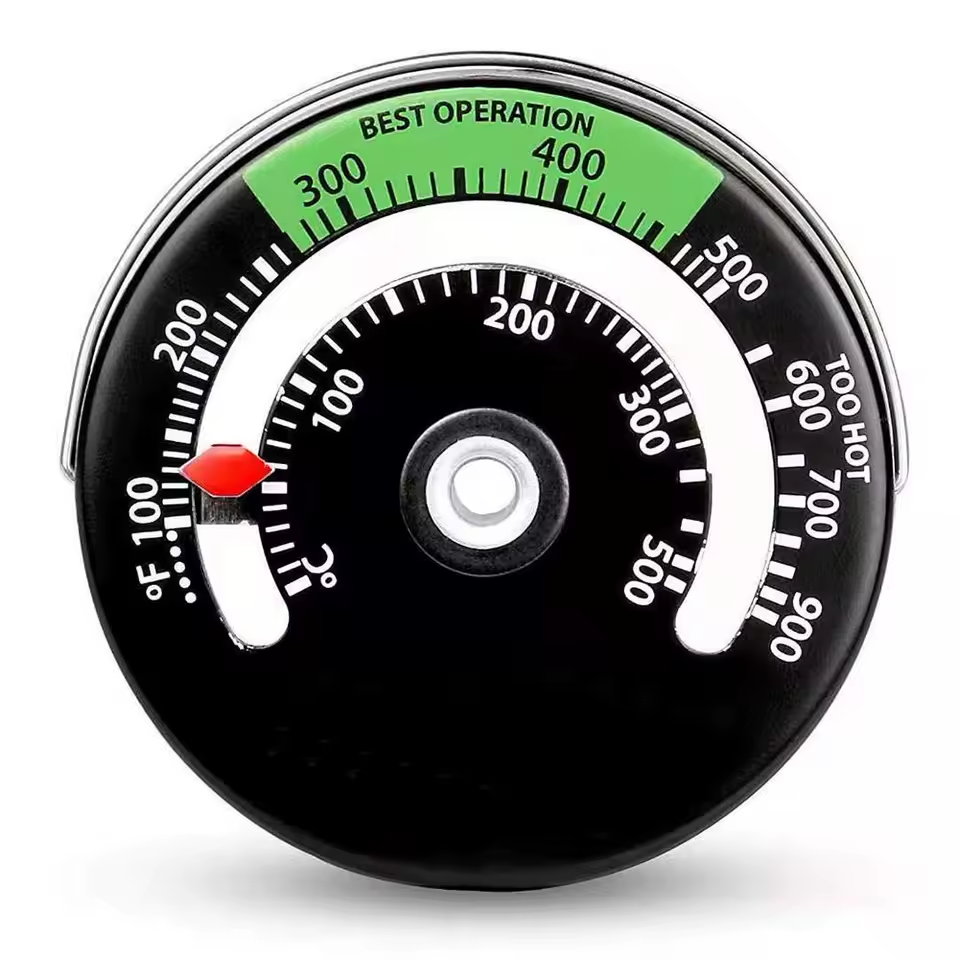
- Maintain your stove’s peak operating temperature range per manufacturer specifications
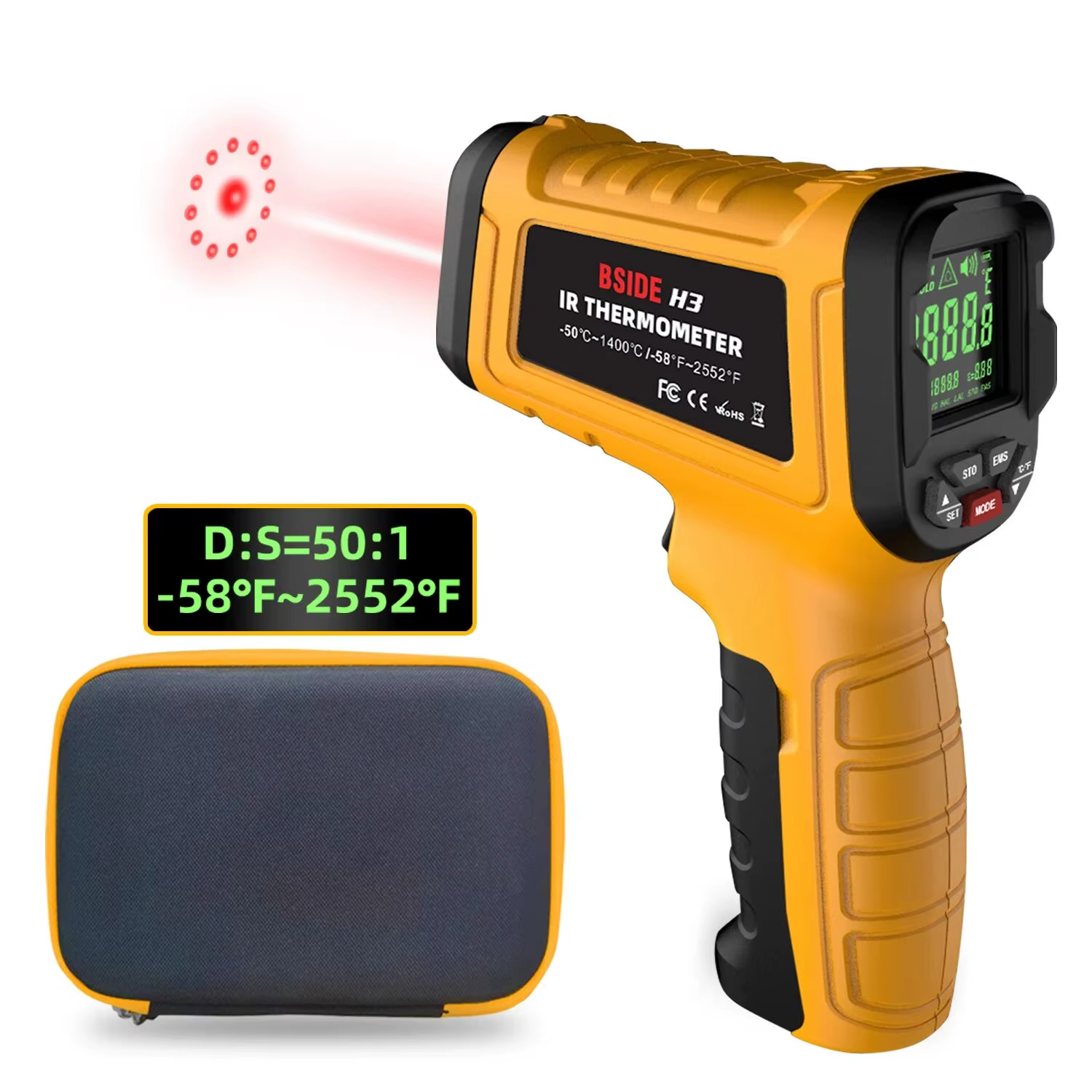
A stove thermometer helps you monitor performance and adjust as needed.
Creosote Prevention
Even though properly seasoned poplar wood doesn’t create excessive creosote, follow best practices:
- Only burn fully dried poplar wood (below 20% moisture)
- Maintain active flames rather than smoldering fires
- Ensure adequate combustion air reaches the fire
- Schedule regular chimney inspections and cleaning
- Never restrict air flow too much when burning poplar wood
The National Fire Protection Association recommends annual chimney inspections for anyone burning wood regularly.
Poplar Wood Compared to Other Common Firewoods
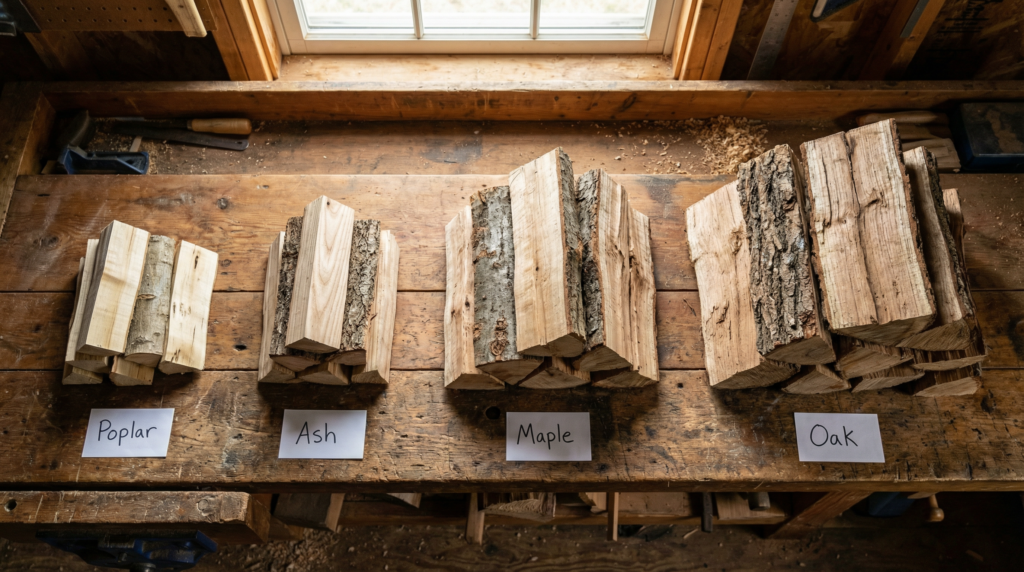
Understanding how poplar wood measures up against alternatives helps you decide when to use it.
Poplar vs. Oak
Oak represents the gold standard for firewood in many regions. It produces nearly double the BTUs of poplar wood and burns for hours on a single load. However, oak requires patience, you’ll wait up to two years for proper seasoning.
Use oak as your primary fuel and poplar as a supplement. The combination balances availability, cost, and performance better than relying on either wood exclusively.
Poplar vs. Pine
Pine and poplar share similar characteristics: both season quickly, split easily, and produce moderate heat output. Pine has a slight edge in BTU content (14-17 million per cord) and burns slightly longer.
The main difference is resin content. Pine produces more creosote if burned improperly, while poplar is relatively clean-burning when dry. For kindling and shoulder season use, they’re roughly equivalent.
Poplar vs. Birch
Birch offers better heat output than poplar (20-21 million BTUs per cord) while still seasoning in under a year. If you have access to birch, it’s generally a better choice for primary heating.
Poplar wood wins on splitting ease and availability in many regions. Birch can be difficult to split when dry and isn’t as widely distributed across North America.
Poplar vs. Ash
Ash is probably the ideal comparison point. It seasons reasonably fast (12 months), splits easily, and produces substantially more heat than poplar . Ash burns cleanly and creates excellent coals.
The catch? Emerald ash borer has devastated ash populations across much of North America. Dead ash is plentiful right now, but that won’t last forever. Poplar might become more valuable as ash becomes scarce.
According to Penn State Extension, managing ash trees affected by emerald ash borer includes harvesting them for firewood before they deteriorate completely.
Environmental and Economic Considerations
Looking at poplar wood from broader perspectives reveals additional factors worth considering.
Sustainability
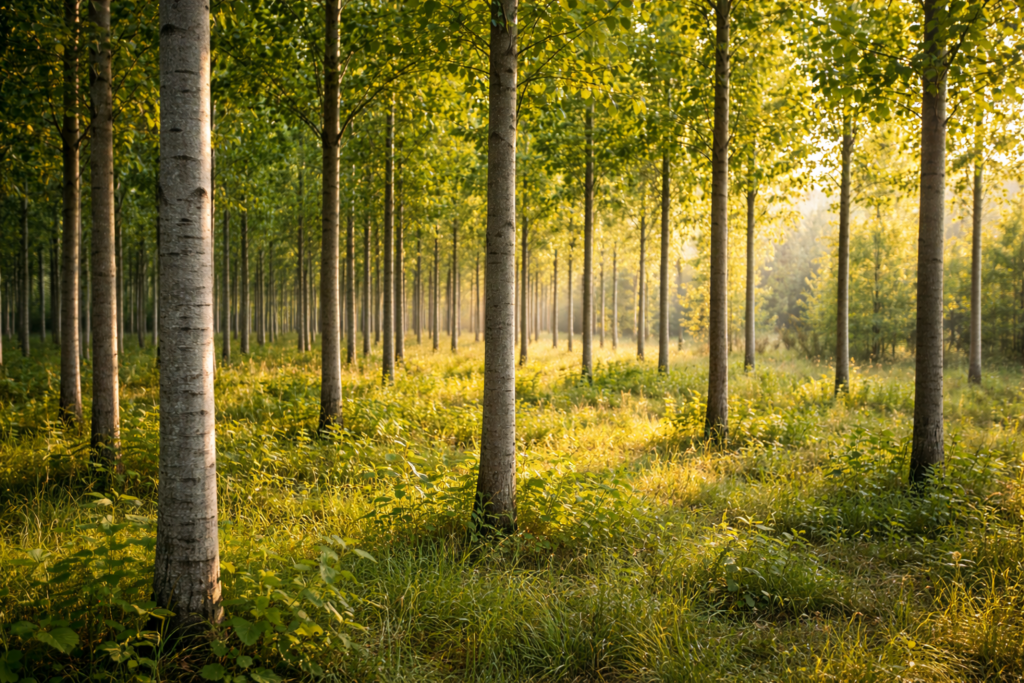
Poplar trees grow fast and regenerate quickly, making poplar wood one of the more sustainable firewood options. These trees reach harvestable size in 10-15 years compared to 40-80 years for oak. From a forest management perspective, harvesting poplar wood has minimal long-term impact.
Many conservation programs actually encourage removing poplar in favor of more diverse forest ecosystems. Using poplar wood for fuel supports better forest health in many situations.
Cost Analysis
Free or cheap poplar wood might seem like a bargain until you factor in the volume required. Let’s run some numbers:
- If premium hardwood costs $250 per cord delivered
- And you need 3 cords for winter heating ($750 total)
- You’d need roughly 4.5 cords of poplar wood for equivalent heat
- If poplar wood costs $150 per cord ($675 for 4.5 cords)
You save $75 but handle 1.5 additional cords of wood. Factor in your time for splitting, stacking, and more frequent stove loading, and the savings diminish. However, if you can get poplar wood for free or source it yourself, the economics shift dramatically in its favor.
Carbon Footprint
Burning any wood releases carbon dioxide, but the U.S. EPA considers wood heating carbon-neutral when trees are sustainably harvested. The CO2 released during combustion equals what the tree absorbed during growth.
Poplar wood’s fast growth rate means these trees sequester carbon quickly. Using poplar wood from sustainable sources arguably has less environmental impact than some slower-growing alternatives.
The efficiency of your wood stove matters more than wood choice for environmental impact. A modern EPA-certified stove burns any wood far cleaner than an old, inefficient unit.
Common Mistakes When Using Poplar Wood
Avoid these errors that give poplar wood an even worse reputation than it deserves.
Burning It Too Green
The biggest mistake is burning poplar wood before it’s properly seasoned. Yes, it dries faster than oak, but six months isn’t guaranteed. Test your wood with a moisture meter.
Green poplar wood produces disappointing heat, excessive smoke, and dangerous creosote buildup. The time saved by faster seasoning disappears if you burn it too early.
Using It as Primary Winter Fuel
Trying to heat through January and February with poplar wood alone leads to frustration. You’ll constantly feed your stove, burn through enormous quantities of wood, and still struggle to maintain comfortable temperatures during cold snaps.
Save poplar wood for appropriate applications rather than forcing it into roles where it underperforms.
Paying Too Much
Some firewood sellers charge nearly as much for poplar wood as they do for oak. This makes no economic sense given the BTU differences. If you’re buying poplar wood, it should cost substantially less than premium hardwoods, typically 40-50% of the price.
Ignoring Safety Protocols
Just because poplar wood burns quickly doesn’t mean you can skip safety measures. You still need working smoke detectors, carbon monoxide detectors, a fire extinguisher, and proper clearances around your stove.
The Consumer Product Safety Commission reports that wood heating appliances are involved in thousands of home fires annually. Follow all manufacturer guidelines regardless of fuel type.
FAQs
Is poplar wood good for burning in a wood stove?
Poplar wood works for wood stoves but isn’t ideal as your primary fuel. It produces about 13-14 million BTUs per cord, roughly half what oak delivers, making it better suited for kindling, shoulder season heating, or mixing with denser hardwoods. The wood seasons quickly in 6-8 months and splits easily, but you’ll burn through it fast and need more frequent reloading compared to premium hardwoods.
How long does poplar wood need to season before burning?
Properly split and stacked poplar wood typically seasons in 6-8 months under good conditions with adequate sun exposure and airflow. This is significantly faster than oak or hickory which require 18-24 months. Always verify dryness with a moisture meter before burning, as conditions vary by climate and storage method. Target moisture content below 20% for clean, efficient burning.
Does poplar wood create more creosote than other firewood?
Properly seasoned poplar wood doesn’t produce significantly more creosote than other woods when burned correctly in a well-maintained stove. The key is ensuring the wood is thoroughly dry (below 20% moisture) and burning it with adequate airflow to maintain active flames. Wet or improperly burned poplar wood will create dangerous creosote buildup just like any other wood species.
Can you mix poplar wood with other types of firewood?
Yes, mixing poplar wood with denser hardwoods like oak or maple is an excellent strategy that extends your premium wood supply while maintaining acceptable heat output. Use approximately one piece of poplar wood to every three or four pieces of hardwood. The poplar wood ignites quickly and helps get the denser wood burning, while the hardwoods provide sustained heat for longer burn times.
Why is poplar wood so much cheaper than oak or maple?
Poplar wood costs less because it produces roughly half the heat energy per cord compared to premium hardwoods like oak, which means you need to burn significantly more volume to achieve the same heating results. Additionally, poplar trees grow very quickly and are extremely abundant, making the wood readily available. Many people view poplar as inferior firewood, which further depresses prices.
What’s the best use for poplar wood in heating?
Poplar wood excels as kindling material due to its low density and easy ignition properties. It’s also ideal for shoulder season heating in spring and fall when you need moderate warmth without intense heat output. Additionally, poplar wood works well mixed with premium hardwoods to extend your fuel supply and provides quick heat when reloading a cold stove during the day when you can tend it frequently.
How much poplar wood equals one cord of oak in heat output?
You need approximately 1.7 to 2 cords of poplar wood to equal the heat energy from one cord of oak. Poplar wood produces about 13-14 million BTUs per cord while oak delivers 24-28 million BTUs per cord. This means significantly more storage space, handling, and stove loading when relying primarily on poplar wood for heating compared to using denser hardwoods.
Making Smart Decisions About Poplar Wood
So where does this leave you with poplar wood? The answer depends entirely on your situation, needs, and expectations.
If you have free or inexpensive access to poplar wood, the time and physical ability to process it, and adequate storage space, it makes sense as a supplemental fuel. Use it strategically for kindling, shoulder season heating, and mixed loads with better hardwoods. You’ll extend your premium wood supply and reduce overall heating costs.
If you’re buying firewood and have limited storage, poplar wood becomes less attractive unless the price reflects the lower heat output. Paying $150 for poplar wood when oak costs $250 might seem like savings until you realize you need nearly twice as much.
For anyone heating primarily with wood through harsh winters, poplar wood shouldn’t be your main fuel source. The constant reloading and higher volume requirements create more work without proportional benefit. Focus on denser hardwoods for baseline heating and keep poplar wood for specific applications where it performs well.
The wood stove community often gets dogmatic about firewood choices. Oak is worshipped, pine is scorned, and poplar wood falls somewhere in the middle of the controversy. Here’s the truth: every wood has appropriate uses if you understand its characteristics and limitations.
Poplar wood isn’t trash fuel, but it’s not premium heating wood either. It occupies a useful niche for wood burners willing to work with its properties rather than against them. Split some, season it properly, test it in your stove, and decide for yourself whether it fits your needs.
Your heating situation is unique. Maybe you have a small cabin where the quick heat from poplar wood works perfectly. Maybe you have a woodlot full of poplar trees and free labor to process them. Maybe you’re supplementing another heat source and don’t need all-day burns. Or maybe you’re better off investing in quality hardwoods and forgetting about poplar wood entirely.
Whatever you decide, burn it safely, season it properly, and keep your chimney clean. Those fundamentals matter more than whether you’re burning poplar wood or the finest oak money can buy.
