
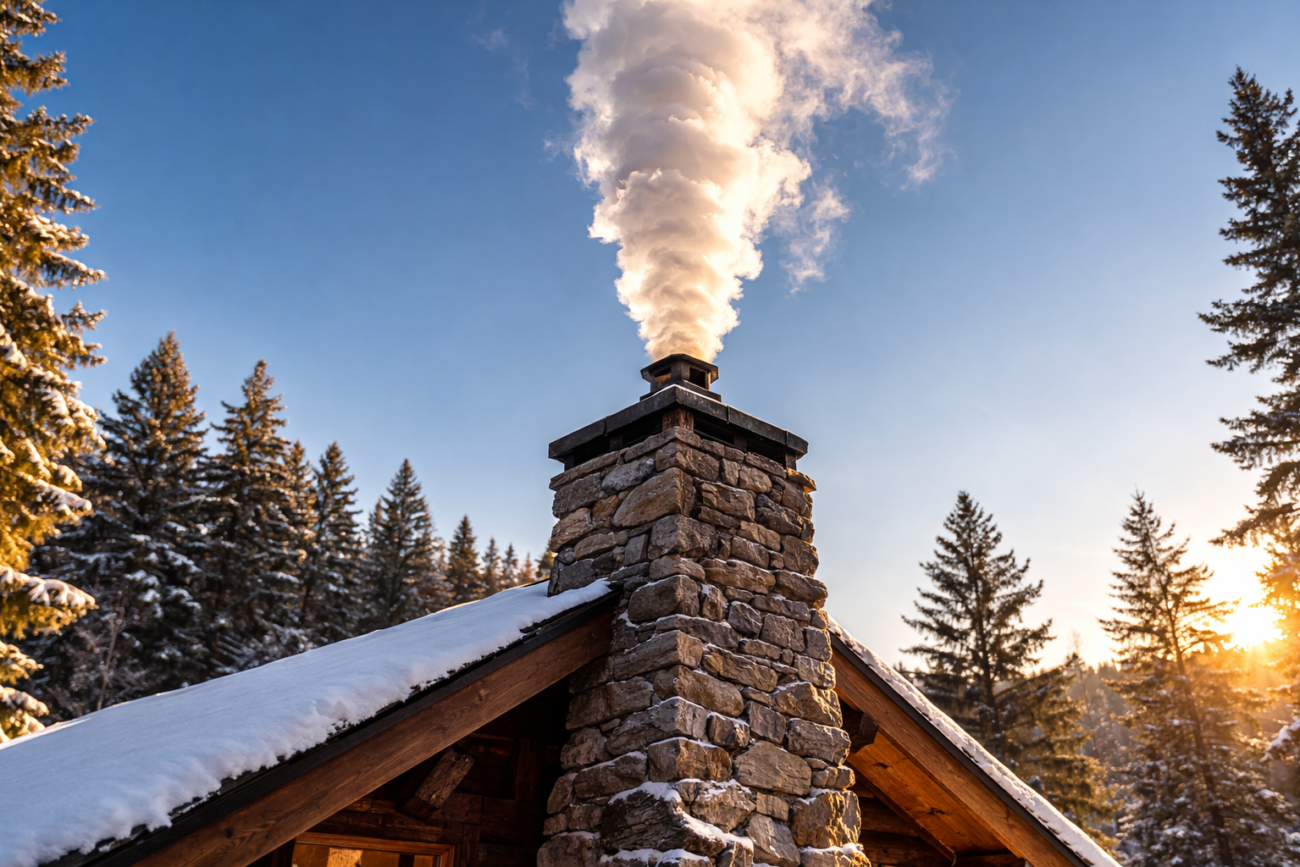
You light a fire in your wood stove, close the door, and within minutes smoke starts seeping into the living room instead of going up the chimney. Sound familiar? If you want to increase chimney draft naturally, you’re dealing with one of the most common and frustrating problems in wood heating. Poor draft means smoke in your home, wasted firewood, dangerous creosote buildup, and a stove that never reaches its full heating potential.
Here’s the short answer: to increase chimney draft naturally without electricity, focus on these core fixes: extend your chimney height to at least 3 feet above the roofline, burn only properly seasoned firewood with under 20% moisture, keep your flue clean of creosote, warm the flue before lighting a full fire, and eliminate air leaks in the chimney system. These five changes alone solve about 90% of draft problems, and none of them require a single watt of power.
I’ve spent over 15 years troubleshooting wood stove systems, and the question of how to increase chimney draft naturally comes up more than almost anything else. The good news? Draft is governed by basic physics, hot air rises, and once you understand what’s working against you, the fixes are surprisingly straightforward. Most homeowners can increase chimney draft naturally using simple adjustments that cost little or nothing.
In this guide, I’ll walk you through nine proven methods to increase chimney draft naturally, explain the science behind each one, and help you diagnose exactly what’s causing your draft problems. Whether you’re dealing with a smoky startup, backdrafting on windy days, or a stove that just won’t draw properly, you’ll find actionable solutions here. Let’s get your chimney pulling the way it should.
Why Chimney Draft Matters More Than You Think
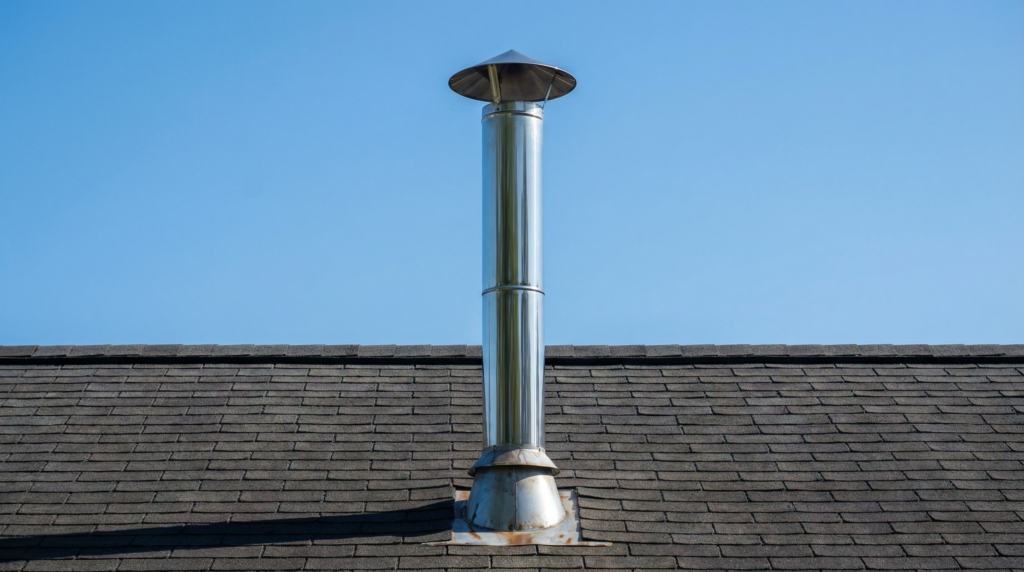
Before we jump into the fixes, let’s talk about why you’d want to increase chimney draft naturally in the first place. Draft isn’t just about keeping smoke out of your living room, though that’s certainly a big motivator. It’s the engine that drives your entire wood heating system.
Your chimney creates draft through a simple principle: hot air is lighter than cold air, so it rises. The column of hot gas inside your chimney weighs less than the column of cold air outside, creating a pressure difference that pulls combustion gases upward and draws fresh oxygen into the firebox. When you increase chimney draft naturally, you’re strengthening this pressure difference so your stove burns hotter, cleaner, and more efficiently.
According to the EPA’s Burn Wise program, proper draft is essential for both safety and efficiency in wood-burning appliances. Poor draft leads to incomplete combustion, which produces more smoke, more particulate emissions, and dramatically more creosote inside your flue. The National Fire Protection Association (NFPA 211) identifies inadequate draft as a contributing factor in many chimney fires and carbon monoxide incidents.
When you increase chimney draft naturally, you also reduce firewood consumption. A well-drafting stove achieves complete combustion, extracting more heat from every log. That means fewer trips to the woodpile and lower heating costs all season. If you’re curious about what you’re spending on fuel, our cord of wood price by state breakdown puts real numbers on it.


9 Proven Ways to Increase Chimney Draft Naturally
Each of these methods works without electricity, fans, or mechanical devices. They’re based on the physics of airflow and heat, and most can be implemented in a single afternoon. I’ve organized them from the simplest quick fixes to the more involved structural improvements, so you can start with the easy wins and work your way up.
1. Warm the Flue Before Lighting a Full Fire
This is the single fastest way to increase chimney draft naturally, and it costs you nothing. When your chimney is cold, especially after sitting unused overnight or for days, the column of cold air inside the flue actually pushes downward. That’s why you get a face full of smoke when you first open the stove door.
The fix is simple: before loading your firebox, roll up a sheet of newspaper, light it, and hold it near the flue opening inside the stove for 30-60 seconds. You’ll feel the draft reverse as the warm air starts rising. Once you feel that upward pull, you’re ready to light your actual fire.
I use this technique every single morning during heating season. It takes less than a minute and eliminates startup smoke completely. Some folks use a small butane torch instead of newspaper, which works even faster. The key to increase chimney draft naturally at startup is getting that initial column of warm air established before you ask the chimney to handle a full fire’s worth of combustion gases.
According to the Chimney Safety Institute of America (CSIA), pre-warming the flue is one of the most effective techniques for preventing smoke spillage during cold starts. They recommend it as standard practice for all wood stove owners.
2. Burn Only Properly Seasoned Firewood
Wet wood is the enemy of good draft. When you burn firewood with high moisture content, a huge portion of the fire’s energy goes toward evaporating water instead of heating the flue gases. Cooler flue gases mean weaker draft. It’s that straightforward.
To increase chimney draft naturally, burn wood with moisture content below 20%. Properly seasoned hardwood, dried for 12-18 months, hits this target consistently. The U.S. Department of Energy recommends seasoning firewood for at least six months, though I’ve found that denser hardwoods like oak really need a full year or more.
How do you know if your wood is dry enough? Invest in a $20 moisture meter. Split a piece and test the freshly exposed surface. If it reads above 20%, that wood needs more time. For a deeper comparison of drying methods, check out our guide on seasoned firewood vs kiln dried.
Dry wood burns hotter, produces less smoke, creates less creosote, and generates the strong flue temperatures you need to increase chimney draft naturally. It’s the foundation of every other fix on this list.
3. Keep Your Chimney Clean of Creosote
Creosote is a tar-like substance that builds up inside your flue from incomplete combustion. Even a thin layer restricts airflow, and a heavy buildup can reduce your flue’s effective diameter by inches. If you want to increase chimney draft naturally, keeping the flue clean is non-negotiable.
The CSIA recommends professional chimney inspection and cleaning at least once per year, or more frequently if you burn daily. Between professional cleanings, you can monitor creosote buildup by shining a flashlight up the flue and checking for dark, flaky, or glossy deposits.
Stage 1 creosote (light, flaky soot) is easy to brush away. Stage 2 (hard, shiny deposits) requires more aggressive cleaning. Stage 3 (glazed, tar-like coating) is extremely dangerous and may require chemical treatment or professional removal. Our guide on how to reduce wood stove smoke covers the burning practices that minimize creosote formation in the first place.
A clean chimney is a well-drafting chimney. When you remove creosote and soot, you restore the full diameter of the flue, reduce friction on the gas flow, and increase chimney draft naturally without changing anything else about your setup.
4. Extend Your Chimney Height
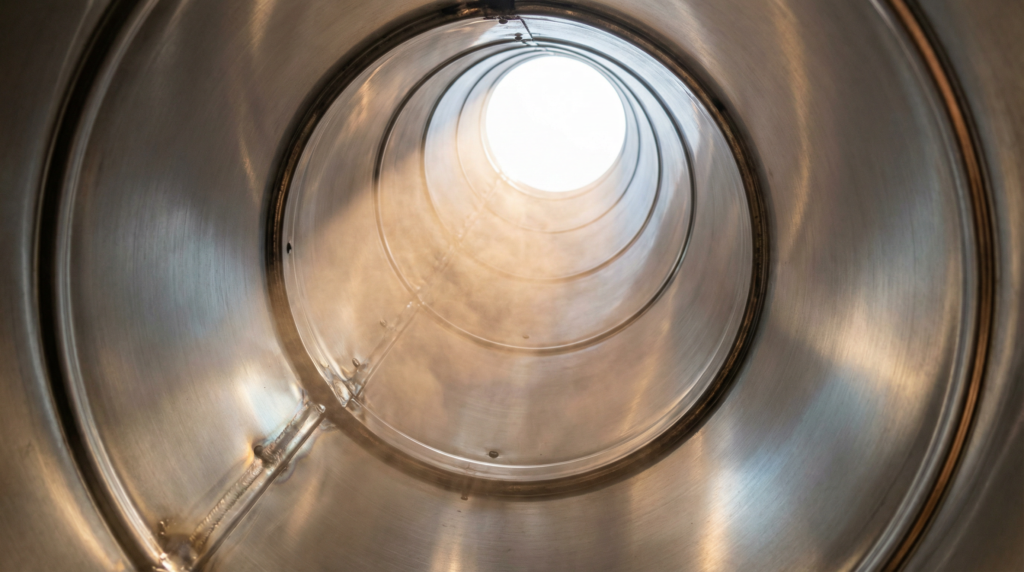
Chimney height is the single most powerful factor in draft strength. The taller the chimney, the larger the column of hot air, and the stronger the pressure difference that pulls gases upward. If your chimney is too short, no amount of technique will fully compensate. To increase chimney draft naturally through height, you need to understand the minimums.
The NFPA 211 standard requires chimneys to extend at least 3 feet above the point where they pass through the roof, and at least 2 feet higher than any part of the building within 10 feet horizontally. This is known as the 3-2-10 rule, and it’s the bare minimum for safety and draft.
In my experience, chimneys that just barely meet the 3-2-10 rule often still have draft issues, especially in homes surrounded by tall trees or on hillsides where wind patterns create downdrafts. Adding an extra 2-3 feet of chimney height can dramatically increase chimney draft naturally in these situations.
Here’s a rough guide to how chimney height affects draft:
| Total Chimney Height | Draft Strength | Typical Performance |
|---|---|---|
| Under 12 feet | Weak | Frequent smoke spillage, poor combustion |
| 12-15 feet | Moderate | Works in mild conditions, struggles in cold/wind |
| 15-20 feet | Good | Reliable draft in most conditions |
| 20-25 feet | Strong | Excellent draft, fast startup, clean burn |
| Over 25 feet | Very Strong | May need damper to control overdraft |
If you’re planning a new installation or evaluating your current setup, run the numbers through our Chimney Draft Calculator to see exactly how height changes affect your draft pressure. Adding chimney height is one of the most reliable ways to increase chimney draft naturally, and the improvement is permanent.
5. Use the Right Flue Size for Your Stove
An oversized flue is one of the most common, and most overlooked, causes of poor draft. When the flue diameter is too large for your stove’s output, the combustion gases spread out, cool down faster, and lose the velocity needed to maintain strong upward flow. To increase chimney draft naturally, your flue size needs to match your stove.
Most modern wood stoves use a 6-inch flue collar. If your chimney has an 8-inch liner (common in older masonry chimneys), you’ve got a mismatch that’s killing your draft. The solution is to install a properly sized stainless steel chimney liner that matches your stove’s flue collar diameter.
According to Penn State Extension’s wood heat research, matching flue size to stove output is critical for achieving optimal combustion efficiency. An oversized flue can reduce draft by 30-50%, which is a massive performance hit. This is one of the most impactful ways to increase chimney draft naturally if you’re dealing with an older chimney system.
If you’ve been struggling with venting mistakes that cost you heat, flue sizing is probably part of the problem. Getting this right makes every other draft improvement work better.
6. Eliminate Air Leaks in the Chimney System
Air leaks anywhere in your chimney system dilute the hot flue gases with cold outside air, cooling the gas column and weakening draft. To increase chimney draft naturally, you need a sealed system from the stove collar to the chimney cap.
Common leak points include: joints between stovepipe sections, the connection between stovepipe and chimney thimble, cracked mortar joints in masonry chimneys, damaged chimney liners, and poorly sealed cleanout doors. Even small leaks add up.
Check every joint and connection in your system. Stovepipe joints should be secured with three sheet metal screws per joint and sealed with high-temperature silicone or furnace cement. Masonry chimneys should be inspected for cracked mortar and repointed as needed. If your liner is damaged, replacement is the only safe option.
A sealed chimney system maintains higher flue gas temperatures throughout the entire column, which is exactly what you need to increase chimney draft naturally. Think of it like a straw with holes in it, you can’t get good suction until you plug the leaks.
Advanced Methods to Increase Chimney Draft Naturally
If the first six fixes didn’t fully solve your problem, these advanced techniques target the trickier causes of poor draft. They require a bit more effort or investment, but they can make a dramatic difference in stubborn cases.
7. Insulate Your Chimney Flue
An uninsulated chimney, especially an exterior masonry chimney on an outside wall, loses heat rapidly through the chimney walls. As flue gases cool, they slow down, and draft weakens. In extreme cases, the gases cool enough to condense, creating heavy creosote deposits and near-zero draft.
To increase chimney draft naturally through insulation, you have several options. For masonry chimneys, installing an insulated stainless steel liner is the gold standard. The insulation wrap (typically ceramic blanket or vermiculite pour) keeps flue gases hot from bottom to top, maintaining strong draft even in bitter cold weather.
For factory-built chimneys, make sure you’re using double-wall or triple-wall insulated pipe for any sections that pass through unheated spaces like attics or exterior walls. Single-wall pipe in these areas is a draft killer, and it’s also a fire hazard. The Consumer Product Safety Commission warns that improper chimney insulation contributes to both performance problems and house fires.
I’ve seen homeowners increase chimney draft naturally by 40-60% just by relining an old masonry chimney with an insulated stainless liner. It’s not cheap (typically $1,500-$3,000 installed), but it transforms the entire system’s performance. If you’re weighing the investment, remember that better draft also means less firewood burned, check our guide on cord of wood weight to understand how much fuel you’re actually going through.
8. Address Negative Air Pressure in Your Home
This one catches a lot of people off guard. Your chimney doesn’t exist in isolation, it’s part of your home’s overall air pressure system. If your house has negative air pressure (more air leaving than entering), the chimney becomes a convenient air intake instead of an exhaust. That’s backdrafting, and it’s one of the hardest draft problems to diagnose.
Common causes of negative pressure include: bathroom exhaust fans, kitchen range hoods, clothes dryers, and even a furnace competing for combustion air. In tightly sealed modern homes, running a powerful range hood can create enough negative pressure to reverse chimney draft entirely.
To increase chimney draft naturally in a negative-pressure home, you need to provide makeup air. The simplest approach is cracking a window near the stove, just an inch or two, to equalize pressure. A more permanent solution is installing a dedicated combustion air intake that feeds outside air directly to the stove area.
The Department of Energy notes that modern energy-efficient homes are particularly susceptible to negative pressure issues because they’re sealed so tightly. If you’ve recently weatherized your home and noticed your stove drafting worse, this is almost certainly the cause. Providing a dedicated air supply is one of the most effective ways to increase chimney draft naturally in newer construction.
If your home has competing exhaust appliances, try this test: light a small fire, then turn on your range hood or bathroom fan. If smoke immediately starts leaking from the stove, you’ve confirmed a negative pressure problem. The fix is straightforward once you know what you’re dealing with.
9. Optimize Your Fire-Building Technique
How you build and manage your fire directly affects draft strength. A smoldering, oxygen-starved fire produces cool smoke that barely rises. A hot, well-fed fire generates the high flue temperatures that increase chimney draft naturally and keep it strong throughout the burn cycle.
The top-down fire method is the best technique to increase chimney draft naturally from the moment you light up. Instead of the traditional bottom-up approach, you place the largest logs on the bottom, medium pieces in the middle, and kindling on top. Light the kindling, and the fire burns downward. This method produces less smoke during startup because the hottest flames are at the top, right where the flue opening is, establishing strong draft immediately.
Here’s the top-down method step by step:
- Place 3-4 large splits on the firebox floor, parallel to each other
- Add a layer of medium-sized pieces perpendicular on top
- Place small kindling and fire starters on the very top
- Light the kindling with the air intake fully open
- Leave the door cracked for 5-10 minutes until the fire is established
- Close the door and adjust the air intake as needed
According to the EPA’s guidelines on wood stove operation, the top-down method produces up to 50% less smoke during the critical startup phase. Less smoke means hotter flue gases, which means stronger draft from the very first minute. This is one of the easiest ways to increase chimney draft naturally, and it works every single time.
Once the fire is established, avoid the temptation to choke down the air supply too aggressively. Restricting air too much drops firebox temperature, cools the flue gases, and weakens draft. Find the balance between a controlled burn and maintaining enough heat to keep the chimney pulling strongly. A properly installed stove with correct clearances gives you the flexibility to run hotter burns safely.


Diagnosing Your Draft Problem: A Quick Troubleshooting Table
Not sure which fix applies to your situation? This troubleshooting table helps you match symptoms to causes so you can increase chimney draft naturally by targeting the right issue first.
| Symptom | Likely Cause | Fix (Section #) |
|---|---|---|
| Smoke pours out when you first open the door | Cold flue, no initial draft | Pre-warm the flue (#1) |
| Smoke during startup but clears after 10 min | Wet wood or cold chimney | Season wood (#2), warm flue (#1) |
| Constant light smoke seepage from stove | Creosote restriction or air leaks | Clean flue (#3), seal leaks (#6) |
| Draft reverses on windy days | Chimney too short, wind exposure | Extend height (#4), add cap |
| Stove works fine until you turn on range hood | Negative house pressure | Provide makeup air (#8) |
| Draft is weak even with hot fire | Oversized flue or poor insulation | Resize flue (#5), insulate (#7) |
| Fire smolders and won’t burn hot | Insufficient air supply or wet wood | Open air intake, season wood (#2) |
| Creosote builds up rapidly | Cool flue temps, incomplete combustion | Insulate (#7), burn hotter (#9) |
Use this table alongside our Chimney Draft Calculator to get a complete picture of your system’s performance. The calculator gives you actual draft pressure numbers, while this table helps you interpret what those numbers mean in practice. Together, they’re the fastest path to increase chimney draft naturally.
Seasonal Maintenance to Keep Draft Strong Year-Round
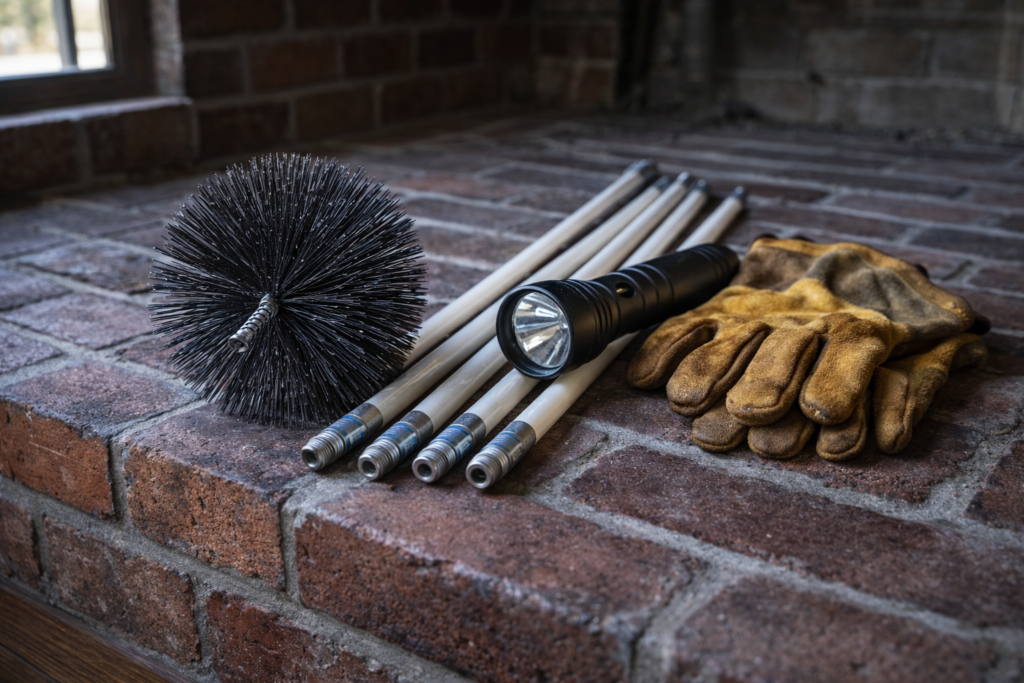
Once you’ve made improvements to increase chimney draft naturally, you need to maintain them. Draft performance can degrade over time if you neglect regular maintenance. Here’s a seasonal checklist that keeps your chimney pulling strong all winter.
Before Heating Season (September-October)
Schedule a professional chimney inspection and cleaning. Even if you cleaned it yourself in spring, a pre-season check catches any issues that developed over summer, like animal nests, debris, or moisture damage. This is the most important step to increase chimney draft naturally before you light your first fire.
Check all stovepipe connections and tighten any loose joints. Inspect the chimney cap for damage or blockage. Verify that your firewood supply is properly seasoned by testing several pieces with a moisture meter. If you’re still building your wood supply, our rick of wood vs cord of wood comparison helps you buy the right amount.
During Heating Season (November-March)
Monitor your stove thermometer regularly. Flue temperatures between 300-500°F indicate good combustion and strong draft. Below 250°F, you’re in the creosote danger zone and draft is likely suffering. Adjust your burning practices to maintain higher temperatures.
Visually inspect the flue every 4-6 weeks during heavy use. If you see significant creosote buildup, schedule a mid-season cleaning. Burning a creosote sweeping log monthly can help reduce light deposits between professional cleanings, though it’s not a substitute for mechanical brushing.
Continue to increase chimney draft naturally by always pre-warming the flue on cold mornings and burning only dry wood. These daily habits compound over the season, keeping your system running at peak performance.
After Heating Season (April-May)
Clean the chimney one final time before summer. Leaving creosote in the flue over summer allows moisture to mix with it, creating acidic compounds that damage the liner. A clean chimney going into the off-season means a healthy chimney when fall arrives.
Inspect the chimney cap, flashing, and crown for any damage from winter weather. Repair cracks in the chimney crown with appropriate sealant to prevent water intrusion. Close the damper (if you have one) to prevent downdrafts from bringing moisture and debris into the flue during summer months. For related maintenance tasks, our wood stove ash pan replacement guide covers another common spring maintenance item.
What NOT to Do When Trying to Increase Chimney Draft Naturally
I’ve seen homeowners try some creative, and sometimes dangerous, solutions when they’re frustrated with poor draft. Here are the approaches you should avoid.
Don’t Remove the Chimney Cap
Some people think the cap restricts airflow. It doesn’t, at least not enough to matter. A properly designed chimney cap actually helps increase chimney draft naturally by preventing downdrafts from wind. Removing it exposes your flue to rain, snow, animals, and debris, all of which cause far worse problems than any minor airflow restriction.
Don’t Burn Green or Wet Wood “Hotter” to Compensate
Overfiring your stove to overcome poor draft from wet wood is dangerous. You risk overheating the stove, damaging the flue liner, and potentially starting a chimney fire. The right approach is to fix the fuel, not force the fire. Burn dry wood and the draft takes care of itself.
Don’t Seal Your Home Too Tightly Without Providing Makeup Air
Energy efficiency is great, but a wood stove needs oxygen. If you’ve recently added insulation, weatherstripping, or new windows, you may have inadvertently created the negative pressure problem described in fix #8. Always ensure adequate combustion air supply when you increase chimney draft naturally in a tight home.
Don’t Ignore Persistent Draft Problems
If you’ve tried multiple fixes and still can’t increase chimney draft naturally, call a certified chimney professional. Persistent draft issues can indicate structural problems like a cracked liner, blocked flue, or fundamental design flaw that requires expert diagnosis. The Purdue Extension’s guide on wood heat safety emphasizes that unresolved draft problems are a serious safety concern that shouldn’t be ignored.
How Weather and Environment Affect Chimney Draft
Even after you’ve done everything right to increase chimney draft naturally, external conditions can still affect performance. Understanding these factors helps you adapt your burning strategy on difficult days.
Temperature Inversions
On calm, cold nights, a layer of warm air can settle above the cold air near the ground, creating a temperature inversion. This traps chimney exhaust close to the roofline and can push smoke back down the flue. To increase chimney draft naturally during inversions, build a hotter fire than usual and keep the air intake more open to generate stronger upward velocity.
Wind Effects
Wind can either help or hurt draft depending on direction and chimney design. A properly capped chimney handles most wind conditions well. However, if your chimney is on the leeward side of the roof (downwind), wind can create a low-pressure zone that actually pulls air down the chimney. A wind-directional chimney cap can help increase chimney draft naturally in consistently windy locations.
Barometric Pressure Changes
Falling barometric pressure (before a storm) can weaken draft slightly, while rising pressure (clearing weather) tends to improve it. You can’t control the weather, but you can compensate by adjusting your fire management. On low-pressure days, burn slightly hotter and keep the flue warmer to increase chimney draft naturally despite the atmospheric conditions.
The National Weather Service provides local forecasts that can help you anticipate conditions that affect chimney performance. Checking the forecast before your evening fire isn’t overkill, it’s smart stove management.
Increase Chimney Draft Naturally: Quick-Reference Summary
Here’s a condensed version of all nine methods to increase chimney draft naturally, organized by effort level so you can prioritize:
| Fix | Effort | Cost | Impact |
|---|---|---|---|
| Pre-warm the flue | Easy (1 min) | Free | High for startup |
| Burn seasoned wood only | Easy (planning) | Free-Low | Very High |
| Clean chimney regularly | Moderate | $150-$300/year | High |
| Extend chimney height | Moderate-Hard | $200-$800 | Very High |
| Match flue size to stove | Hard (pro install) | $1,500-$3,000 | Very High |
| Seal air leaks | Moderate | $20-$100 | Moderate-High |
| Insulate the chimney | Hard (pro install) | $1,500-$3,000 | Very High |
| Provide makeup air | Easy-Moderate | Free-$200 | High (in tight homes) |
| Top-down fire method | Easy (technique) | Free | High for startup |
Start with the free and easy fixes first. Pre-warming the flue, burning dry wood, and using the top-down fire method cost nothing and can dramatically increase chimney draft naturally within your very next fire. If those don’t fully solve the problem, work through the moderate and advanced fixes systematically.
For a complete picture of your stove’s performance, pair these draft improvements with proper heat shield installation and the right stove for your space. A well-drafted chimney connected to a properly sized, well-maintained stove is the foundation of efficient, safe wood heating.
Frequently Asked Questions
What is the fastest way to increase chimney draft naturally?
The fastest method to increase chimney draft naturally is pre-warming the flue with a rolled-up newspaper or small torch before lighting your main fire. This reverses the cold air column in under 60 seconds and establishes upward airflow immediately. Combine this with the top-down fire-building method for the strongest startup draft without any electricity.
How tall does a chimney need to be for good draft?
NFPA 211 requires chimneys to extend at least 3 feet above the roof penetration and 2 feet above anything within 10 feet horizontally (the 3-2-10 rule). For reliable draft in most conditions, a total chimney height of 15-20 feet from the stove to the top is ideal. Shorter chimneys often struggle, especially in cold or windy weather.
Why does my chimney draft get worse when I turn on the kitchen exhaust fan?
Kitchen exhaust fans, bathroom fans, and dryers remove air from your home, creating negative pressure. Your chimney becomes the path of least resistance for replacement air, causing backdrafting. To increase chimney draft naturally in this situation, crack a window near the stove or install a dedicated combustion air intake to equalize pressure.
Can a dirty chimney cause poor draft?
Absolutely. Creosote buildup narrows the flue opening, increases friction on gas flow, and can reduce effective flue diameter by several inches. Even a quarter-inch layer of creosote significantly impacts draft. Annual cleaning, or more frequently with heavy use, is essential to increase chimney draft naturally and maintain safe operation.
Does chimney insulation really help with draft?
Yes, chimney insulation is one of the most effective ways to increase chimney draft naturally, especially for exterior chimneys. Insulation keeps flue gases hot throughout the entire chimney height, maintaining the temperature differential that drives draft. Homeowners who install insulated stainless steel liners typically see 40-60% improvement in draft strength.
Will opening a window help increase chimney draft naturally?
In homes with negative air pressure, yes. Cracking a window near the stove provides makeup air that equalizes pressure and allows the chimney to function as an exhaust rather than an intake. You only need a 1-2 inch opening. This is a quick diagnostic test, if opening a window immediately improves draft, you have a pressure problem that needs a permanent solution.
How can I test my chimney draft at home without special tools?
Hold a lit match or lighter near the stove’s air intake with the door slightly open. If the flame pulls toward the stove opening, you have positive draft. If it blows away from the stove or stays still, draft is weak or reversed. For precise measurements, use our free Chimney Draft Calculator to estimate draft pressure based on your chimney dimensions and conditions.
Final Thoughts
Learning to increase chimney draft naturally is one of the most valuable skills any wood stove owner can develop. Every fix in this guide works without electricity, fans, or expensive gadgets, just smart application of physics and good maintenance habits. Start with the free techniques like pre-warming the flue and burning dry wood, then work through the structural improvements if needed.
The payoff goes beyond just eliminating smoke in your living room. When you increase chimney draft naturally, your stove burns cleaner, your firewood lasts longer, creosote buildup drops dramatically, and your home stays warmer with less effort. It’s the difference between fighting your stove and enjoying it.
Before you make any changes, run your current setup through our Chimney Draft Calculator to establish a baseline. Then apply the fixes that match your symptoms, and test again. You’ll be surprised how much improvement is possible when you understand what’s working against you.
For more ways to get the most from your wood heating system, explore our guides on venting mistakes that cost you heat, reducing wood stove smoke, and alternative fuels that burn hotter. Stay warm, stay safe, and keep that chimney pulling strong.
