
Last winter, I watched my neighbor burn through three cords of firewood while I only used two. Same house size, same weather, same wood species. The difference? I knew how to season firewood for best heat output, and he was burning wood that still hissed and sputtered in his stove.
To season firewood for best heat output, you need to dry freshly cut wood to below 20% moisture content by splitting it, stacking it in a well-ventilated area with proper airflow, and allowing 6-24 months of drying time depending on the wood species. This process transforms wet, inefficient fuel into clean-burning wood that delivers maximum BTUs, reduces creosote buildup, and keeps your home warmer with less wood.
After heating my off-grid cabin for over 15 years, I’ve learned that knowing how to season firewood for best heat output isn’t just about patience, it’s about science, strategy, and some good old-fashioned elbow grease. Properly seasoned wood burns hotter, cleaner, and longer than green wood. It lights faster, produces less smoke, and won’t damage your stove or chimney with dangerous creosote deposits.
In this complete guide, you’ll discover the exact steps for how to season firewood for best heat output, including the ideal moisture levels, proven stacking techniques, and common mistakes that cost you heat and money. Whether you’re a first-time wood burner or you’ve been heating with wood for years, these methods will help you get more warmth from every log.
Why Seasoning Firewood Matters for Heat Output
When you cut a tree, the wood contains a massive amount of water, often 45% to 100% moisture content depending on the species and time of year. Oak can hit 80% moisture when freshly cut. Poplar and willow can exceed 100% moisture content, meaning they literally weigh more from water than from dry wood fiber.
Here’s what happens when you try to burn wet wood in your stove. First, a huge portion of the fire’s energy gets wasted evaporating all that water instead of heating your home. Wood with moisture above 30% will bubble water from the end grain when heated, which is energy that should be warming your living room.
Second, wet wood creates incomplete combustion. The wood can’t reach high enough temperatures to burn efficiently, so you get thick smoke, creosote buildup in your chimney, and wasted fuel. I’ve seen chimneys so clogged with creosote from burning green wood that they became legitimate fire hazards within a single season.
Third, and this is what really matters when you’re learning how to season firewood for best heat output, wet wood delivers drastically fewer BTUs per cord. A cord of properly seasoned oak delivers about 26-30 million BTUs. That same cord burned green? You might only get 15-18 million BTUs of usable heat because so much energy is lost to moisture evaporation.
The Environmental Protection Agency recommends burning wood with moisture content between 15% and 20% for optimal efficiency. At this range, wood ignites easily, burns cleanly, and delivers maximum heat output. Once you understand how to season firewood for best heat output and hit that sweet spot consistently, you’ll notice the difference immediately in your heating costs and comfort level.
For more details on selecting the right wood species to start with, check out my guide on best firewood for wood stove performance.
Understanding Moisture Content and Heat Efficiency
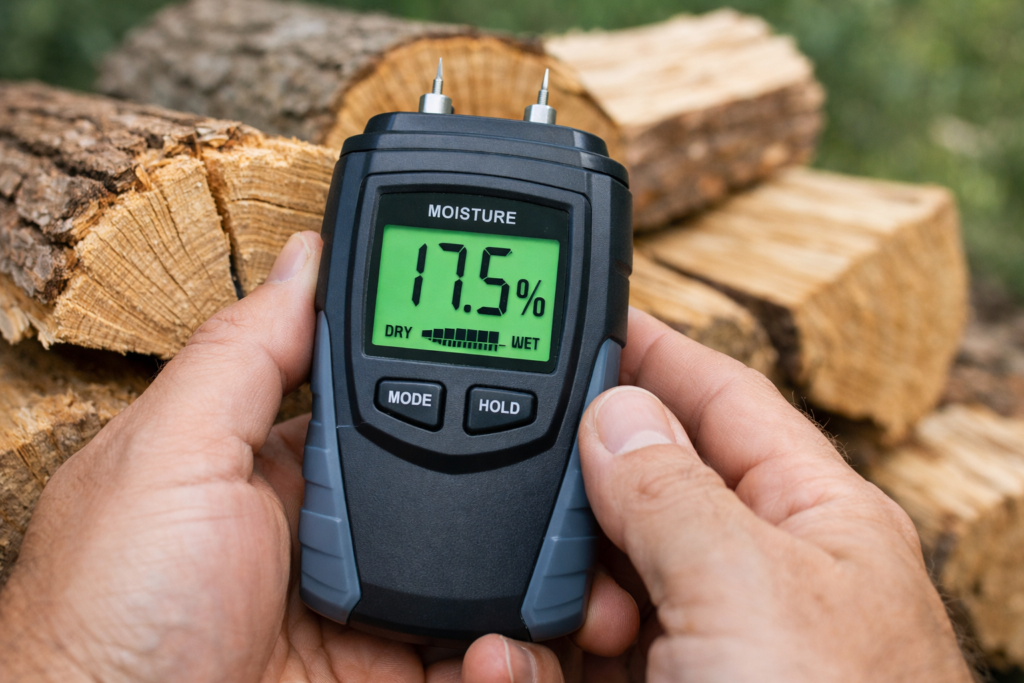
Moisture content is the percentage of water weight compared to the wood’s total weight. A piece of wood at 50% moisture content is literally half water. When learning how to season firewood for best heat output, understanding these numbers helps you make better decisions about when your wood is ready to burn.
The right band of firewood moisture is between 15% and 20%, according to seasoned wood burning professionals. When you get much over 20%, you start seeing sluggish ignition and difficulty maintaining a clean burn. Above 30%, the wood barely burns at all in modern EPA-certified stoves.
Green Wood Moisture Levels by Species
Different tree species start with different moisture contents when freshly cut. This directly affects how long you’ll need to season them. Here’s what you’re working with:
High Moisture Woods (100%+ when green):
- Willow
- Cottonwood
- Poplar
- Elm
Medium Moisture Woods (60-80% when green):
- Oak (red and white)
- Maple
- Hickory
- Birch
Lower Moisture Woods (35-50% when green):
- Ash
- Black locust
- Honey locust
- Cherry
Understanding these starting points is crucial when planning how to season firewood for best heat output. Ash might be ready in 6-8 months, while oak could need 18-24 months to reach optimal burning conditions.
How Moisture Affects Combustion
- Every 1% increase in moisture content above 20% reduces your effective heat output. Here’s the breakdown:
- At 15-20% moisture, wood burns at peak efficiency. The fire reaches high temperatures quickly, secondary combustion occurs cleanly, and you get maximum BTUs delivered to your home.
- At 25% moisture, you’ll notice the wood takes longer to ignite, produces more smoke, and the fire struggles to maintain high temperatures. About 10-15% of the fire’s energy is wasted just boiling off that extra water.
- At 30% moisture, you’re losing 20-25% of potential heat to evaporation. The wood sizzles and steams in the firebox. Creosote formation accelerates dramatically because of incomplete combustion.
- Above 35% moisture, you’re better off not burning it at all. The wood might not even sustain combustion in a modern stove, and the creosote and smoke you’ll create represent both wasted money and serious safety hazards.
This is why learning how to season firewood for best heat output pays such massive dividends. The difference between 30% and 18% moisture content can literally mean burning 30% less wood to achieve the same warmth. For detailed safety information on wood burning, the Chimney Safety Institute of America provides comprehensive resources on preventing chimney fires and maintaining safe heating systems.

Step 1: Cut and Split Your Wood at the Right Time
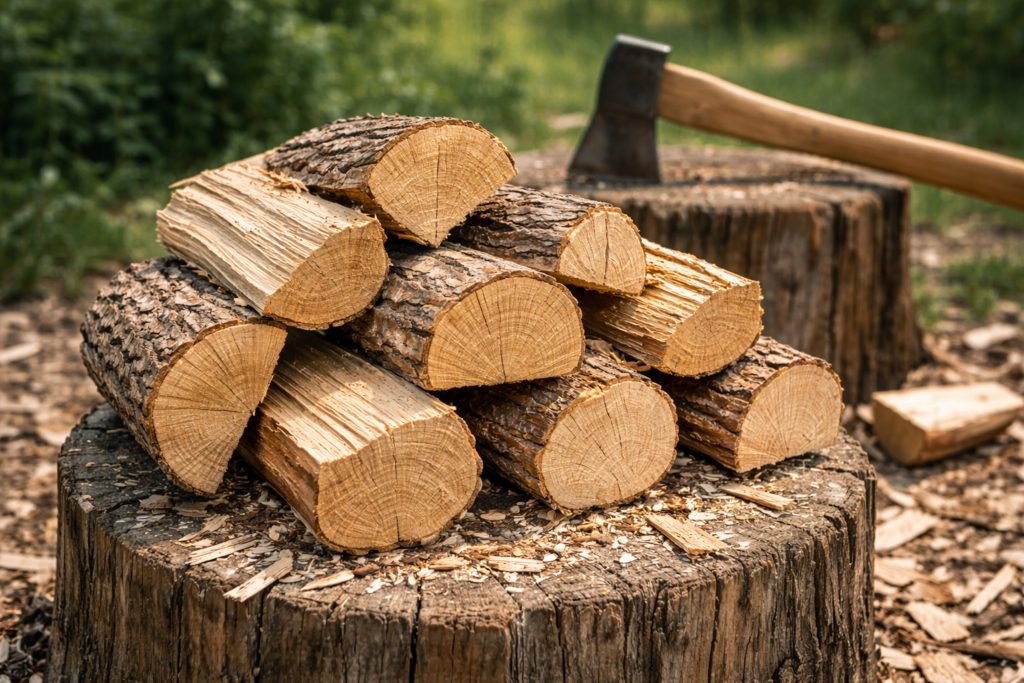
Timing makes a huge difference when learning how to season firewood for best heat output. The traditional wisdom says to cut wood in late winter or early spring, and there’s solid science behind it.
Trees have lower sap flow during dormant winter months, which means the wood starts with less moisture. I’ve tested this myself by cutting the same oak tree in both February and July, the February wood showed 60% moisture while the July wood was pushing 80%.
Cut your wood during late winter (January through March) if possible. The wood will have lower initial moisture, the ground is often frozen which makes access easier, and you’ll have the entire spring and summer for drying.
Splitting for Maximum Drying
Here’s where many people go wrong. They stack whole logs and wonder why their wood is still wet after a year. Splitting is absolutely essential for how to season firewood for best heat output to work properly.
Wood dries from the ends and through the exposed surfaces. A round log might only dry an inch or two from the outside over an entire year. Split that same log into quarters, and suddenly you’ve got four to six times more surface area for moisture to escape.
Split your wood to 3-6 inches in diameter for optimal results. Smaller splits dry faster but create more work and give you less burn time per log. Larger splits take longer to dry but are perfect for overnight burns once properly seasoned.
I split most of my hardwoods into quarters for pieces under 12 inches diameter. Anything larger gets split into sixths or eighths. The goal is pieces that will dry within your target timeframe while still being large enough to provide substantial burn time.
Always split wood when it’s fresh. Green wood splits much easier than seasoned wood. I learned this the hard way trying to split oak that had sat for six months, it was like hitting concrete. Fresh-cut oak splits cleanly with much less effort.
Step 2: Choose the Perfect Seasoning Location
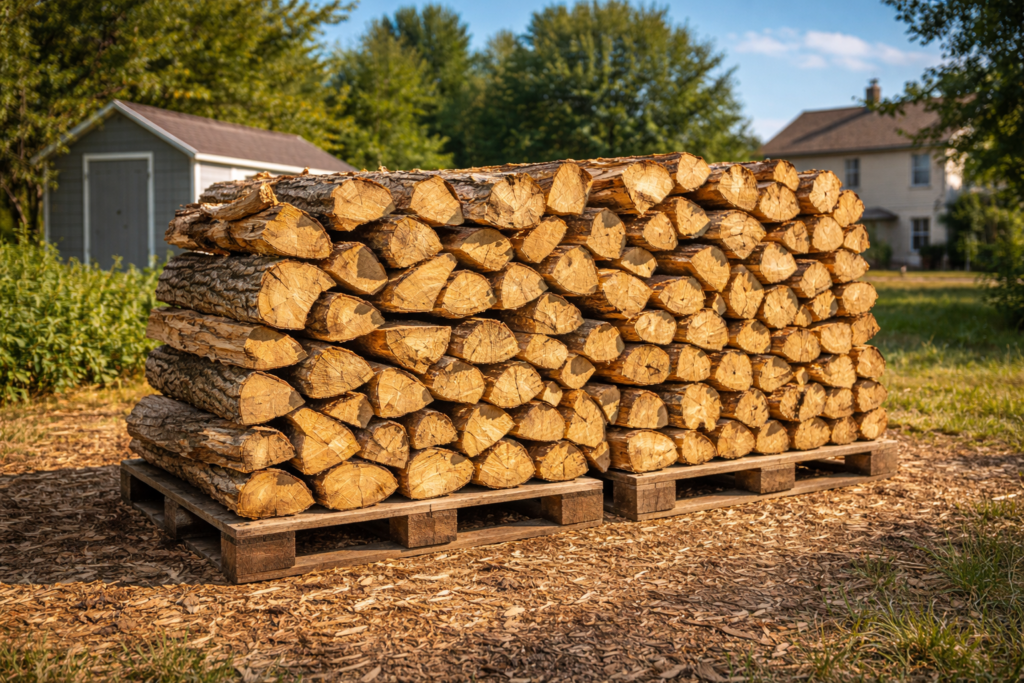
Location matters enormously when figuring out how to season firewood for best heat output. The right spot can cut your seasoning time in half. The wrong spot can keep your wood damp indefinitely.
Your ideal seasoning location needs four things: sun exposure, wind exposure, good drainage, and elevation off the ground.
Sun and Wind Exposure
Sun is your best friend when seasoning wood. Direct sunlight heats the wood surface, which accelerates moisture evaporation. I’ve seen wood in full sun dry 40% faster than identical splits stacked in shade.
Position your woodpile to get maximum southern exposure if you’re in the Northern Hemisphere. A spot that gets 4-6 hours of direct sun daily is ideal. Morning sun is particularly effective because it dries the wood after overnight condensation.
Wind is almost as important as sun. Good airflow carries moisture away from the wood pile continuously. Stagnant air creates a humid microclimate around your stack that slows drying dramatically.
Avoid tight spaces between buildings or against solid walls. I keep my wood racks at least 3-4 feet from any structure to ensure air can circulate on all sides. Some airflow is good; constant strong wind is even better.
Drainage and Elevation
Water is the enemy when learning how to season firewood for best heat output. Your wood must stay elevated off the ground to prevent moisture wicking up from the soil.
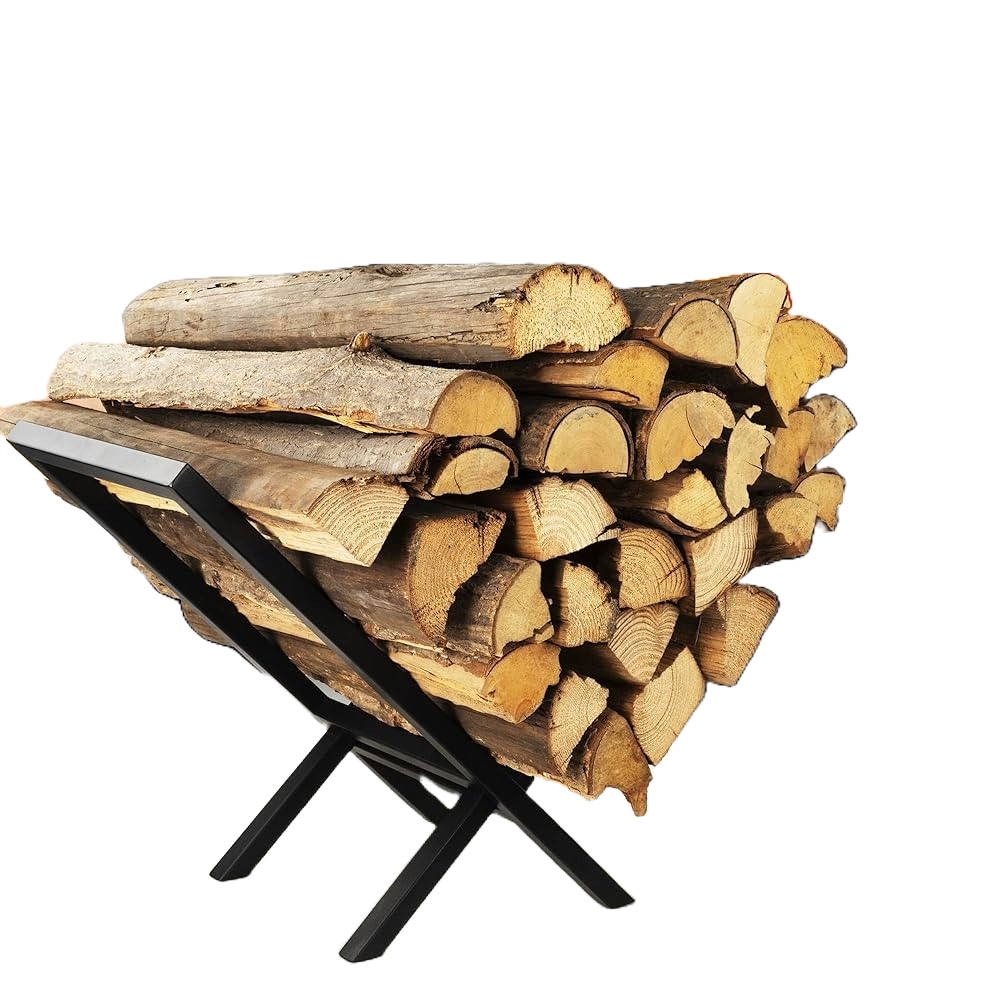
I use either metal firewood racks, pressure-treated 4×4 runners, or old pallets to keep wood at least 4-6 inches off the ground. This simple step prevents the bottom row from staying perpetually damp and potentially rotting.
Make sure your site has good natural drainage. Don’t stack wood in low spots where water collects after rain. A slight slope is ideal so water runs away from the pile rather than pooling underneath.
If you’re stacking against a shed or barn, leave 6-8 inches of airspace between the back of your pile and the building. This allows air circulation and prevents moisture from the building from transferring to your wood.
For comprehensive information about wood storage and stacking, see my article on off grid cabin heating options which covers fuel management strategies.
Step 3: Stack Your Wood for Optimal Airflow
Stacking method is where most people either succeed or fail at how to season firewood for best heat output. Proper stacking maximizes airflow while keeping the pile stable and organized.
The classic holzhaufen method involves stacking wood in a circular pattern with a hollow center. Air rises through the center creating a chimney effect that pulls moisture out continuously. It’s beautiful and effective, but takes practice and quite a bit of space.
For most home wood burners, I recommend the traditional parallel row stack with proper spacing. Here’s how to do it right.
Building Your Stack
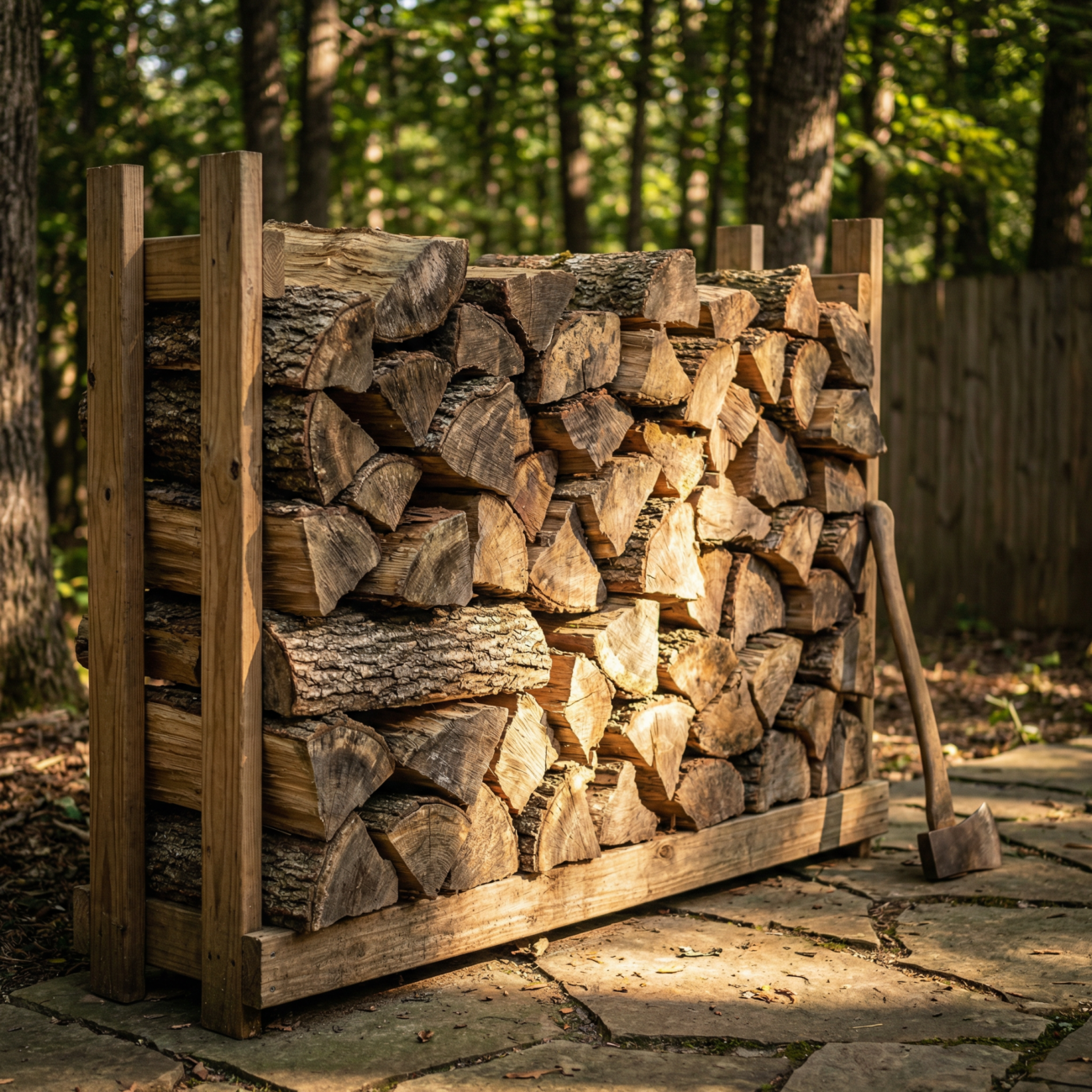
Start with a solid, level foundation. I use either commercial firewood racks or build my own with pressure-treated 4x4s and 2x4s. The foundation should be perfectly level to prevent the stack from leaning as it grows.
Create vertical end supports using either commercial rack brackets or by stacking wood in a crisscross pattern. These supports keep your stack from toppling. I build mine about 8-10 courses high, alternating each layer 90 degrees.
Stack your firewood bark-side up if possible. This creates a natural shingle effect where water runs off rather than soaking into the exposed wood grain. It’s a small detail but it makes a measurable difference in how to season firewood for best heat output.
Leave small gaps between individual pieces, about a quarter to half-inch. Don’t pack wood tightly together. These small air channels allow wind to penetrate deep into the stack, accelerating the drying process throughout the entire pile.
Stack wood in a single row deep, not multiple rows. A stack that’s 4 feet high and one row deep dries much faster than a stack that’s 2 feet high and two rows deep, even though they contain the same amount of wood.
Don’t stack higher than 4-5 feet unless you have professional-grade supports. Tall stacks become unstable and dangerous. Multiple shorter stacks are safer and often dry faster than one huge pile.
Top Cover: Yes or No?
Here’s where opinions diverge, and both sides have valid points. The question when learning how to season firewood for best heat output is whether to cover the top of your stack.
I cover the top third of my stacks with metal roofing panels, leaving the sides completely open. This keeps direct rain and snow from soaking into the top layers while still allowing maximum airflow from all sides.
Never wrap your wood pile in tarps or plastic sheeting like a mummy. This traps moisture inside and can actually keep wood wet indefinitely. If you use tarps at all, drape them loosely over just the top and weight them down, leaving all four sides completely open.
In particularly rainy climates like the Pacific Northwest, you might need more aggressive rain protection. Build a simple roof over your wood pile using 2x4s and corrugated metal roofing. Keep the sides open for airflow.
In dry climates, you might not need any cover at all. I’ve successfully seasoned wood in New Mexico with zero cover because rain was so infrequent that it didn’t matter.
Step 4: Time Your Seasoning by Wood Species
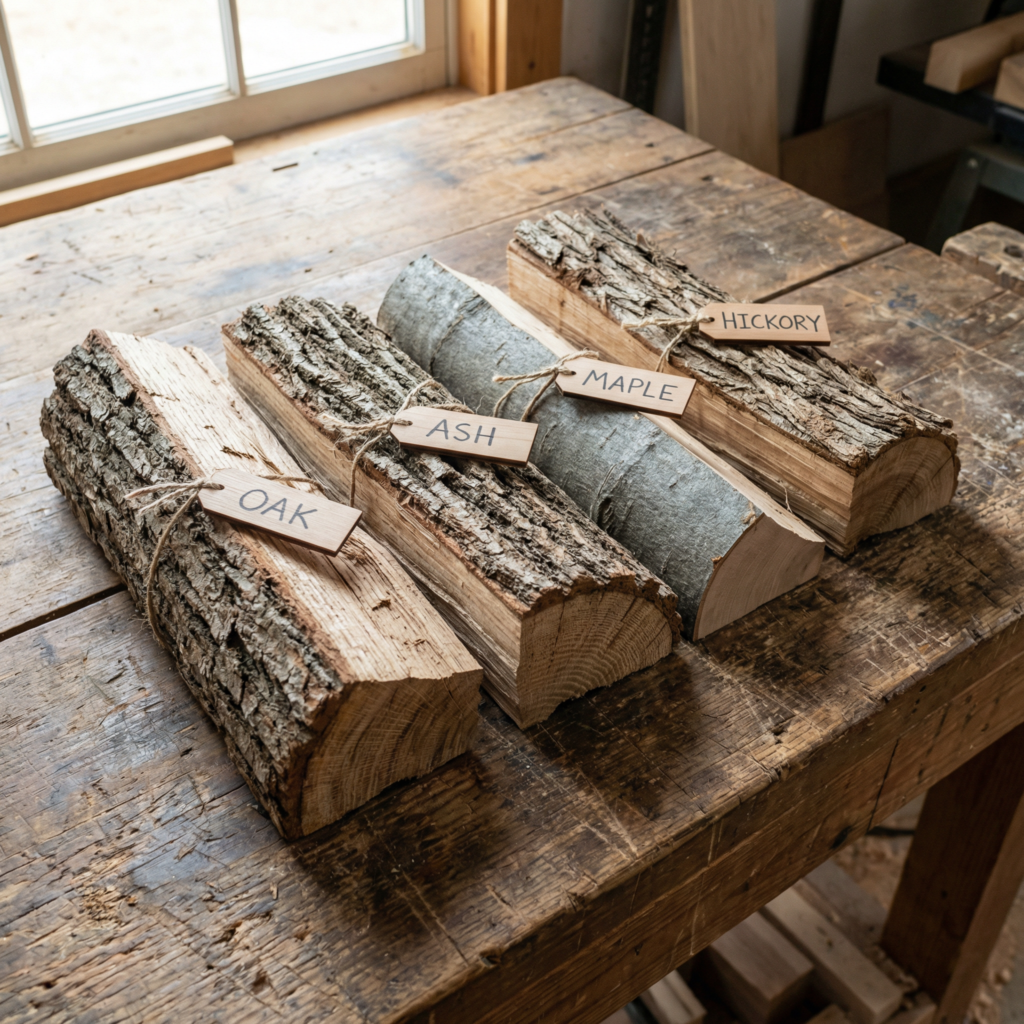
Different woods need different seasoning times when learning how to season firewood for best heat output. Push wood to burn too early and you’ll waste heat and create creosote. Wait too long and you’re tying up space you might need for the next year’s supply.
Fast-Seasoning Woods (6-8 Months)
These woods have lower starting moisture or dry faster due to their cell structure:
- Ash: This is the fastest-seasoning hardwood and my personal favorite when I need wood ready quickly. Ash cut and split in March can be ready to burn by November if conditions are good. It has relatively low initial moisture content and dries readily.
- Black Locust: Extremely dense wood with high BTU output. Despite the density, black locust seasons reasonably quickly, usually ready in 8-10 months with good stacking.
- Cherry: Beautiful wood that smells amazing when burning. Cherry seasons in about 8-10 months and delivers good heat output.
Medium-Seasoning Woods (12-18 Months)
Most popular firewood species fall into this category for how to season firewood for best heat output:
- Maple (Sugar and Red): Plan for 12-14 months minimum. Sugar maple is denser and may need the full 18 months. Red maple is slightly faster.
- Birch: Beautiful bark and decent BTU output, but it must be seasoned properly. Figure 12-15 months. Don’t wait too long to burn birch or it can start to punk and rot.
- Hickory: High-density hardwood with excellent heat output. Needs 12-18 months depending on piece size and climate.
Slow-Seasoning Woods (18-24+ Months)
The heavyweight hardwoods require serious patience:
- Oak (Red and White): The king of firewood and my primary fuel, but oak demands time. White oak in particular can take 2+ years to fully season. I cut my oak a full two years before I plan to burn it.
- Elm: Notoriously difficult to split and slow to dry. If you have access to a hydraulic splitter and 2 years of patience, elm delivers good heat. Otherwise, skip it.
- Beech: Excellent firewood once properly seasoned, but needs 18-24 months minimum.
Plan ahead when learning how to season firewood for best heat output. I keep a three-year rotation going. This year’s burning wood was cut three years ago. Next year’s wood was cut two years ago. And I’m cutting this year’s supply for burning two years from now.
Step 5: Monitor and Test Moisture Levels
You can’t just assume your wood is ready. Learning how to season firewood for best heat output requires actually measuring moisture content to know when it’s safe to burn.
Using a Moisture Meter
A quality moisture meter is essential and costs less than a cord of firewood. I use a pin-type meter that drives two metal probes into the wood to measure electrical resistance, which correlates to moisture content.
The EPA recommends that moisture readings should be taken on newly split sides of wood, with the prongs running parallel with the grain, and you should take 2-3 tests in different locations to get an accurate overall reading.
Here’s my testing procedure for how to season firewood for best heat output verification:
- Take a piece from the middle of your stack, not from the exposed outer edges. The outer pieces dry faster and aren’t representative of the entire pile.
- Split the piece in half with your axe. You want to test the interior moisture, not the surface which can be deceptively dry while the core remains wet.
- Insert the meter’s probes about 1/4 to 1/2 inch into the freshly exposed wood surface, with the probes oriented along the grain direction. Take readings from multiple spots on the piece.
- Test 5-10 pieces from different parts of your stack. This gives you a much better picture than testing just one or two pieces.
- Record your results and keep notes on which stack or section you tested. This helps you learn your local seasoning patterns and plan better for future years.
Reading the Results
The EPA recommends burning wood with a moisture content of 20% or less to reduce harmful air pollution and maximize efficiency. Here’s how to interpret what your meter tells you:
- 15-20% moisture: Perfect. This wood is ready to burn and will deliver maximum heat output with minimal creosote and smoke.
- 20-25% moisture: Technically burnable, but not ideal. Save this for shoulder seasons when you’re not running the stove hard. Mix it with drier wood if you must burn it.
- 25-30% moisture: Not ready. You’ll waste significant energy evaporating water and create creosote buildup. Give it more seasoning time.
- 30%+ moisture: Don’t even think about it. This wood will smoke, struggle to burn, and potentially damage your chimney system.
Visual and Physical Indicators
Before moisture meters existed, people used physical signs to judge seasoning. These still work well alongside meter testing when learning how to season firewood for best heat output:
- End-grain checking: Properly seasoned wood develops cracks or “checks” radiating from the center out to the bark on the cut ends. These are good signs the wood has released moisture.
- Bark condition: Bark that’s loose and falls off easily usually indicates well-seasoned wood. Bark that’s tight and fresh-looking suggests the wood is still green.
- Color changes: Seasoned wood darkens and loses the bright, fresh-cut color. The end grain of oak shifts from light tan to gray-brown as it seasons.
- Sound test: Knock two pieces together. Dry wood makes a sharp, crisp crack. Wet wood makes a dull thud. This takes practice but becomes reliable.
- Weight: Seasoned wood weighs dramatically less than green wood. Pick up a split and compare it to a similar-sized piece from fresh wood. The difference is obvious.
The National Fire Protection Association provides detailed standards on fire safety and wood burning best practices that complement these moisture testing guidelines.
Step 6: Accelerate Seasoning in Special Situations
Sometimes you need wood dried faster than normal. Maybe you bought green wood and heating season is approaching, or you had to cut emergency wood mid-season. Here are proven methods for how to season firewood for best heat output when you’re working against the clock.
Kiln Drying
If you have access to a wood kiln or can rent time in one, kiln drying brings moisture content down to 6-8% in just days. This is how commercial “kiln-dried” firewood achieves such low moisture levels.
The downside is cost and availability. Kiln time isn’t cheap, and most areas don’t have accessible kilns for homeowners. But if you’re in a pinch and have the resources, it works.
Solar Seasoning
Build a simple solar kiln using clear plastic sheeting, lumber frame, and black landscape fabric. The greenhouse effect can raise internal temperatures to 130-150°F on sunny days, dramatically accelerating moisture evaporation.
I’ve built several solar kilns using cattle panels formed into a hoop house shape, covered with 6-mil clear plastic. Paint the back wall black to absorb heat. Include vents at top and bottom for air circulation.
A solar kiln can cut seasoning time by 40-60% compared to outdoor stacking. Wood that would normally take 12 months might be ready in 6-7 months. Not as fast as a real kiln, but much cheaper.
Forced Air Drying
Some people use fans to force air through wood piles. This works but requires electricity and isn’t cost-effective for most situations. The energy cost often exceeds any savings from faster seasoning.
Where forced air makes sense is in enclosed sheds or barns where natural airflow is limited. A simple box fan running 8-12 hours daily can prevent moisture accumulation and keep wood drying when natural ventilation is poor.
Strategic Indoor Storage
Moving wood indoors 2-3 weeks before burning helps surface moisture equilibrate with indoor humidity. This isn’t true seasoning, but it does help wood light easier and burn better.
I keep 3-4 days worth of wood in my mudroom during winter. The dry indoor air pulls moisture from the surface, making starting fires much easier. Just don’t bring truly wet wood indoors or you’ll have mold problems.
For more winter heating strategies including fuel management, check out my guide on best wood stove accessories for efficient burning.
Common Mistakes That Ruin Firewood Seasoning
After 15+ years of heating with wood and helping dozens of neighbors troubleshoot their firewood issues, I’ve seen these mistakes repeated over and over. Avoiding them is crucial when learning how to season firewood for best heat output.
Mistake 1: Stacking Too Soon After Cutting
I see people cut wood in the morning and have it neatly stacked by afternoon. While I appreciate the work ethic, this actually slows seasoning.
Freshly cut wood benefits from 2-4 weeks of loose piling before stacking. Let the rounds sit scattered in the sun where air can reach all surfaces. This initial “shock drying” pulls out surface moisture quickly before you stack for long-term seasoning.
After this initial period, split the wood and then stack properly. You’ll notice the difference in final seasoning time.
Mistake 2: Storing Wood Against Buildings
That spot right against your garage wall seems perfect, doesn’t it? Convenient, somewhat protected, out of the way. It’s also terrible for how to season firewood for best heat output.
Wood stacked tight against buildings doesn’t get airflow on all sides. The building itself often transfers moisture to the wood, especially concrete block or poured foundations. And you’re creating a perfect home for termites, carpenter ants, and mice.
Keep wood at least 3-5 feet from any structure. Yes, this means a few extra steps when carrying wood to your stove, but it’s worth it for properly seasoned fuel.
Mistake 3: Wrapping Stacks in Plastic
I can’t tell you how many times I’ve seen entire wood piles wrapped in tarps like Christmas presents. The wood stays wet for years because moisture can’t escape.
If you must use tarps, drape them loosely over just the top third of the pile and leave all sides completely open. Better yet, use a simple roof structure that keeps rain off while allowing maximum airflow.
Mistake 4: Mixing Species and Years
When you mix different species and cutting years in the same stack, you can’t tell what’s ready to burn. The ash from three years ago is over-dry while the oak from last year is still at 30% moisture, but they all look the same.
Separate your stacks by species and cutting year. Label them. I use lumber crayons to mark stacks with the month and year cut. This takes five seconds and saves enormous confusion later.
Mistake 5: Assuming All Wood Is the Same
“Wood is wood” is a guaranteed way to fail at how to season firewood for best heat output. Oak needs 18-24 months. Ash needs 6-8 months. If you give them all 12 months, half your wood is still wet and half is perfect.
Learn your local wood species and their seasoning requirements. Plan your cutting and stacking schedule accordingly. This is why I maintain that 3-year rotation I mentioned earlier.
Mistake 6: Burning “Seasoned” Purchased Wood
Firewood vendors know the word “seasoned” sells wood. That doesn’t mean their wood is actually seasoned to proper moisture levels.
Because it can be difficult to ensure that purchased firewood is properly seasoned, the best approach is to buy and stack firewood well before it is needed. Buy in spring, test with your moisture meter, and continue seasoning through summer if needed.
Never trust vendor claims without verification. Your moisture meter doesn’t lie.
Regional Considerations for Seasoning Firewood
Climate dramatically affects how to season firewood for best heat output. What works in Arizona fails miserably in Maine, and vice versa.
Cold Humid Climates (Northeast, Upper Midwest, Pacific Northwest)
These regions face the longest seasoning times due to high humidity and shorter, cooler summers. Moisture doesn’t evaporate as readily when air is already saturated.
Plan for maximum seasoning times in these areas. Oak will need the full 24 months. Even ash might need 10-12 months rather than the typical 6-8.
Top covers are essential in high-rainfall areas. You can’t rely on brief sunny periods to offset constant rain exposure. Build proper roofs over your stacks or use metal roofing panels.
Take advantage of winter winds. While wood doesn’t season as fast in cold weather, winter often brings lower humidity and strong winds that continue the drying process, just more slowly.
Hot Dry Climates (Southwest, Inland California)
The opposite challenge exists here. Low humidity means wood seasons incredibly fast, sometimes too fast.
Wood can season in half the normal time in desert climates. I’ve seen ash go from green to 18% moisture in 4 months during Arizona summers. The intense sun and bone-dry air pull moisture out aggressively.
The challenge becomes over-drying and cracking. Wood dried below 10% moisture can develop severe checking and splits that make it hard to stack and burn less efficiently.
In these climates, light top shading can actually help by slowing the seasoning slightly and preventing excessive splitting. I use shade cloth over stacks during peak summer months.
Moderate Climates (Mid-Atlantic, Southeast, Southern Plains)
These areas offer ideal conditions for how to season firewood for best heat output. Warm summers with moderate humidity dry wood well without overdoing it.
Standard seasoning times work perfectly here. Follow the species guidelines mentioned earlier and you’ll hit target moisture content reliably.
The main concern is summer humidity spikes. Cover tops during prolonged rainy periods to prevent moisture re-absorption.
High Altitude Considerations
I heat an off-grid cabin at 8,500 feet elevation, and the thin air affects seasoning in interesting ways.
Lower air pressure means water evaporates more readily at lower temperatures. This can accelerate early-stage seasoning.
However, shorter growing seasons mean less total warm weather for drying. Plan for the lower end of your seasoning time estimates.
Intense UV radiation at altitude can cause severe surface checking and weathering. Some top cover helps protect wood from excessive sun damage.
Storing Properly Seasoned Firewood
Once you’ve successfully completed how to season firewood for best heat output, you need to maintain that condition. Poorly stored seasoned wood can re-absorb moisture and undo months of work.
Long-Term Storage
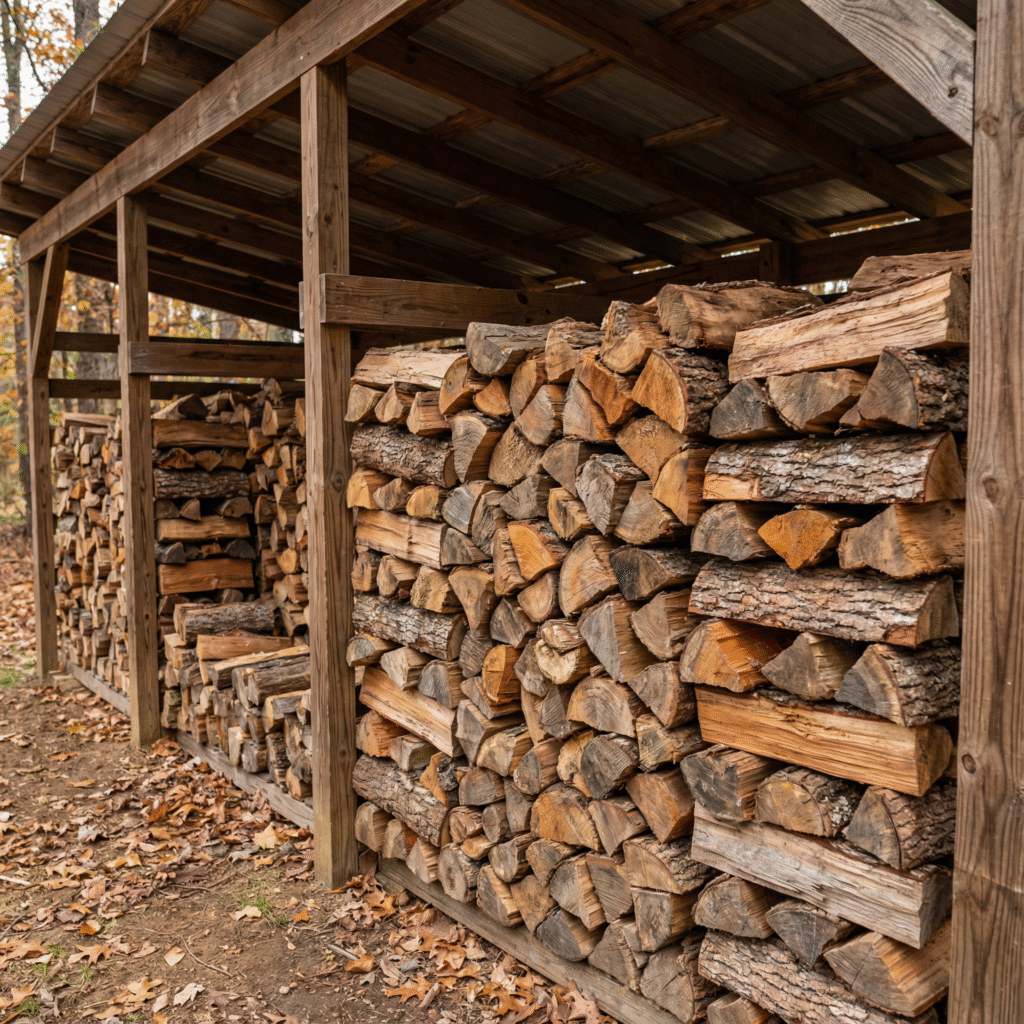
Seasoned wood should be moved under better cover once it’s reached target moisture content. I transition wood from open-air seasoning stacks to a more protected storage area about 3-6 months before burning.
A simple three-sided shed works perfectly. Roof and three walls provide excellent weather protection while the open front allows continued air circulation. Floor should still be elevated and well-drained.
If you’re stacking seasoned wood outdoors, improve your top covers. Seasoned wood is more valuable and deserves better protection than wood that’s still actively seasoning.
Keep seasoned wood separate from green wood. Never add fresh-cut wood to a seasoned stack. The moisture from green wood can transfer to seasoned pieces.
Preventing Re-Absorption
Seasoned firewood typically won’t drop lower than around 10% moisture content because of the humidity of the atmosphere, and wood naturally seeks equilibrium with surrounding air humidity.
In humid climates, even perfectly seasoned wood can creep back up to 22-25% moisture if left exposed to rain and fog. This is why final storage matters for maintaining your hard work on how to season firewood for best heat output.
During very wet periods, covered storage becomes essential. That said, don’t worry about normal seasonal humidity fluctuations. Wood at 18% in September might test at 20% in November due to autumn humidity, but it’s still within acceptable burning range.
Indoor Storage
Keep 3-7 days worth of wood indoors near your stove during heating season. This small supply acclimates to indoor humidity levels and lights easily.
Indoor wood should be stored in a ventilated rack or container, not in cardboard boxes or sealed containers. Air circulation prevents mold growth.
Watch for bark beetles, spiders, and other insects hitchhiking on indoor wood. I knock each piece firmly before bringing it inside and check for obvious bug activity.
Never store more than a week’s worth indoors. The space it takes isn’t worth it, and you’re creating unnecessary insect habitat inside your home.
For complete safety protocols around wood storage and burning, see my guide on wood stove insurance requirements which covers storage distances and fire safety.
Maximizing Heat Output From Seasoned Wood
Learning how to season firewood for best heat output is only half the equation. You also need to burn that wood correctly to extract maximum BTUs.
Loading Strategy
Properly seasoned wood deserves proper loading technique. Don’t just toss logs randomly into the firebox.
Start with a hot coal bed. Seasoned wood lights readily, but it still performs best when placed on established coals from previous loads.
Load wood tightly for long burns, loosely for quick heat. When I want maximum overnight burn time, I pack seasoned hardwood splits tightly together to slow combustion. When I need heat fast, I stack splits loosely with plenty of air gaps.
Mix piece sizes strategically. Large splits for long burns, smaller splits for quick heat, and medium splits for everything in between. How to season firewood for best heat output includes cutting various sizes during the splitting process.
Air Control
Seasoned wood doesn’t need as much air as green wood to burn cleanly. Once the load is fully ignited and burning well, you can close your air intake much more than you could with marginal wood.
This is where properly seasoned wood really shines in modern EPA stoves. The clean, efficient combustion allows long burn times at reduced air settings without the fire going out or creating smoke.
I typically run my primary air wide open for 10-15 minutes after loading, then gradually reduce to 25-30% open for long overnight burns. This only works reliably with wood at proper moisture content.
Avoid Overloading
Just because wood is perfectly seasoned doesn’t mean you should cram the firebox completely full every time. Overloading restricts airflow and leads to incomplete combustion, even with dry wood.
Fill the firebox 75-80% full for normal burns. This leaves room for air circulation and flame development. Save the absolutely packed loads for overnight burns when you really need maximum duration.
Combine Species Intelligently
Here’s a trick I learned from old-timers that really works. Load the bottom of your firebox with dense, slow-burning hardwoods (oak, hickory). Top it with medium-density woods (maple, ash).
The faster-burning top wood provides initial heat and secondary combustion while the dense bottom wood provides long-lasting coals. This combination burns longer and more completely than loading all the same species.
For related techniques on getting the most from your stove, check out my article on how to reduce wood stove smoke which covers optimal burning practices.
FAQ: How to Season Firewood for Best Heat Output
How long does it take to season firewood for best heat output?
Seasoning time varies by species: ash seasons in 6-8 months, maple and hickory need 12-18 months, while oak requires 18-24 months. Climate, splitting size, and stacking methods also affect timing. Always verify with a moisture meter rather than assuming wood is ready based on time alone.
What moisture content should seasoned firewood be for maximum heat?
Properly seasoned firewood should be below 20% moisture content, with the ideal range being 15-20% according to EPA guidelines. Wood above 20% wastes significant energy evaporating water instead of heating your home, while wood below 15% burns extremely efficiently with maximum BTU output.
Can I season firewood in 3 months for emergency use?
Three months isn’t enough for traditional seasoning, but you can accelerate the process using solar kilns, forced air drying, or by selecting fast-drying species like ash and splitting pieces very small (2-3 inches). Even with these methods, aim for 4-6 months minimum and always test moisture content before burning.
Should I cover my firewood while it seasons?
Cover only the top third of your stack with metal roofing or loosely draped tarps, leaving all sides completely exposed for airflow. Never wrap wood in plastic or tarps like a blanket, as this traps moisture and prevents proper seasoning. In dry climates, covers may not be necessary at all.
Does stacking method really affect how fast firewood seasons?
Absolutely. Single-row stacks with proper spacing between pieces dry 40-60% faster than tightly packed double rows. Stacks elevated 4-6 inches off the ground in sunny, windy locations with good airflow can reduce seasoning time significantly compared to ground-contact piles in shade.
Can over-seasoned firewood lose heat value?
No, firewood cannot be too dry for burning efficiency. Very old wood (3+ years seasoned) may become punky or start to rot, which reduces BTU content, but properly stored wood maintains heat value indefinitely. Wood stored dry under cover for 5-10 years burns just as well as 1-year seasoned wood.
How do I know if purchased “seasoned” firewood is actually dry?
Always test purchased firewood with a moisture meter before burning, regardless of vendor claims. Split a piece and test the interior, not the surface. Properly seasoned wood should read below 20%, show cracks in the end grain, have loose bark, make a sharp sound when knocked together, and feel noticeably lighter than green wood.
Conclusion
Learning how to season firewood for best heat output transforms wood heating from a frustrating smoke-filled experience into an efficient, reliable, and satisfying way to heat your home. The process requires patience, proper technique, and attention to detail, but the payoff is enormous.
Properly seasoned wood delivers 40-60% more usable heat than green wood, burns cleaner with minimal creosote buildup, lights faster and easier, and reduces wood consumption by up to a third. These benefits add up to significant savings in both money and effort over a heating season.
Start by cutting wood at the right time, split it promptly to appropriate sizes, and stack it in a sunny, windy location with excellent airflow. Give different species the time they need, verify moisture content with reliable testing, and protect your investment with proper storage practices.
The three-year rotation I maintain means I’m never scrambling for dry wood. This year’s fires burn wood I cut three years ago, and I’m already preparing fuel for 2028. This system removes stress from wood heating and ensures consistently good results.
Whether you’re heating a tiny cabin or a large farmhouse, the principles of how to season firewood for best heat output remain the same. Apply them consistently and you’ll enjoy warmer winters, cleaner chimneys, and the satisfaction of heating your home with fuel you prepared yourself.
