
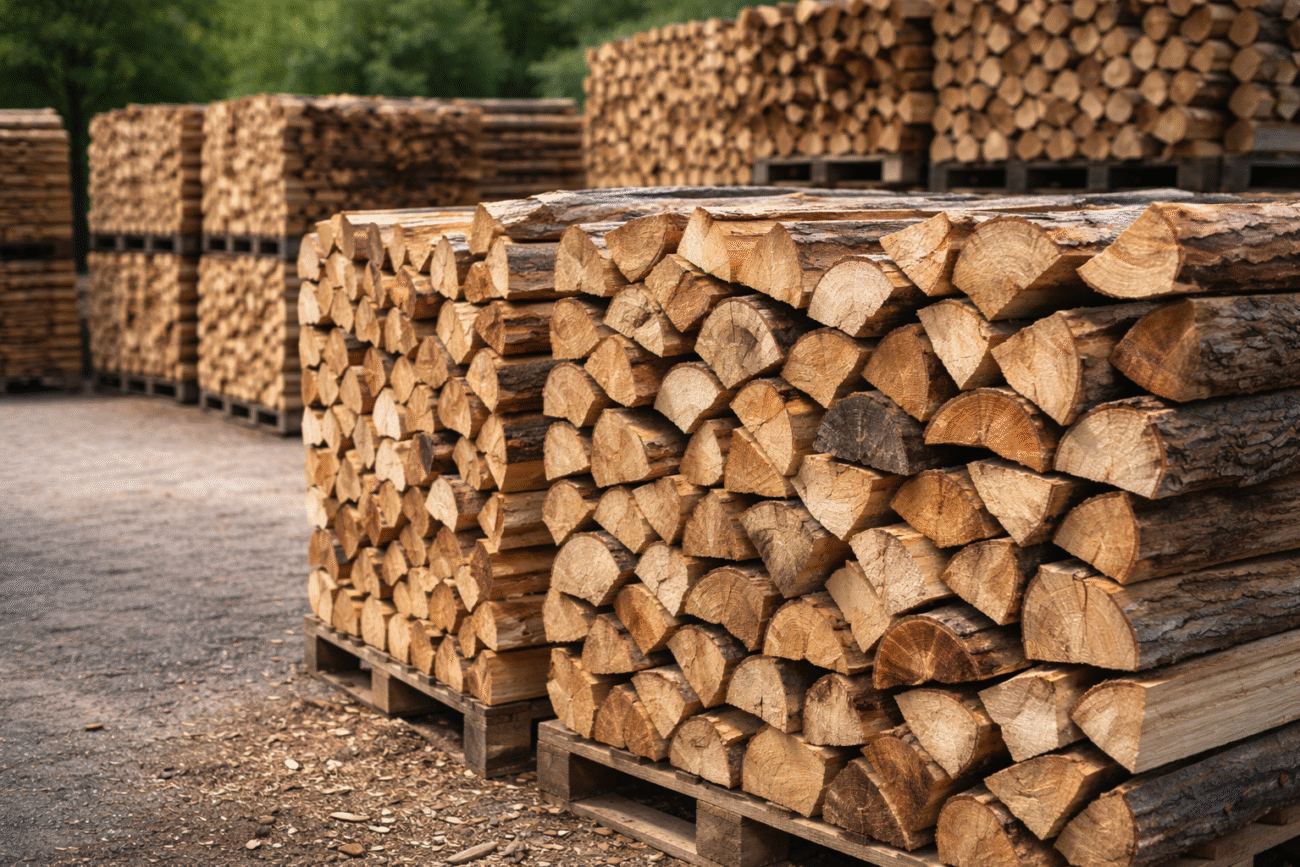
You’re standing in your driveway on a crisp October morning, watching a firewood vendor unload what they claim is a “full cord.” Something doesn’t look right. The stack seems short, and you’re pretty sure you’re paying way more than your cousin in Vermont did last month. You’re not alone in wondering whether you’re getting a fair deal on firewood, especially when cord of wood price by state varies so dramatically across the country.
Understanding cord of wood price by state matters more than ever in 2026. A full cord of seasoned hardwood ranges from $150 to $575 nationally, with the average hovering around $300. However, where you live makes a massive difference. Vermont residents might pay $470 for kiln-dried hardwood, while buyers in Idaho could find cords for $200. These aren’t small variations, they’re differences that can double your heating costs for an entire winter.
This guide breaks down exactly what you’ll pay for cord of wood price by state in 2026, including detailed regional breakdowns, money-saving strategies, and how to spot scams before you hand over your cash. Whether you’re researching cord of wood price by state for budgeting purposes or comparing quotes, by the end you’ll know whether that firewood quote is fair or if you should keep shopping.
What Determines Regional Firewood Costs
The cord of wood price by state isn’t random. Several interconnected factors create the pricing puzzle you see across America.
Forest abundance plays the biggest role. States with extensive hardwood forests, like Maine, Oregon, and North Carolina, benefit from local supply chains that keep transportation costs low. When firewood doesn’t travel far from forest to fireplace, you save money. According to the U.S. Forest Service, regions with sustainable logging operations maintain lower base costs for raw wood.
Transportation distance matters tremendously. Arizona’s premium oak prices, which can hit $1,100 per cord, reflect long-haul trucking from out-of-state sources. Every mile adds roughly $2 to your delivery fee, and when firewood travels hundreds of miles, those costs stack up fast.
Local demand creates predictable price swings. Northern states with harsh winters see consistent year-round demand, which stabilizes prices but keeps them higher overall. Southern states might have cheaper baseline prices but experience dramatic winter spikes when cold snaps hit.
Urban versus rural location shifts cord of wood price by state within regions themselves. City dwellers typically pay 15-20% more than rural buyers. That $300 cord in a countryside Vermont town might cost $360 in Burlington, simply because of delivery logistics and limited storage space for urban suppliers.
Climate severity drives consumption patterns. Minnesota homeowners burning wood as primary heat might use 5-8 cords per season, creating steady demand that supports more suppliers and competitive pricing. Compare that to Tennessee, where occasional use means fewer vendors and less price competition.
State regulations and forestry policies also influence costs. Some states require firewood certification to prevent invasive species spread, adding inspection fees. Others restrict harvesting seasons or require permits for commercial cutting, all of which show up in your final price.



National Price Ranges For 2026
Let’s cut through the confusion and look at actual numbers. The cord of wood price by state varies widely across 2026, but understanding national averages for cord of wood price by state gives you a solid benchmark for negotiations with local suppliers.
Full Cord Pricing
A standard full cord (128 cubic feet) of mixed seasoned hardwood costs between $250-$400 across most of the United States in 2026. Premium options push higher:
- Basic mixed hardwood: $250-$350
- Premium oak or hickory: $350-$500
- Kiln-dried specialty wood: $400-$575
- Budget softwood or pine: $150-$300
Half Cord Economics
Half cords don’t simply cost half the price of full cords. You’ll pay a premium per cubic foot:
- Mixed hardwood half cord: $180-$280
- Premium hardwood half cord: $200-$350
- Softwood half cord: $120-$200
Face Cord Reality
Face cords (also called rick cords) measure about 43 cubic feet and represent roughly one-third of a full cord. Pricing gets tricky here because some sellers use confusing terminology:
- Standard face cord: $120-$200
- Premium hardwood face cord: $140-$250
Quarter Cords And Bundles
For casual users, smaller quantities make sense, but you’ll pay significantly more per unit:
- Quarter cord: $75-$175
- Campfire bundles (1 cubic foot): $5-$15
The U.S. Department of Energy recommends buying in bulk when possible to maximize value. Those $10 bundles from gas stations? You’re paying roughly $640-$1,280 for the equivalent of one full cord, a terrible deal compared to buying bulk.
When comparing cord of wood price by state offers, always verify you’re comparing the same measurements. A “cord” should always mean 128 cubic feet, but unscrupulous sellers sometimes use vague terms like “truckload” to confuse buyers.
Northeast Region Breakdown
The Northeast commands some of the highest cord of wood price by state figures nationally when analyzing cord of wood price by state data, but it’s not without good reason given the region’s quality standards and harsh winters.
Vermont And New Hampshire
Vermont tops the charts at $470-$475 per cord for kiln-dried premium hardwood. Standard seasoned hardwood runs $350-$450. Why so high? Quality matters here. Vermont suppliers often invest in professional kiln-drying equipment, reducing moisture content below 15%, which the Chimney Safety Institute of America confirms creates cleaner, more efficient burns.
New Hampshire mirrors Vermont’s pricing, with full cords ranging $340-$460 depending on wood type and delivery distance.
Maine’s Competitive Market
Maine offers slightly better value despite similar climate demands. Full cord prices range from $250-$500, with the average settling around $325. Half cords run $125-$300. Maine’s abundant forests keep supply steady, and the state’s wood culture means more suppliers competing for business.
Regional variations exist within Maine itself. Coastal areas with longer transportation routes pay more than inland forest communities.
Connecticut’s Premium Position
Connecticut’s state regulations require firewood sales by the cord or half-cord only, protecting consumers from measurement scams. According to Connecticut Consumer Protection, seasoned firewood costs $220-$300 per cord statewide, with premium hardwoods reaching $350.
Connecticut buyers should demand stacking to verify measurements. If your vendor refuses, find another supplier.
Massachusetts And Rhode Island
Urban density drives prices up. Boston-area buyers pay $350-$450 for seasoned hardwood cords, while rural western Massachusetts sees $280-$380. Rhode Island follows similar patterns, with Providence-area premiums adding 15-20% over rural prices.
Pennsylvania’s Value
Pennsylvania offers some of the Northeast’s best cord of wood price by state values when comparing cord of wood price by state across the region. Full cords range $220-$350, with many reputable sellers like Richards Tree Farm in East Stroudsburg offering full cords around $220. The state’s extensive hardwood forests and rural supplier network keep competition healthy and cord of wood price by state reasonable.
For folks heating primarily with wood in the Northeast, expect to budget $1,200-$2,000 for a full winter’s supply (4-6 cords). That’s significantly less than oil heat in most cases, making wood an economical choice despite higher per-cord prices. Check out our guide on best firewood for wood stoves to maximize your heating efficiency.
Midwest And Great Lakes Pricing
The Midwest presents a mixed bag for cord of wood price by state analysis, with significant variations in cord of wood price by state driven by forest coverage and population density across this diverse region
Michigan And Wisconsin
Both states benefit from abundant hardwood forests. Michigan’s Upper Peninsula offers some of the region’s best deals at $200-$300 per cord for quality hardwood. Lower Michigan and southern Wisconsin see higher prices, $280-$380, due to denser populations and longer delivery routes.
Wisconsin’s oak and maple cords typically run $250-$350, with premium ash (increasingly scarce due to emerald ash borer) commanding $350-$450 when available.
Minnesota’s Stable Market
Minnesota’s harsh winters create year-round demand that paradoxically stabilizes prices. Full cords of mixed hardwood cost $250-$350, with birch and oak at the higher end. Rural areas near state forests see prices dip to $200-$280.
Twin Cities metro buyers pay the premium, often $300-$400 for delivered and stacked hardwood. Northern Minnesota, where wood heat remains common, maintains robust supplier networks with competitive $225-$300 pricing.
Illinois And Indiana
Southern regions of these states have less forest coverage, driving cord of wood price by state higher. Chicago-area buyers face $320-$450 for seasoned hardwood, while rural Illinois ranges $250-$350.
Indiana mirrors this pattern. Indianapolis suburbs see $300-$400, while southern Indiana near Louisville benefits from Kentucky’s lumber industry with $240-$320 pricing.
Ohio’s Regional Splits
Ohio divides into two distinct markets. Northeast Ohio around Cleveland pays $280-$380 for hardwood cords. Southeast Ohio, with extensive Appalachian forest access, offers $220-$300.
North Dakota And South Dakota
Limited forest resources make these states challenging. Firewood here often travels from Minnesota or Montana, adding transportation premiums. Expect $200-$350 for mixed wood, with oak or specialty hardwoods reaching $350-$450.
The Dakotas also see significant seasonal swings. Summer purchases might save 25-30% compared to desperate February buying.
For Midwest buyers using wood as primary heat, the math works favorably. A typical well-insulated 1,800-square-foot home needs 4-5 cords annually, costing $1,000-$1,750 total. That beats natural gas in many markets and provides backup heating when storms knock out power. Learn proper burning techniques with our overnight burn guide.
Southern States Analysis
The South presents the nation’s most variable cord of wood price by state landscape, with dramatic differences between coastal, mountain, and plain regions.
North Carolina’s Appalachian Advantage
Western North Carolina benefits from extensive Appalachian hardwood forests. Full cords run $250-$400, averaging around $300. Eastern coastal areas, farther from mountain timber sources, pay $320-$450.
North Carolina’s regulations mirror Connecticut, requiring sales by standardized cord measurements. The state’s forestry extension programs also educate buyers on proper seasoning and storage.
Tennessee And Kentucky
Tennessee’s pricing splits geographically. East Tennessee mountain regions see $240-$350 for mixed hardwood, while Nashville and Memphis areas pay $300-$400. Kentucky follows similar patterns, with rural areas offering $250-$350 and Louisville suburbs reaching $320-$420.
Both states benefit from robust Appalachian timber industries, keeping supply chains efficient and prices competitive compared to coastal states.
Virginia And West Virginia
Virginia’s cord of wood price by state ranges from $260-$380 for standard hardwood, with northern Virginia near D.C. commanding premium prices of $350-$450. West Virginia’s extensive forests provide some of the region’s best values at $220-$320 per cord.
West Virginia suppliers often sell directly to consumers, cutting out middleman costs. However, verify seasoning quality, as some sellers move green wood at lower prices that seems like deals but burns poorly.
Georgia And The Carolinas
South Carolina and Georgia see less residential wood heating, which means fewer suppliers and higher prices when you do find them. Atlanta-area pricing hits $300-$450, while rural Georgia ranges $260-$350.
Coastal regions in both states face the highest prices, sometimes reaching $400-$500 for quality hardwood, due to limited local timber and saltwater corrosion concerns for outdoor storage.
Florida’s Unique Market
Florida represents an outlier. Limited hardwood forests, minimal heating demand, and high humidity (which complicates seasoning) create a sparse market. Miami or Tampa buyers seeking firewood for occasional use might pay $350-$550 for a cord that would cost $250 in Tennessee.
Most Florida firewood goes to restaurants for wood-fired cooking rather than residential heating, creating a specialty market with premium pricing.
Arkansas, Louisiana, And Mississippi
These states offer moderate pricing but limited selection. Mixed hardwood runs $240-$340 in most areas, with oak commanding $300-$400. Urban areas like Little Rock, Baton Rouge, and Jackson see premiums of $50-$100 over rural prices.
Hurricane-prone regions sometimes see price spikes after major storms, as cleanup crews generate excess wood that floods the market temporarily, then subsides.
Southern buyers using wood for ambiance rather than primary heat should consider propane alternatives for easier maintenance with similar aesthetic appeal.
Western States Comparison
Western cord of wood price by state figures show the nation’s widest range when comparing cord of wood price by state from coast to mountains, from bargain basement to eye-watering premium depending on your specific location.
Pacific Northwest Value
Oregon and Washington benefit from the country’s most productive timber regions. Rural western Oregon sees full cords for $250-$350, while Portland metro pricing hits $320-$420. Eastern Oregon, with less forest density, ranges $280-$380.
Washington mirrors Oregon’s pricing closely. Seattle-area buyers pay $340-$450, while Spokane and eastern Washington range $260-$360. Both states offer excellent quality, with Douglas fir and various hardwoods readily available.
California’s Complex Market
California divides into distinct regions. Northern California timber country offers $280-$380 per cord for quality wood. Bay Area pricing jumps dramatically to $400-$550 due to transportation costs and limited storage options in dense suburbs.
Southern California presents serious challenges. Limited forests, strict air quality regulations on wood burning in many counties, and long-haul transportation push prices to $450-$650 for hardwood cords. Many SoCal residents opt for manufactured fire logs instead.
Mountain State Variations
Colorado shows interesting patterns. Denver-area buyers pay $250-$350 for mixed wood, benefiting from Rocky Mountain forests. However, specialty oak or fruit woods can hit $400-$500 due to importation from other regions.
Idaho and Montana offer some of the West’s best cord of wood price by state deals. Rural Idaho sees $200-$300 for quality mixed wood, though Boise adds $50-$100 for delivery and urban logistics. Montana’s pricing runs $220-$320, with western Montana’s forests providing better access than eastern plains.
Wyoming follows Montana’s patterns, with Jackson Hole and tourist areas commanding premium $320-$420 pricing while rural areas stay at $240-$330.
Southwest Premium Pricing
Arizona represents the extreme high end nationally when examining cord of wood price by state. Limited local hardwood forces importation from surrounding states. According to recent market data, Arizona cord of wood price by state figures range from $325 for Aleppo pine to an astounding $1,100 per cord for premium oak, making it the highest cord of wood price by state in the nation.
New Mexico faces similar challenges but maintains slightly lower pricing at $300-$450 for mixed wood and $450-$650 for oak. Both states’ dry climates mean wood seasons quickly once delivered, a small consolation for the premium prices.
Utah’s pricing falls between Colorado and Arizona at $280-$400 for most hardwoods, with Salt Lake City metro adding typical urban premiums.
Nevada’s Sparse Market
Nevada’s limited forests create a challenging market. Las Vegas and Reno buyers might pay $350-$500 for cords that would cost $250 in Oregon. Rural Nevada sometimes sees better deals from suppliers serving the agricultural community, but options remain limited.
Western buyers should calculate heating costs carefully using our wood heating calculator before committing to wood as a primary heat source in high-cost markets.


Factors That Increase Your Costs
Beyond regional cord of wood price by state averages that show baseline cord of wood price by state, specific factors can add significantly to your final bill and shift actual cord of wood price by state you pay.
Delivery Distance And Fees
Most suppliers include free local delivery within 10-15 miles. Beyond that, expect charges of $2-$3 per mile. If you’re 40 miles from the nearest firewood dealer, that’s an extra $50-$90 on your order.
Some suppliers offer delivery-only pricing, while others bundle delivery with purchase. Always clarify which model you’re dealing with before ordering.
Stacking Services
Dumping firewood in your driveway costs nothing extra, but stacking it properly adds $25-$80 per cord depending on distance from the truck. For elderly buyers or those with physical limitations, this service makes sense. For others, recruit friends with pizza and beer as payment.
Premium Wood Species
Generic “mixed hardwood” represents your baseline price. Requesting specific species increases costs:
- Oak (any variety): Add $30-$80 per cord
- Hickory: Add $50-$100 per cord
- Cherry: Add $100-$200 per cord
- Black locust: Add $80-$150 per cord
- Fruit woods (apple, peach): Add $100-$300 per cord
Cherry firewood can reach $900 per cord in some markets, though that’s usually for specialty smoking wood rather than home heating.
Seasoning Level And Moisture Content
Green (unseasoned) firewood costs 30-50% less than properly seasoned wood but requires 6-18 months of storage before burning. According to the Environmental Protection Agency, burning wood above 20% moisture content reduces heat output by up to 45% and dramatically increases creosote buildup.
Kiln-dried wood, with moisture below 15%, commands premiums of 25-40% over air-dried seasoned wood. However, it burns immediately with maximum efficiency.
Custom Cut Lengths
Standard 16-inch pieces fit most stoves. If you need 12-inch, 18-inch, or 24-inch lengths, expect to pay $25-$50 more per cord for the extra processing time.
Seasonal Timing
Winter purchases during peak demand cost 20-30% more than summer buying. A cord costing $250 in July might hit $325 in January. Smart buyers stock up during spring and summer to lock in lower cord of wood price by state rates.
Small Quantity Premiums
Buying less than a full cord dramatically increases your per-cubic-foot cost. Those $10 campfire bundles work out to about $1,280 per cord equivalent, roughly quadruple the bulk rate.
Wood Splitting And Processing
Some sellers offer rounds (unsplit logs) at discounted prices, typically 25-30% less than split wood. If you’ve got the equipment and willingness to split several cords yourself, this saves money. Most buyers prefer paying for the convenience of pre-split wood.
Understanding these variables helps you negotiate better. For example, if you’re flexible on species and willing to accept mixed hardwood instead of all oak, you might save $50-$100 per cord without sacrificing much heat output. Check out our oak firewood guide to understand whether premium oak justifies its higher cost for your situation.
How To Save Money On Firewood
Smart buying strategies can cut your heating costs significantly without sacrificing warmth or safety, helping you beat average cord of wood price by state no matter where you live.
Buy Summer, Burn Winter
This is the golden rule. Purchase firewood between April and August when demand plummets. You’ll save 20-30% compared to desperate November buying. That $350 winter cord might cost only $250 in June.
Buy Green And Season It Yourself
Green firewood costs 30-50% less than seasoned wood. If you’ve got storage space and can plan ahead, buy green in spring and let it season for 12-18 months. You’ll need proper stacking techniques, which the U.S. Forest Service details in their wood seasoning guides.
Bulk Purchasing Power
Many suppliers discount orders of 3+ cords. Instead of paying $300 per cord for single-cord orders, you might get 3 cords for $800, saving $100 overall. Split the order with neighbors if you can’t use three cords yourself.
Cut Your Own Permits
National forests often sell firewood permits allowing you to cut dead standing timber. Prices vary by region, but $20-$100 permits typically allow 2-4 cords worth of cutting. Oregon’s Willamette National Forest, for example, offers $20 permits for 2 cords.
You’ll need equipment (chainsaw, safety gear, truck), physical ability, and time. But for rural homeowners, this drastically reduces cord of wood price by state costs.
Source From Arborists And Tree Services
Tree removal crews often have excess wood they’ll give away or sell cheap rather than paying dump fees. Call local services and ask about availability. You’ll usually get unseasoned rounds needing splitting and seasoning, but free wood is hard to beat.
Storm cleanup after major weather events creates temporary gluts of free or cheap wood. Stay safe, don’t trespass, but keep eyes open for opportunities.
Avoid Small Bundle Purchases
Those convenient gas station bundles cost 4-5 times more per cord equivalent than bulk buying. If you burn wood regularly, they’re a terrible value. Stock bulk wood at home and skip the expensive convenience wood.
Negotiate Stacking Fees
If you’re buying multiple cords, ask whether the supplier will stack for free or reduced cost. Many will waive the $25-$80 per cord stacking fee for 3+ cord orders, especially during slow summer months.
Mix Species Strategically
Don’t insist on all-oak cords. Mix premium hardwoods with good but less expensive options like ash or maple. You’ll get 90% of oak’s performance at 70% of the cost.
Check Moisture Content
Bring a moisture meter (available for $20-$40) when accepting delivery. Wood sold as “seasoned” should test below 20% moisture. If it’s 25-30%, you’re paying premium prices for wood that needs more drying. Negotiate a discount or refuse delivery.
Join Wood Co-Ops
Some rural communities organize firewood co-ops that purchase wholesale and distribute to members. You’ll get bulk pricing without handling full truckload logistics yourself.
These strategies combined can reduce your annual firewood costs by 30-50%, making wood heat even more economical compared to fossil fuels.
Red Flags When Buying Firewood
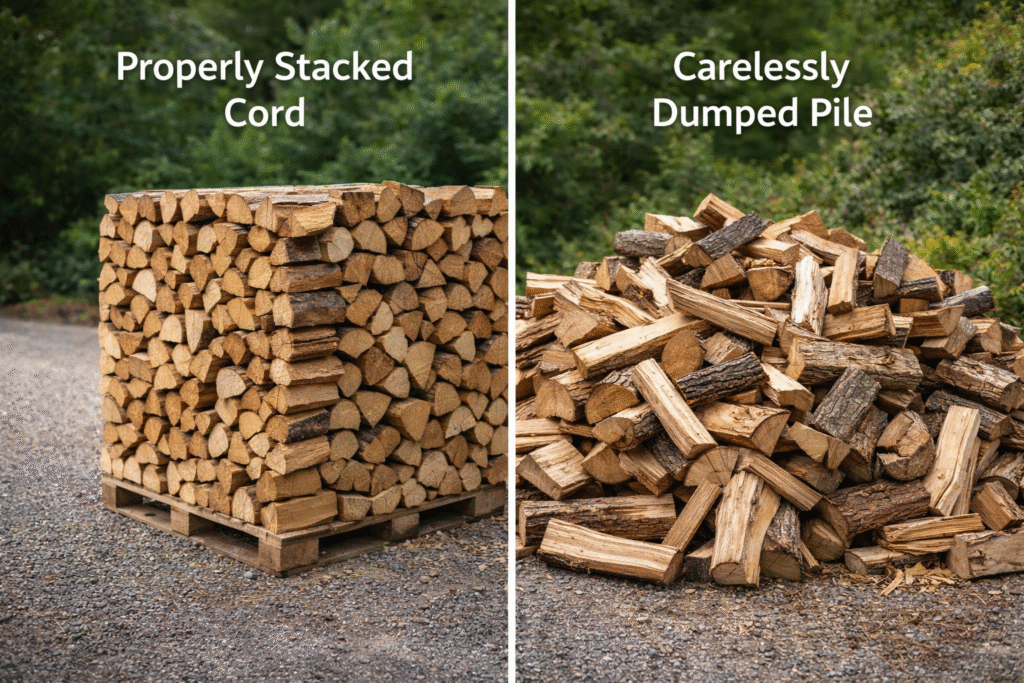
Knowing fair cord of wood price by state ranges matters when comparing cord of wood price by state offers, but avoiding scams matters even more than getting the lowest cord of wood price by state.
Vague Quantity Descriptions
If a seller refuses to specify whether they’re selling a full cord, half cord, or face cord, walk away. Terms like “truckload” or “rack” aren’t standardized and often mean less wood than you’d expect.
Refusing To Stack For Measurement
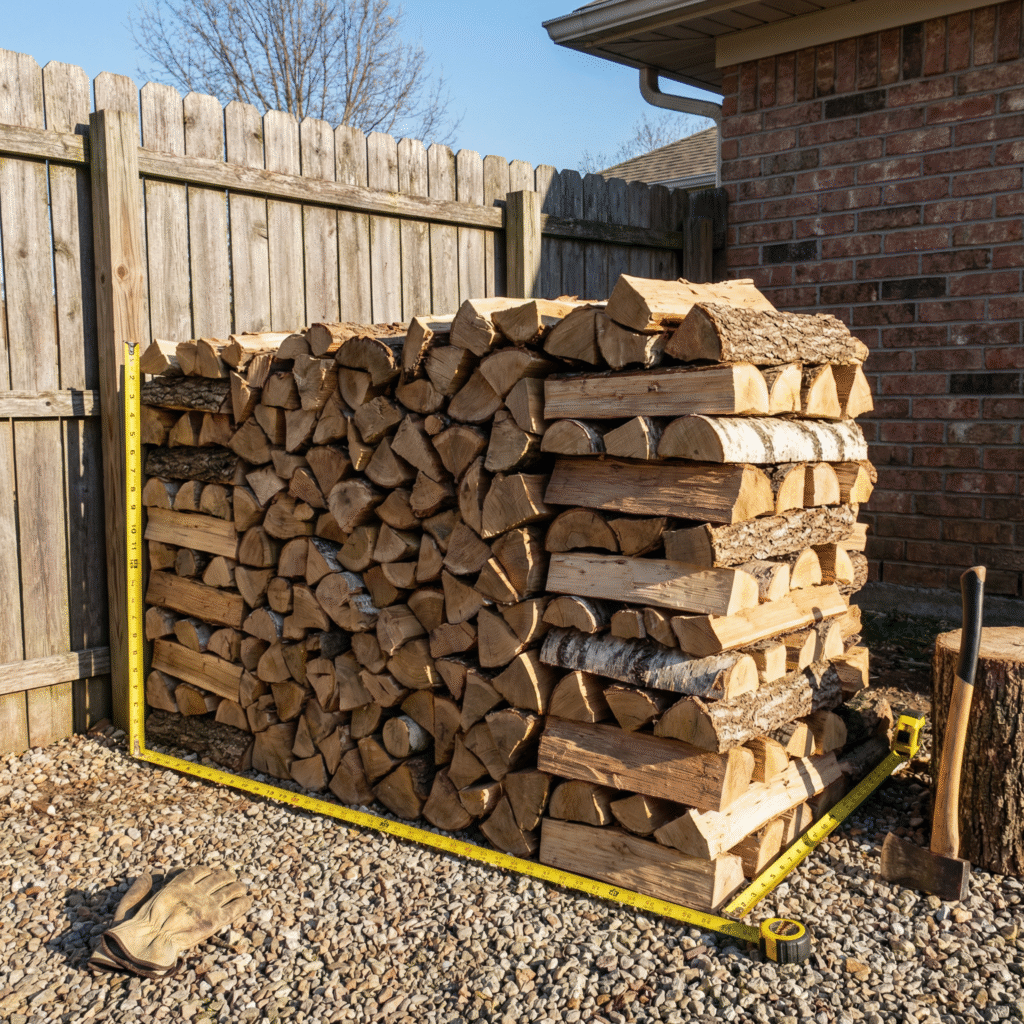
Legitimate sellers will stack your firewood so you can verify the cubic footage. A proper cord measures 4 feet high, 4 feet deep, and 8 feet long, totaling 128 cubic feet. Sellers who dump and run might be short-changing you.
Unreasonably Low Prices
If someone offers seasoned oak for $150 per cord when regional prices run $300-$350, something’s wrong. You’re probably getting green wood, mixed junk wood, or short measurements.
No Business Information
Reputable firewood sellers have business names, addresses, and phone numbers. Random Craigslist ads with only cell numbers and cash-only policies create no recourse if you get burned. The Better Business Bureau can verify legitimate businesses in your area.
High-Moisture “Seasoned” Wood
Truly seasoned hardwood has been drying for 6-18 months and tests below 20% moisture. If wood looks freshly split, feels heavy, or doesn’t make a sharp clacking sound when struck together, it’s probably green regardless of what the seller claims.
Mixed Junk Wood
Some unscrupulous sellers pad hardwood cords with construction scraps, softwood, or even treated lumber (which releases toxic fumes when burned). Inspect before accepting delivery. Quality hardwood has clean splits, minimal bark, and consistent piece sizes.
Delivery Trucks That Don’t Measure Up
A standard pickup truck bed holds roughly half a cord of loosely loaded wood. If someone claims their single pickup load is a “full cord,” the math doesn’t work. Half-ton pickups can’t even safely carry a full cord’s weight (2,500-5,000 pounds).
Pressure To Pay Upfront
Reputable dealers accept payment on delivery after you’ve verified the load. Be cautious of sellers demanding full payment before delivering wood you haven’t inspected.
Invasive Species Warnings
Responsible sellers should explain the importance of burning local wood to prevent invasive pest spread. According to the USDA Animal and Plant Health Inspection Service, moving firewood long distances can transport pests like emerald ash borer or spotted lanternfly that devastate forests.
If your seller doesn’t know or care where their wood comes from, they might be enabling ecological damage.
No Knowledge Of Wood Species
Professional firewood dealers know their inventory. If a seller can’t tell you whether you’re getting oak, maple, ash, or mixed hardwood, they’re probably just flipping wood without proper processing or seasoning.
Trust your instincts. If something feels off about a firewood transaction, find another supplier. The few dollars you might save aren’t worth the headaches of inadequate heating or unsafe wood.

Best Times To Purchase Firewood
Strategic timing dramatically affects your cord of wood price by state costs and wood quality.
April Through July: Prime Buying Season
This window offers the best combination of price and selection. Suppliers want to move inventory from the previous year to make room for new cutting. Demand sits at annual lows, giving you negotiating power.
You’ll save 20-30% compared to fall prices. That $300 fall cord might cost only $225 in May. Plus, you’ll have pick of the best wood, whereas late-season buyers take whatever’s left.
August Through September: Last Chance For Deals
As summer ends, prices start climbing but haven’t yet hit peak levels. You can still find 10-15% discounts compared to November pricing. This window works for procrastinators who missed spring sales but want to avoid winter premiums.
October Through November: Premium Pricing Begins
First cold snaps trigger panic buying. Cord of wood price by state figures jump 15-25% as demand spikes. Selection narrows as popular species (oak, hickory) sell out. You’ll get wood, but you’ll pay for waiting.
December Through February: Desperation Premiums
Winter storm forecasts create urgency. Sellers know it and price accordingly. You might pay 30-40% more than summer prices for the same wood. Worse, you’ll likely get whatever’s left, possibly including inferior species or marginal seasoning quality.
March: Shoulder Season
As winter wanes, prices soften slightly. Suppliers want to clear remaining inventory before spring deliveries begin. You might find 10-15% discounts, though selection will be picked over.
Multi-Year Planning
The absolute best strategy? Buy two years ahead. Purchase green wood in spring, season it for 18-24 months, and you’ll always have a cord ready while paying the lowest possible prices. This requires storage space and planning, but cuts heating costs dramatically.
For anyone serious about wood heat, treat firewood buying like any other commodity. Purchase when prices are low, regardless of immediate need, and you’ll never pay peak prices again.
Measuring And Verifying Your Delivery
Don’t trust, verify. Confirming you received the firewood you paid for protects your investment.
Understanding Cord Measurements
A full cord equals 128 cubic feet arranged as a stack 4 feet high, 4 feet wide, and 8 feet long. That’s not 128 cubic feet of solid wood, it includes air gaps between logs. Actual solid wood volume is typically 70-90 cubic feet depending on how tightly pieces stack.
This matters because some sellers exploit confusion. They might stack wood only 3 feet high and claim it’s “close enough,” shorting you 25% of what you paid for.
Proper Stacking For Verification
Ask your supplier to stack the wood in a measureable row. Use a tape measure to verify dimensions. Four feet high, four feet deep, eight feet long equals one cord. If measurements don’t match, don’t pay until they deliver what you ordered.
Some sellers argue stacking styles affect totals. While true, the legal definition remains 128 cubic feet. They need to deliver that volume regardless of how logs happen to fit together.
Face Cord Verification
A face cord (rick cord) should measure 4 feet high, 8 feet long, and 16 inches deep, totaling about 43 cubic feet or one-third of a full cord. Many sellers use “face cord” loosely, sometimes meaning just a single row of any dimension.
Always confirm the exact measurements you’re getting. Calculate cubic footage yourself, don’t rely on vague terminology.
The Pickup Truck Test
A full-size pickup truck bed holds roughly half a cord of loosely stacked wood. If your “full cord” delivery fits easily in a single pickup load, you’re being shorted. Physics doesn’t lie.
Moisture Meter Verification
Seasoned wood should test below 20% moisture on a freshly split surface. Test multiple pieces from different parts of the pile. If readings consistently exceed 25%, the wood isn’t properly seasoned regardless of what the seller claimed.
Quality meters cost $25-$50 and pay for themselves by preventing one bad firewood purchase. Our cord of wood calculator can help you determine proper measurements and verify pricing.
Weight Considerations
A cord of seasoned hardwood weighs 2,500-5,000 pounds depending on species and moisture. Oak runs heavy (4,000+ pounds), while ash is lighter (3,000 pounds). If the delivery seems suspiciously easy to unload, you might have received less than promised.
Photographic Evidence
Snap photos of stacked deliveries before accepting them. If you later discover short measurements, photos provide evidence for disputes.
Know Your Rights
Many states regulate firewood sales and require deliveries match advertised volumes. Contact your state’s weights and measures department if you’ve been shorted. They can investigate and fine dishonest sellers.
Being thorough during delivery prevents costly mistakes. Five minutes of measurement saves hours of frustration and wasted money.
FAQs : Cord Of Wood Price By State in 2026
What is the average cord of wood price by state in 2026?
The average cord of wood price by state ranges from $150 in low-cost areas like Idaho and North Dakota to $575 in premium markets like Arizona and Vermont. Nationally, most homeowners pay $250-$400 for a full cord of seasoned mixed hardwood, with the overall average around $300. Urban areas typically add 15-20% to rural pricing within the same state.
Which states have the cheapest firewood prices?
Idaho, Montana, and North Dakota offer some of the nation’s lowest cord of wood price by state rates at $200-$300 for mixed hardwood. Rural Pennsylvania and West Virginia also provide excellent value at $220-$320 per cord. These states benefit from abundant local forests, low population density, and robust supplier competition.
Why does cord of wood price by state vary so dramatically?
Regional pricing differences stem from forest abundance, transportation distances, local demand, and climate severity. States with extensive timber resources like Oregon and Maine maintain lower base costs, while desert states like Arizona pay premiums for imported wood. Urban versus rural location within states also creates 15-20% price variations.
When is the best time to buy firewood to save money?
Purchase firewood between April and July for maximum savings of 20-30% compared to winter prices. Early summer represents the sweet spot when demand drops, suppliers want to clear inventory, and you’ll have the best selection. Avoid buying during October through February when cold weather drives prices up 30-40%.
How can I verify I’m getting a full cord of wood?
A true full cord measures exactly 128 cubic feet, stacked 4 feet high, 4 feet wide, and 8 feet long. Insist your supplier stack the wood so you can measure it yourself before paying. Use a tape measure to verify dimensions, test moisture content with a meter (should be under 20%), and compare the pile to a pickup truck bed (which holds approximately half a cord).
What’s the difference between a full cord and face cord pricing?
A full cord contains 128 cubic feet of stacked wood, while a face cord (rick cord) measures approximately 43 cubic feet, roughly one-third of a full cord. However, face cords don’t cost one-third the price of full cords. You’ll typically pay 40-50% of a full cord’s price for a face cord, representing a 20-50% premium per cubic foot due to smaller quantity pricing.
Is buying green firewood and seasoning it yourself worth the savings?
Yes, if you have storage space and can plan 12-18 months ahead. Green firewood costs 30-50% less than seasoned wood, saving $75-$150 per cord. For example, green wood at $175 versus seasoned at $300 saves $125, which covers the time and space investment if you burn multiple cords annually. However, burning green wood reduces heat output by up to 45% and increases dangerous creosote buildup.
Conclusion
Understanding cord of wood price by state empowers you to heat your home efficiently without overpaying. Whether you’re facing Vermont’s $470 premium kiln-dried cords or capitalizing on Idaho’s $200 bargains, knowledge protects your wallet.
Remember the key strategies: buy during summer’s sweet spot for 20-30% savings, verify measurements before paying, test moisture content with a simple meter, and never settle for vague quantity descriptions. These simple steps prevent the majority of firewood scams and ensure you get full value.
Regional prices will always vary based on forest access, transportation logistics, and local demand. But now you know what’s fair in your state, what red flags to watch for, and how to negotiate from a position of knowledge rather than desperation.
