
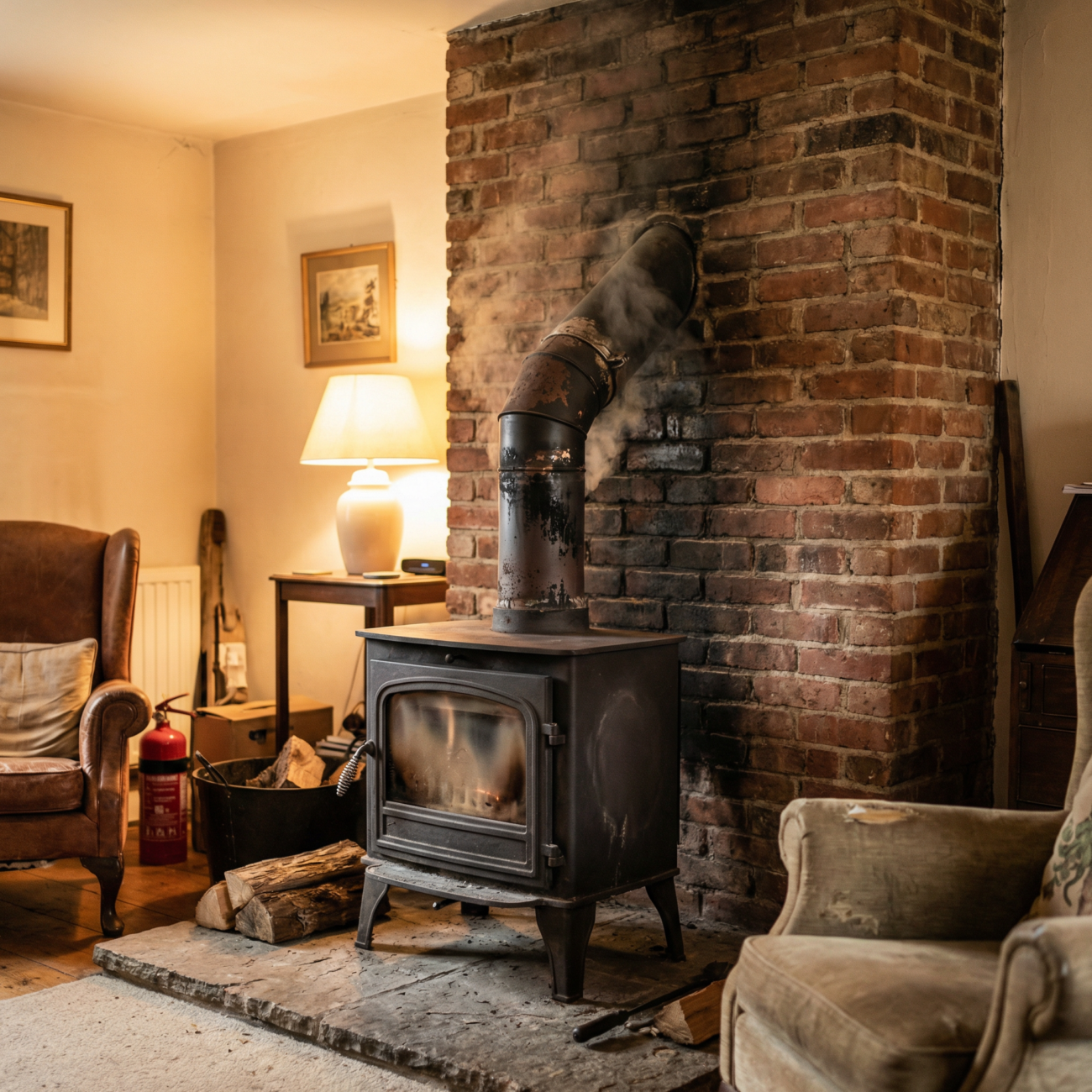
I’ll never forget the January morning a homeowner called me in a panic. His brand new $3,500 wood stove was pumping smoke into his living room instead of up the chimney. After burning through half a cord of perfectly seasoned oak with almost no heat output, he thought the stove was defective. Ten minutes into my inspection, I found the real culprit: wood stove venting mistakes that were costing him hundreds in wasted firewood and making his family miserable.
The biggest wood stove venting mistakes include using oversized chimneys that cool exhaust too quickly, installing too many horizontal runs that restrict airflow, skipping chimney liners in masonry flues, ignoring proper clearances that create fire hazards, and failing to account for home air pressure dynamics. These errors waste 30-50% of your heat output, increase creosote buildup by up to 400%, and can turn a $2,000 heating investment into a smoke-belching liability.
Here’s the thing about wood stove venting mistakes: they’re incredibly common, even among experienced installers. I’ve been working with wood stoves for over 15 years, and I still see the same five errors repeated on job sites across New England. What’s frustrating is that most of these wood stove venting mistakes are completely preventable, they just require understanding how draft physics actually work rather than relying on outdated advice or cutting corners to save a few bucks.
In this guide, I’ll walk you through the five most costly wood stove venting mistakes I encounter, explain exactly why they’re sabotaging your heat output, and give you step-by-step fixes that’ll have your stove burning clean and hot. Whether you’re planning a new installation or troubleshooting an existing setup, understanding these wood stove venting mistakes could save you thousands in wasted fuel and prevent serious safety hazards.
Why Proper Wood Stove Venting Matters More Than You Think
Before we dive into specific wood stove venting mistakes, let’s talk about why venting deserves as much attention as the stove itself.
Your chimney isn’t just a pipe for smoke to escape. It’s the engine that drives your entire heating system. Good draft pulls oxygen into the firebox, feeds the flames, and evacuates combustion byproducts. When wood stove venting mistakes compromise that draft, everything falls apart. Your fire smolders instead of burning hot, creosote accumulates at alarming rates, and heat that should be warming your home goes straight up the flue.
According to the EPA’s Burn Wise program, proper venting can improve wood stove efficiency by 20-30% while dramatically reducing emissions. That’s not just better for the environment, it’s more heat per log and fewer trips to the woodpile in subzero weather.
The National Fire Protection Association reports that heating equipment, including wood stoves with venting problems, causes roughly 14% of home fires annually. Many of these incidents trace back to wood stove venting mistakes that created dangerous conditions over time. We’re talking about clearance violations, creosote ignition, and carbon monoxide intrusion, all preventable with proper setup.
I’ve seen wood stove venting mistakes cost homeowners in three main ways. First, there’s the immediate fuel waste, poor draft means you’re burning 30-50% more wood for the same heat. Second, there’s accelerated maintenance, excessive creosote means annual chimney sweeps become monthly necessities. Third, there’s the safety risk, and that’s where the real cost comes in. One chimney fire can run $15,000-$50,000 in repairs, not counting the deductible hike on your homeowner’s insurance.
Wood Stove Venting Mistake #1: Using an Oversized Chimney or Flue
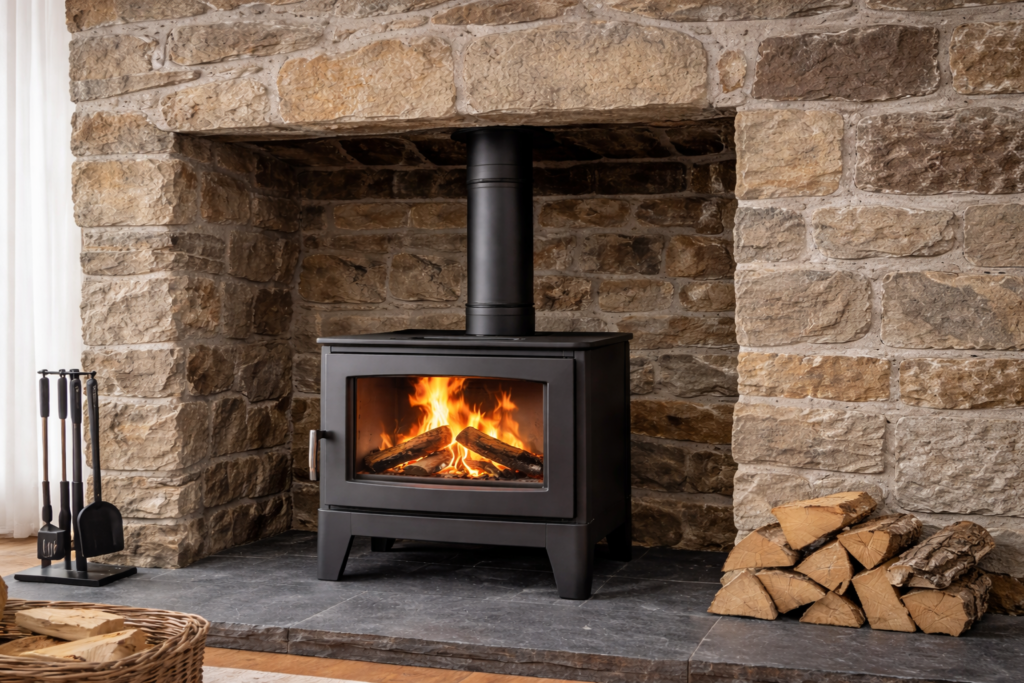
This is the most common of all wood stove venting mistakes, and it’s incredibly counterintuitive. Most people figure bigger is better when it comes to chimneys. More space for smoke to escape, right? Wrong.
Why Oversized Chimneys Kill Performance
When your chimney is too large for your stove, the exhaust gases cool down before they can establish a strong draft. Think of it this way: a 6-inch stove outlet pumping into a 12×12 masonry chimney is like trying to heat a cathedral with a candle. The smoke disperses, loses velocity, and drops in temperature. Cool smoke doesn’t rise efficiently, and that’s when wood stove venting mistakes really start compounding.
Modern EPA-certified stoves are incredibly efficient, which sounds great until you realize that efficiency means less heat goes up the chimney. Old smoke dragons from the 1970s would blast 600°F exhaust up the flue. Today’s clean-burners might only send 250-300°F gases up the pipe. Put that into an oversized masonry chimney, and you’re lucky to see any draft at all.
I once worked on a home where the owner installed a beautiful small wood stove for cabin heating into an existing 10×10 terracotta-lined chimney that had previously served a massive fireplace. The stove was rated for 500 square feet. The chimney could’ve handled a commercial boiler. Every time he lit a fire, smoke poured into the room because the exhaust never got warm enough to draft properly.
The Numbers Behind This Mistake
The University of Missouri Extension provides clear guidance on chimney sizing. For most residential wood stoves, you want a flue that’s matched or slightly undersized relative to the stove’s outlet. A 6-inch stove collar should connect to a 6-inch liner, not an 8-inch or larger flue.
Here’s a quick reference table:
| Stove Outlet Size | Recommended Chimney Liner | Maximum Masonry Flue (without liner) |
|---|---|---|
| 6 inches | 6 inches | 8×8 inches (with insulated liner) |
| 8 inches | 8 inches | 10×10 inches (with insulated liner) |
| 5 inches | 5 inches | Not recommended for masonry |
Note how every scenario includes “with liner” for masonry chimneys. That’s because one of the worst wood stove venting mistakes is connecting modern stoves directly to old masonry flues, which brings us to our next point.
How to Fix an Oversized Chimney
The solution to this particular wood stove venting mistake is installing a properly sized stainless steel liner. I’ve done hundreds of these retrofits, and the performance difference is dramatic.
For a typical 6-inch stove going into a large masonry chimney, you’ll need a 6-inch flexible stainless liner with insulation wrap. The insulation serves two purposes: it keeps exhaust gases hot (maintaining draft), and it protects the chimney structure. Kits start around $400-700 depending on chimney height, and installation typically runs $800-1,500 if you hire a certified chimney sweep.
If you’re comfortable on a roof and have basic DIY skills, liner installation is doable as a weekend project. Just make sure you follow NFPA 211 standards and local building codes. The liner must run continuously from the stove collar to the chimney cap with no gaps or compressions.
One trick I’ve learned: when pulling a liner down a masonry chimney, attach a heavy chain to the bottom end and a rope to the top. Lower the chain slowly while someone feeds the liner from the roof. The weight helps the liner navigate bends and offsets without crimping.
Wood Stove Venting Mistake #2: Too Many Elbows and Horizontal Runs
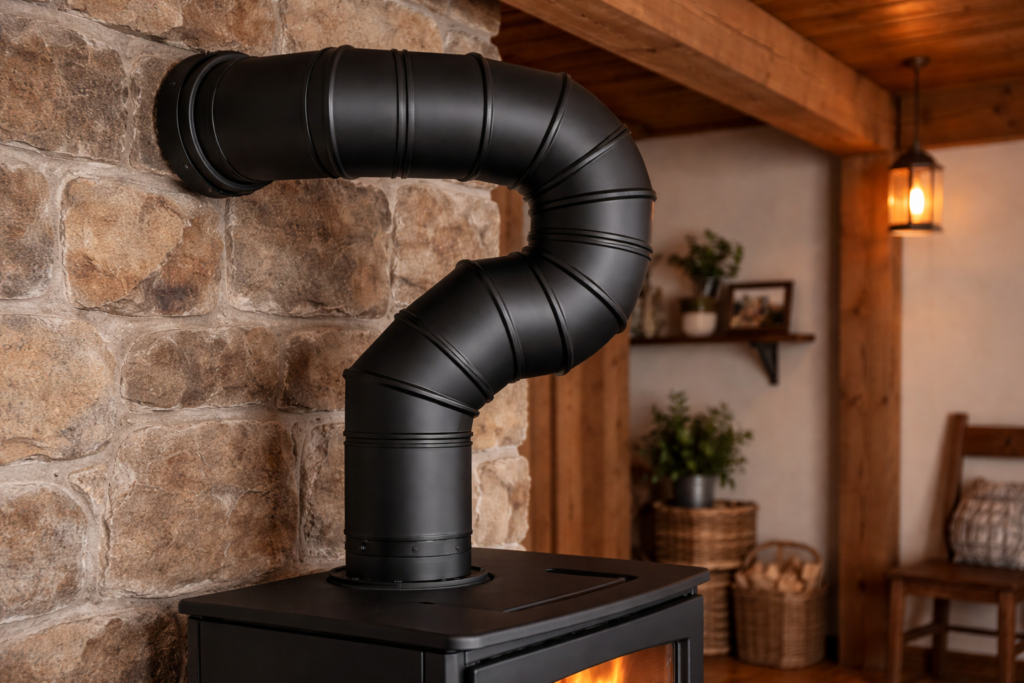
Walk into any older home with a wood stove, and you’ll probably see stove pipe snaking across the room with multiple 90-degree elbows. It might look tidy, but it’s one of the most performance-killing wood stove venting mistakes you can make.
Understanding Draft Resistance
Every elbow, every foot of horizontal pipe, every offset in your venting system adds resistance. Smoke wants to rise straight up, and every time you force it to turn or travel sideways, you’re working against physics.
The general rule I follow: never use more than two 90-degree elbows in a single-wall stove pipe run, and try to use 45-degree elbows wherever possible. Better yet, position your stove so it can connect straight up with minimal offsets.
Horizontal runs are even worse for creating wood stove venting mistakes. Technically, your stove pipe should never be truly horizontal, it should rise at least 1/4 inch per foot of run. I’ve seen installations with 6-8 feet of dead-level pipe, and they’re always problematic. The smoke cools as it travels horizontally, creosote condenses on the pipe walls, and draft suffers.
Real-World Impact
I consulted on a cabin retrofit last year where the previous owner had installed the stove in a corner, ran 4 feet of horizontal pipe to the wall, added a 90-degree elbow, ran another 3 feet to reach the chimney thimble, then added another 90-degree elbow to connect to the vertical chimney. That’s 7 feet of horizontal travel and four changes in direction (including the thimble and chimney connections).
The homeowner couldn’t understand why he burned through two cords of wood per winter in a 600-square-foot space. After we reconfigured the installation, moving the stove 3 feet and reducing the pipe run to a single 45-degree offset, his fuel consumption dropped by almost 40%. That’s the real cost of wood stove venting mistakes.
The Fix for Complex Pipe Runs
If you’re stuck with a challenging layout, here are strategies that minimize the damage:
Replace 90-degree elbows with 45-degree elbows wherever possible. Two 45s create less resistance than one 90.
Keep horizontal runs under 3 feet total length. If you need more, make sure you’re using double-wall stove pipe which maintains higher exhaust temperatures.
Pitch all horizontal runs upward at minimum 1/4 inch per foot. Use a level to verify this, don’t just eyeball it.
Clean horizontal sections more frequently. They accumulate creosote faster than vertical pipe.
Consider repositioning the stove entirely if the current setup requires excessive piping. Moving a stove is cheaper than dealing with chronic draft problems and fire hazards.
For more guidance on proper installation, check out our comprehensive guide on wood stove installation costs and requirements.
Wood Stove Venting Mistake #3: Skipping the Chimney Liner in Masonry Flues
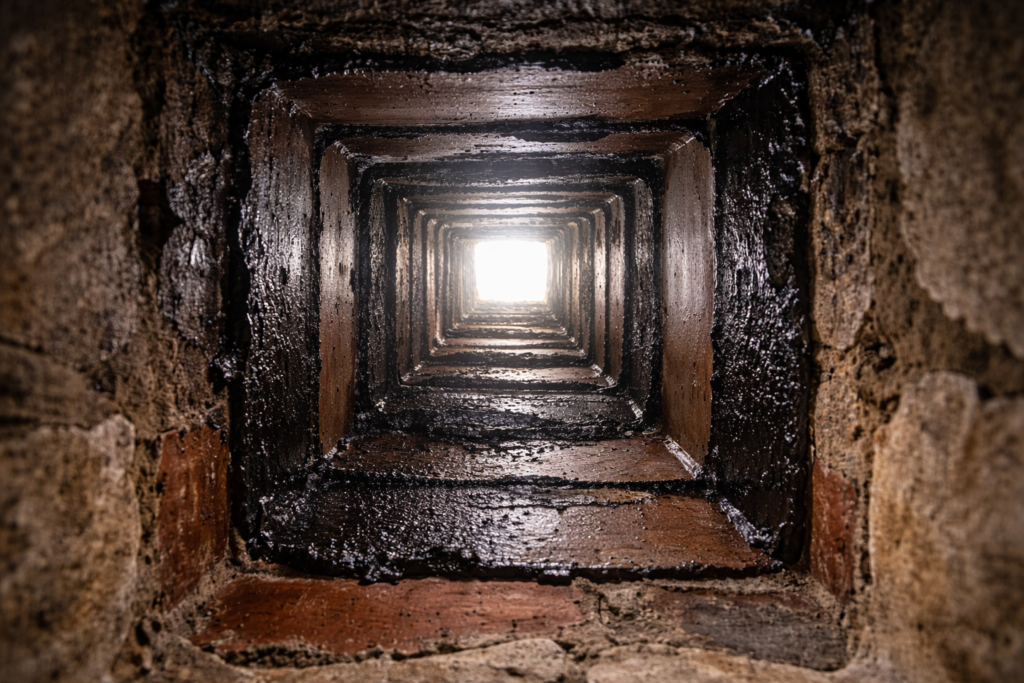
If I had a dollar for every time someone told me “my chimney’s been fine for 50 years, why do I need a liner now?” I could retire early. This is one of the most dangerous wood stove venting mistakes because it combines poor performance with serious safety risks.
Why Modern Stoves Need Liners
Old wood stoves and modern EPA-certified stoves operate at completely different temperatures. Those vintage Fisher or Jøtul stoves from the 1970s would send 600-700°F exhaust up the flue, hot enough to keep a masonry chimney warm and draft strong. Modern clean-burning stoves, especially catalytic models, might only send 250-350°F exhaust up the chimney because they’re extracting so much heat into your living space.
That’s great for efficiency, but terrible for unlined masonry chimneys. The exhaust cools rapidly against cold terracotta or brick, leading to weak draft and massive creosote buildup. Even worse, the condensing moisture and acidic compounds in the smoke attack the mortar joints, causing structural deterioration over time.
The Chimney Safety Institute of America is clear on this: modern wood stoves should always use a listed chimney liner, either stainless steel or rigid ceramic, when connecting to masonry chimneys. Skipping this step is asking for wood stove venting mistakes that’ll haunt you for years.
What Happens Without a Liner
I’ve inspected dozens of unlined installations, and the pattern is always the same. First year, everything seems fine. Second year, the homeowner notices the stove doesn’t draft as well when it’s cold outside. Third year, they’re going through chimney brushes like candy trying to control creosote. By year four or five, they’re either dealing with a chimney fire or facing a $5,000+ chimney rebuild because moisture has destroyed the terracotta liner and mortar.
One family I worked with in Vermont had been running their beautiful soapstone stove into an unlined 1920s chimney for six seasons. When we did a level 2 inspection with a camera, we found cracks in every terracotta section, missing mortar in the joints, and over an inch of glazed creosote in some areas. They were one good draft reversal away from a serious house fire.
The Proper Solution
Installing a stainless steel liner isn’t just about safety and performance, it’s actually required by most building codes and insurance policies for wood stove installations. Here’s what a proper installation looks like:
Stainless steel flexible liner (typically 316Ti or 304 alloy) sized to match your stove collar. For most residential stoves, that’s 6 inches.
Insulation wrap around the liner, either ceramic blanket insulation or poured-in vermiculite. This keeps exhaust gases hot and protects the chimney structure.
Top plate and storm collar at the chimney crown to seal against weather.
Bottom connector with either a tee for cleanout access or a direct connection to the stove collar.
Total cost for a DIY liner kit typically runs $400-900 depending on chimney height and whether you choose insulated or non-insulated liner. Professional installation adds $800-1,800 to that depending on accessibility and local labor rates.
Is this an expense? Sure. But compare it to the alternative: eventual chimney failure, chronic performance problems, and the very real risk of a chimney fire. When you frame it that way, a liner is the cheapest insurance policy you’ll ever buy against wood stove venting mistakes.
For homes with existing stoves and chimneys in good condition, retrofitting a liner is straightforward. The chimney should be swept clean first, then the liner pulled down from the top. For taller or more complex chimneys, this is definitely a job for professionals who have the equipment and experience to do it safely.
Wood Stove Venting Mistake #4: Ignoring Required Clearances
This is where wood stove venting mistakes cross from “performance problem” into “house fire waiting to happen.” Clearance requirements exist for one reason: to prevent combustible materials from reaching ignition temperature. Violate them, and you’re gambling with your home and family.
Understanding Clearance Requirements
Different parts of your venting system have different clearance requirements, and they’re all specified in NFPA 211 code as well as your stove manufacturer’s installation manual.
Single-wall stove pipe (the black pipe connecting your stove to the chimney) typically requires 18 inches of clearance to combustible walls and ceilings. If you’re using heat shields, this can reduce to 6-8 inches depending on the shield design and air gap behind it.
Double-wall or insulated chimney pipe (the stuff that goes through walls, ceilings, and roofs) requires 2 inches clearance to combustibles for most UL-listed systems. That means 2 inches all the way around the pipe, not just on one side.
Where the chimney penetrates the roof, you need minimum 2 inches clearance from the pipe to any wood framing. The roof flashing should seal this penetration while maintaining the clearance requirement.
Common Clearance Violations
I see the same wood stove venting mistakes regarding clearances on almost every DIY installation and some professional ones too:
Stove pipe passing too close to a wooden mantel or cabinet. The wood slowly chars over multiple seasons until it reaches its ignition temperature, usually around 200-250°F for sustained contact.
Inadequate clearance through ceiling or wall penetrations. This is extremely dangerous because you can’t see what’s happening inside the wall cavity. The wood is slowly pyrolyzing (thermally decomposing), getting closer to ignition every time you run the stove.
Chimney pipe touching roof sheathing or rafters. Again, this is hidden so homeowners don’t realize the hazard until it’s too late.
Missing or improperly installed thimbles where stove pipe passes through a wall. The thimble should maintain clearance and provide a fire-resistant transition.
The scariest part about clearance violations is how slowly they develop into problems. You might run a stove for 5-10 years with inadequate clearance before the wood finally ignites. But when it does, the fire often starts inside a wall where you can’t see it until it’s already a major emergency.
How to Verify and Fix Clearances
If you have an existing installation, here’s how to check for clearance wood stove venting mistakes:
Measure from the outer surface of your stove pipe to any combustible material. You need 18 inches for single-wall, 6 inches minimum with approved heat shields.
Check all penetrations. You should see 2 inches of clearance maintained all the way through walls and ceilings. If you can’t verify this because it’s hidden, you might need to expose the area for inspection.
Examine your chimney pipe installation through the attic (if accessible). Make sure the pipe maintains 2 inches from all framing, insulation isn’t touching the pipe, and fire blocking is in place at the ceiling penetration.
Review your stove manual’s clearance requirements. Some stoves have specific requirements that differ from general code minimums.
If you find violations, don’t just hope for the best. Options for fixing clearance problems include:
Installing approved heat shields (metal panels with air space behind them) to reduce required clearances.
Relocating the stove to a better position where clearances are achievable.
Replacing single-wall pipe with double-wall insulated pipe in problem areas.
Rebuilding wall or ceiling penetrations with properly sized thimbles or ceiling support boxes.
For detailed safety requirements and installation best practices, see our article on essential wood stove accessories and safety equipment.
Wood Stove Venting Mistake #5: Not Accounting for Home Air Pressure and Makeup Air
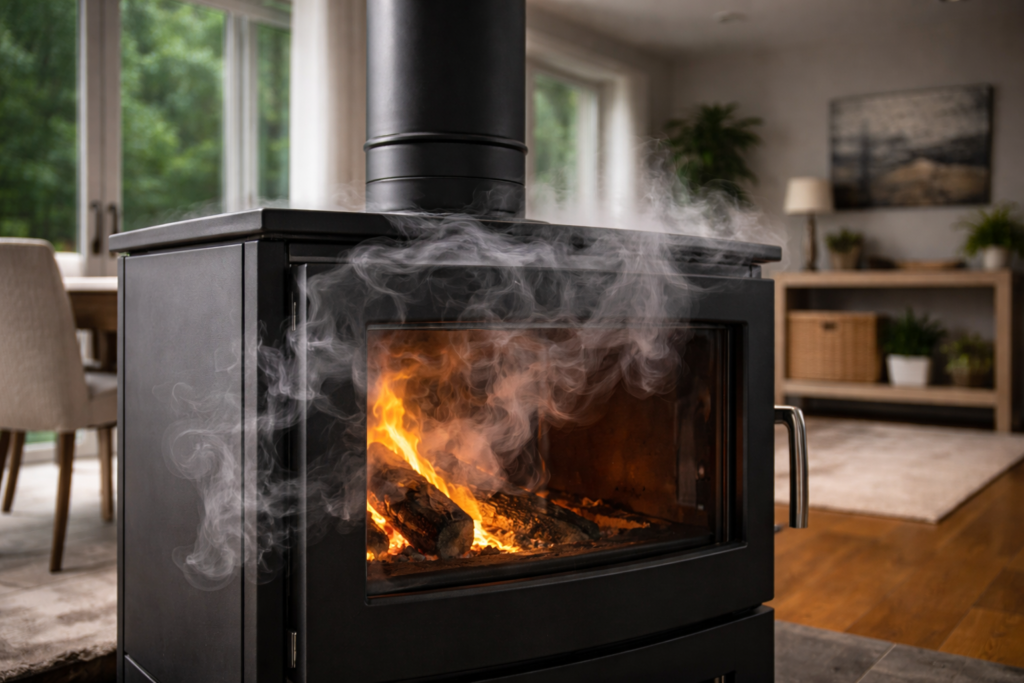
This is the sneakiest category of wood stove venting mistakes because everything might be installed perfectly according to code, yet the stove still won’t draft properly. The culprit? Building science and air pressure dynamics that most installers don’t understand.
The Modern Home Air Problem
Homes built after 2000 are incredibly tight compared to older construction. That’s good for energy efficiency, bad for wood stoves. Your stove needs air to burn, typically 25-50 cubic feet per minute (CFM) depending on burn rate. If your house is sealed tight and that air can’t get in easily, the stove will struggle to draft.
Here’s what happens: the fire tries to pull combustion air, creating negative pressure inside the home. If there’s no easy path for makeup air to enter, the negative pressure builds until it’s strong enough to pull air down the chimney instead of letting smoke rise up. This is called backdrafting, and it’s one of the most frustrating wood stove venting mistakes to diagnose because it’s intermittent and weather-dependent.
The problem gets worse when you run exhaust fans. Kitchen range hoods can pull 200-600 CFM. Bathroom fans typically pull 50-100 CFM. When these are running simultaneously with your wood stove, you can create enough negative pressure to completely reverse your chimney draft, filling your home with smoke.
Diagnosing Air Pressure Problems
I’ve spent hours troubleshooting wood stove venting mistakes that turned out to be air pressure issues. Here’s how to identify them:
The stove drafts fine when windows are open but smokes when the house is closed up tight. Classic makeup air problem.
The stove backdrafts only when certain exhaust fans are running. This confirms you’re pulling more air out than can easily come back in.
Draft improves significantly on windy days. Wind creates positive pressure on the windward side of your home, providing makeup air through any small leaks.
The stove drafts poorly when it’s cold outside. This seems counterintuitive since cold weather should improve draft, but in extremely tight homes, cold weather makes the house even tighter as materials contract.
I worked on a 2019-built passive house where the homeowners installed a beautiful wood stove for backup heat. The house was so tight (0.6 air changes per hour) that the stove would backdraft every time they lit it. We ended up installing a dedicated outdoor air intake to solve the problem.
Solutions for Air Pressure Issues
Here’s how to fix wood stove venting mistakes related to air pressure:
Install an outside air kit (OAK) that connects to your stove’s air intake. Modern stoves often have provisions for this. The OAK provides dedicated combustion air so the stove doesn’t compete with the house for air.
Crack a window near the stove whenever you’re burning. Simple, free, and effective. A 1-inch opening is usually plenty.
Install an automatic makeup air system tied to your range hood. These systems open a dampered vent when they detect negative pressure, providing fresh air to compensate for exhaust fans.
Reduce exhaust fan usage when burning. Don’t run your range hood on high while the stove is going. Use bathroom fans sparingly.
In extreme cases, you might need a balanced ventilation system (HRV or ERV) that brings in as much air as it exhausts. This is expensive but solves pressure problems permanently.
The Department of Energy provides guidelines on home air sealing and ventilation. For wood stove owners, the takeaway is simple: you need adequate makeup air, or you’ll fight draft problems forever.
One interesting test: on a cold day with the stove off, close all windows and doors, and turn on all your exhaust fans. Then crack open your stove door or ash cleanout slightly. If you feel strong airflow pulling into the stove, that’s what happens to your draft when you run the stove in these conditions. The negative pressure literally sucks air down the chimney instead of letting smoke rise.
For more on creating the right environment for wood burning, read our guide on off-grid cabin heating options and ventilation strategies.

How to Prevent Wood Stove Venting Mistakes During Installation
If you’re planning a new wood stove installation or replacing an existing system, here’s how to avoid these costly wood stove venting mistakes from the start:
Proper Planning Steps
Start with a professional assessment. Have a certified chimney sweep or NFI-certified installer evaluate your home before buying anything. They can identify potential wood stove venting mistakes before you spend money on equipment.
Size your chimney to match your stove. This can’t be stressed enough. Don’t assume your existing chimney will work with a new stove. Check the stove manufacturer’s specifications and match them exactly.
Plan the shortest, straightest route from stove to chimney. If this means repositioning where you wanted the stove, do it. A few feet of relocation is infinitely better than fighting draft problems for the next 20 years.
Budget for a chimney liner if connecting to masonry. Don’t treat this as optional. It’s essential for safety and performance with modern stoves.
Account for clearances in your initial layout. Measure everything before you commit to a stove position. Include clearances for stove pipe, the stove itself, and any required hearth protection.
Plan for makeup air if you have a tight house. This is especially critical in new construction or recently renovated homes with modern air sealing.
Installation Best Practices
Once you’re ready to install, follow these practices to avoid wood stove venting mistakes:
Use only listed, approved components. Don’t mix brands or types of chimney pipe. Stick with one complete system from a reputable manufacturer.
Install a chimney liner according to manufacturer specifications. Use the recommended insulation, connect it properly at top and bottom, and maintain required clearances throughout.
Minimize elbows and horizontal runs. Every offset you can eliminate improves performance.
Maintain proper clearances everywhere. Don’t cheat by an inch here or there. Follow the code exactly.
Install a quality chimney cap. This protects against rain, animals, and downdrafts, while allowing proper venting.
Seal all connections with high-temperature silicone. This prevents smoke leaks and improves draft.
Test the system before buttoning everything up. Run a small fire and verify good draft before you finalize the installation. It’s much easier to make adjustments when you haven’t yet closed up walls or finished the hearth.
For detailed cost breakdowns and installation timelines, see our comprehensive guide on what to expect when installing a wood stove in 2026.
Testing and Troubleshooting Your Venting System
Even with perfect installation, it’s smart to regularly test for wood stove venting mistakes that might develop over time. Here’s how to assess your system:
The Smoke Test
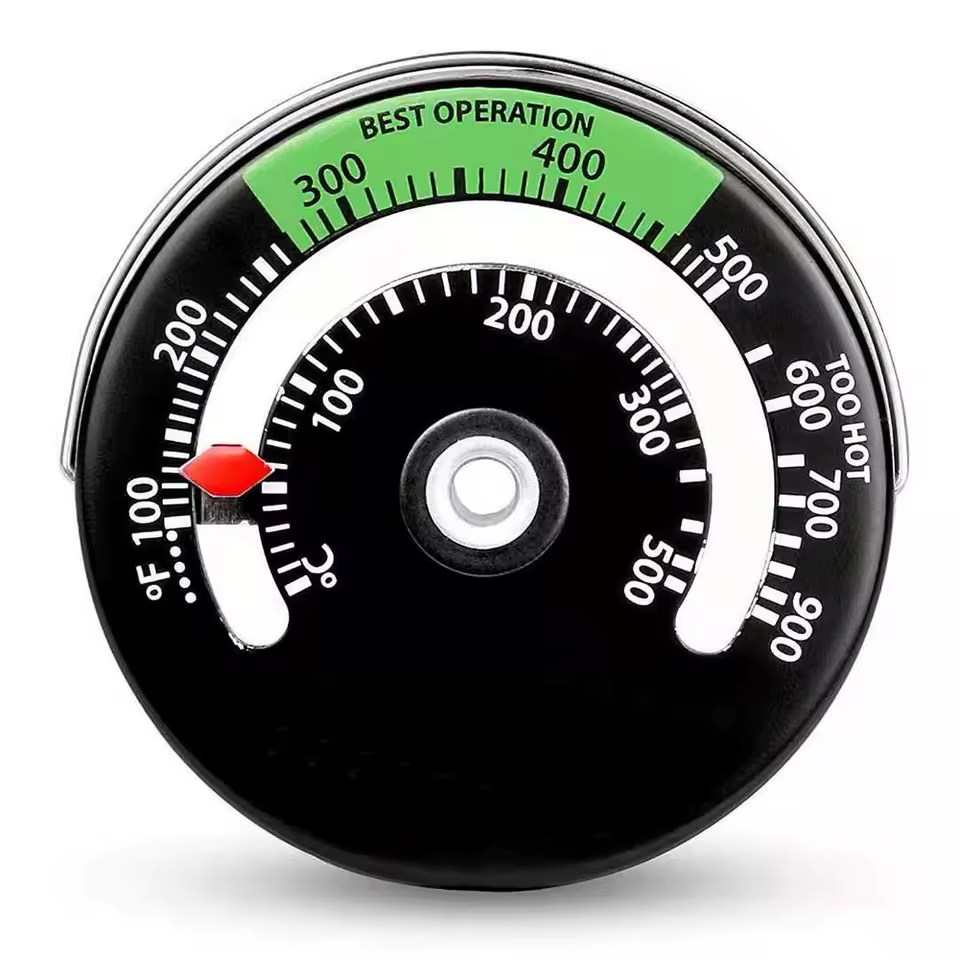
Light a small fire using dry, seasoned kindling. Within 10-15 minutes, you should see strong draft with smoke pulling cleanly up the chimney. If smoke lingers in the firebox or puffs into the room, you’ve got a draft problem.
Watch what happens when you open the loading door. A properly drafting stove will pull air strongly into the firebox when you crack the door. If smoke puffs out, your draft is inadequate.
Check smoke color from outside. Thin, nearly invisible smoke indicates clean combustion. Thick, dark smoke suggests incomplete burning, often related to draft problems.
Maintenance Red Flags
Heavy creosote buildup after just one or two months of burning points to wood stove venting mistakes. Properly vented systems with good draft and dry wood should stay relatively clean.
Difficulty getting fires started, especially when the stove is cold, indicates draft issues. You shouldn’t need to fight with newspaper for 20 minutes to get a fire going.
Smoke smell in the house when the stove is running suggests leak points or backdrafting. Track down the source immediately.
Visible darkening or heat damage on walls near stove pipe points to clearance violations. This is a serious fire hazard.
Decreased performance over time, even with good wood and proper operation, might indicate liner deterioration or chimney damage.
When to Call a Professional
Some wood stove venting mistakes require professional intervention:
If you suspect structural issues with your chimney, get a level 2 video inspection from a certified chimney sweep.
If you’re experiencing persistent backdrafting that window-cracking doesn’t solve, you need a professional diagnosis of your makeup air situation.
If you find clearance violations but aren’t sure how to fix them safely, don’t guess. Hire a qualified installer.
If your liner needs replacement or you’re uncertain about its condition, get a professional assessment. A failed liner is a serious safety hazard.
Annual chimney inspections are mandatory for wood stove owners. A certified sweep can catch developing problems before they become expensive or dangerous. Most inspections run $150-300, a bargain compared to fixing wood stove venting mistakes after they’ve caused damage.
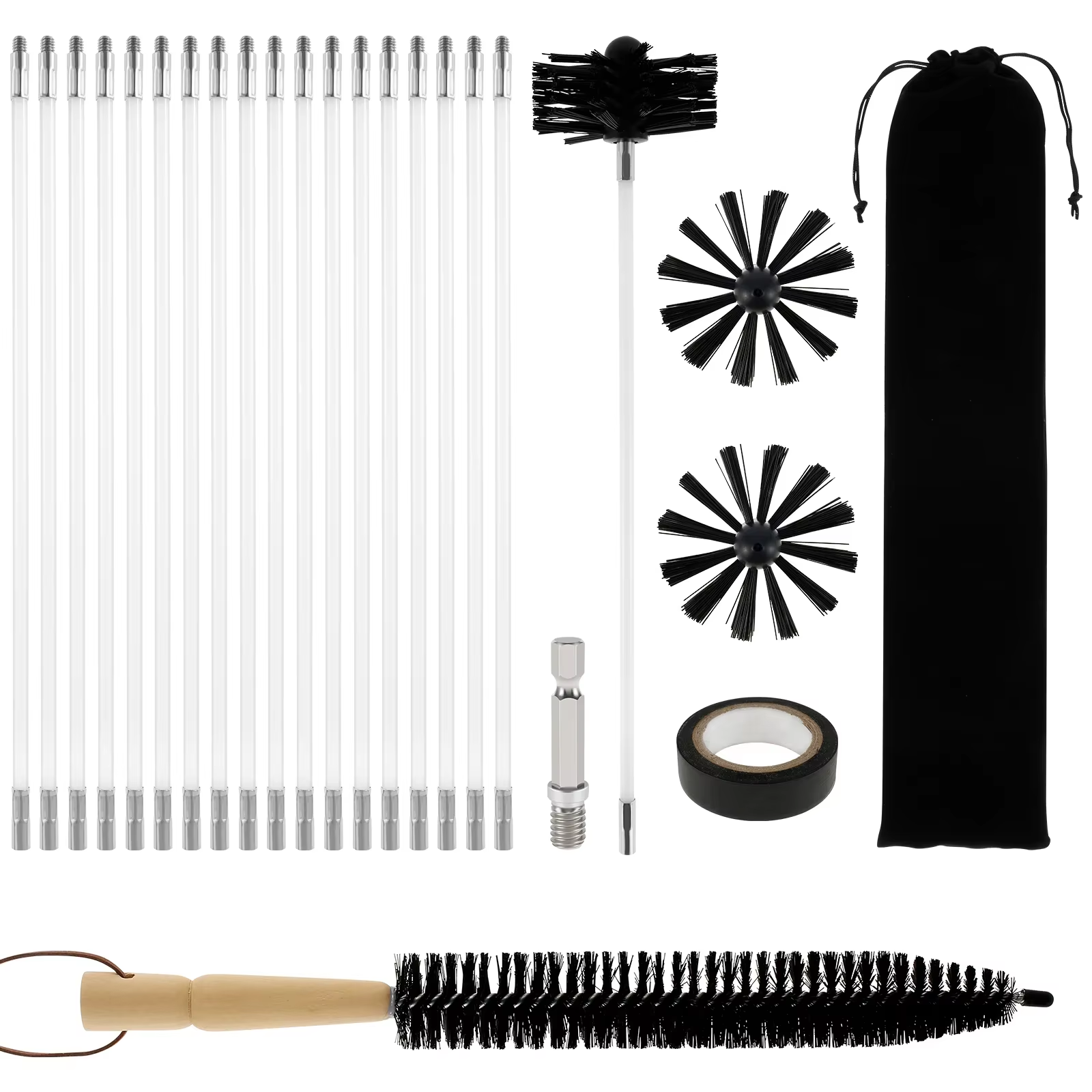
For maintenance schedules and cleaning procedures, check out our guide on the essential wood stove accessories you need, including chimney brushes and inspection tools.
The Real Cost of Wood Stove Venting Mistakes
Let’s talk numbers, because understanding the financial impact helps motivate proper installation and maintenance.
Direct Costs
Wasted fuel from poor draft can increase wood consumption by 30-50%. For a homeowner burning 3-4 cords annually, that’s an extra 1-2 cords, worth $300-700 depending on location.
Increased chimney cleaning needs add up fast. If poor venting leads to monthly cleanings instead of annual ones, you’re looking at $150-300 per cleaning times multiple visits.
Chimney fires caused by creosote buildup cost $5,000-15,000 in chimney repairs alone, not counting interior smoke damage or insurance implications.
Homeowner insurance rate increases or policy cancellations can result from wood stove venting mistakes. Some insurers drop wood stove owners entirely after a claim.
Indirect Costs
Reduced home comfort when your stove can’t maintain consistent heat. You end up supplementing with electric or propane heat, defeating the purpose of wood heating.
Health impacts from smoke exposure if backdrafting is chronic. Carbon monoxide and particulate exposure are serious concerns.
Decreased home value if you eventually sell. Home inspectors flag wood stove venting mistakes, and buyers either demand corrections or walk away.
Time and frustration dealing with a problematic system. How much is it worth to you to have a stove that just works instead of one you’re constantly fighting?
The Investment in Doing It Right
Compare those costs to proper installation from the start:
Chimney liner installation: $400-900 DIY, $1,200-2,500 professionally installed
Outside air kit: $150-400 installed
Heat shields for clearance compliance: $200-600
Professional installation review: $200-500
These are one-time expenses that prevent decades of problems. I’ve never had a customer regret investing in proper venting. I’ve had dozens regret cutting corners.
FAQ About Wood Stove Venting Mistakes
What’s the most common wood stove venting mistake that causes smoke in my house?
The most common wood stove venting mistake causing interior smoke is an oversized chimney or flue that cools exhaust gases too quickly, preventing proper draft. Modern EPA-certified stoves need a properly sized liner to maintain the exhaust temperature required for strong upward flow. Without this, smoke backs up into your living space instead of venting outside.
Can I use my existing masonry chimney for a new wood stove without a liner?
You should never connect a modern wood stove to an unlined masonry chimney, one of the most dangerous wood stove venting mistakes. Today’s efficient stoves produce cooler exhaust than older models, and without a liner, these gases cool too rapidly in the masonry, causing poor draft, excessive creosote buildup, and potential chimney deterioration. Always install a UL-listed stainless steel liner sized to match your stove’s collar.
How many elbows can I have in my wood stove pipe?
To avoid wood stove venting mistakes that restrict airflow, never use more than two 90-degree elbows in your single-wall stove pipe configuration. Each elbow creates resistance and turbulence that weakens draft. Where possible, use 45-degree elbows instead of 90-degree turns, and keep horizontal runs under 3 feet with at least 1/4 inch of rise per foot. The straighter and more vertical your pipe run, the better your draft will be.
Why does my wood stove only smoke when I run my kitchen exhaust fan?
This wood stove venting mistake relates to home air pressure, not your venting system itself. Modern airtight homes can’t easily replace air that exhaust fans remove, creating negative pressure that reverses chimney draft. Your kitchen fan pulls 200-600 CFM while your stove also needs combustion air, fighting for the same limited supply. Fix this by installing an outside air kit for your stove, cracking a window when burning, or adding a makeup air system.
How much clearance do I need between stove pipe and combustible walls?
Single-wall black stove pipe requires 18 inches of clearance to any combustible material, while double-wall or insulated chimney pipe needs 2 inches. Violating these clearances is a critical wood stove venting mistake that creates fire hazards. You can reduce clearances by installing approved heat shields with proper air gaps behind them, typically bringing requirements down to 6-8 inches. Always consult your stove manufacturer’s manual for specific requirements.
What causes excessive creosote buildup even with seasoned firewood?
Several wood stove venting mistakes cause accelerated creosote: an oversized chimney that allows exhaust to cool too quickly, an unlined masonry flue with cold spots, too many elbows or horizontal runs that restrict flow, or insufficient draft from inadequate chimney height. Even with properly seasoned wood, poor venting creates conditions where creosote condenses rapidly on cool surfaces. Fixing the underlying venting problem is the only permanent solution.
Can I vent my wood stove horizontally through an exterior wall?
No, you cannot vent a wood stove horizontally through a wall as your primary venting method, a common but dangerous wood stove venting mistake. Unlike pellet stoves or gas appliances, wood stoves rely on natural draft created by vertical rise. You must have a minimum of 15 feet of vertical chimney height, with the majority of that rise being vertical. While you can have short horizontal sections within proper limits (under 3 feet, rising 1/4 inch per foot) before connecting to a vertical chimney, the system must ultimately vent vertically to create adequate draft.
Conclusion: Getting Your Wood Stove Venting Right
Wood stove venting mistakes cost you in three ways: wasted fuel, increased maintenance, and serious safety risks. But here’s the good news: every one of these problems is solvable. Whether you’re planning a new installation or troubleshooting an existing system, you now understand the five critical errors that sabotage performance and how to fix them.
Start with the basics: properly sized chimney or liner, minimal horizontal runs and elbows, correct clearances throughout, and adequate makeup air for your home. Get these fundamentals right, and your stove will burn clean, hot, and efficiently for decades. Ignore them, and you’ll fight problems every winter while burning through wood and money.
If you’re unsure about your current setup, invest in a professional inspection. A certified chimney sweep can identify wood stove venting mistakes before they become expensive or dangerous. That $200-300 inspection could save you thousands in future repairs and give you peace of mind that your family is safe.
