
If you heat your home with wood, the 2026 wood stove regulations could affect you more than you realize. Starting in 2026, stricter emission standards and compliance requirements take effect nationwide, impacting both new purchases and existing installations. The bottom line: older, non-certified stoves face restrictions in many areas, and new models must meet tougher EPA standards of 2.0 grams per hour or less.
Whether you’re planning to buy a new wood stove, already own one, or just want to stay compliant with the 2026 wood stove regulations, understanding these changes now saves you from headaches later. Some regions are implementing mandatory replacement programs, while others are offering rebates for upgrades. The rules vary by location, but federal standards apply everywhere.
Let’s break down exactly what’s changing, who’s affected, and what you need to do to stay on the right side of these new requirements.
What’s Actually Changing in the 2026 Wood Stove Regulations
The EPA has been tightening wood stove standards for years, and 2026 marks another significant milestone. Here’s what’s different under the 2026 wood stove regulations.
The new emission limit drops to 2.0 grams of particulate matter per hour for all wood-burning appliances sold after May 15, 2026. That’s down from the previous 4.5 grams per hour standard that’s been in place since 2015. According to the EPA’s updated standards, this change aims to reduce air pollution by roughly 90% compared to older, uncertified stoves.
What does this mean for you? If you’re buying a new stove, it’ll be cleaner-burning and more efficient than older models. Manufacturers have already started designing units that meet these specs, so you won’t see a shortage of options.
But here’s where it gets tricky for existing owners. While the federal government isn’t forcing you to replace your current stove, many states and local jurisdictions are implementing their own rules. Some areas prohibit the sale or transfer of non-certified stoves, even secondhand. Others have mandatory replacement programs during home sales or major renovations.
2026 Emission Standards Explained
The 2.0 grams per hour limit might sound technical, but it matters. Older stoves can emit 20-40 grams per hour, which is why smoke from these units is visible and pungent. Modern EPA-certified stoves burn so cleanly you’ll barely see smoke after the initial startup.
This cleaner burn isn’t just about compliance with the 2026 wood stove regulations. You’ll notice real benefits: less creosote buildup in your chimney requiring less frequent cleaning, better heat output from the same amount of wood, and improved indoor air quality.


Who Must Comply With 2026 Wood Stove Rules
Not everyone faces immediate action, but knowing where you stand helps you plan ahead under the 2026 wood stove regulations.
If you’re purchasing a new wood stove in 2026 or later, you’re automatically covered. Every unit on the market will meet the new standards. Manufacturers can’t sell non-compliant models, so you don’t need to worry about accidentally buying the wrong one.
Current owners have different timelines depending on location. Check with your state environmental agency and local air quality district. States like Washington, Oregon, and Colorado have aggressive replacement programs already underway. The CDC’s guidelines on wood smoke explain why these regional differences exist, particularly in areas with air quality challenges.
States and Regions With the Strictest Regulations
The western United States leads in strict enforcement of the 2026 wood stove regulations. Cities like Portland, Denver, and parts of the San Francisco Bay Area have banned the installation of non-certified stoves entirely. Some jurisdictions offer rebates of $500 to $3,000 for replacing old units with EPA-certified models.
Rural areas generally have more flexibility, but that’s changing. Even counties without current mandates are watching air quality data. If your area experiences frequent inversions or poor air quality days, expect tighter restrictions.
Real estate transactions trigger compliance in many places. When you sell your home, disclosure laws may require revealing whether your wood stove meets current standards. Some buyers’ lenders won’t approve mortgages if non-compliant heating appliances are present.
How to Check if Your Wood Stove Is EPA Compliant
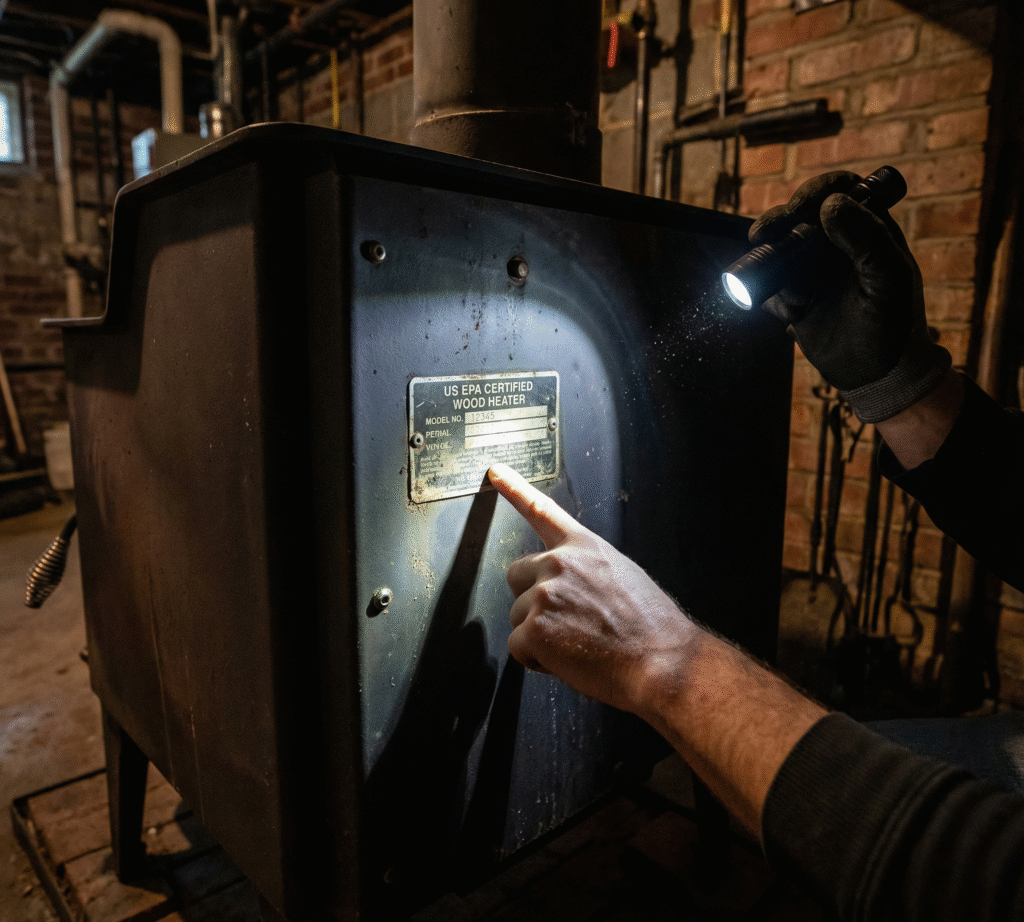
Before you panic about the 2026 wood stove regulations, figure out what you’ve got.
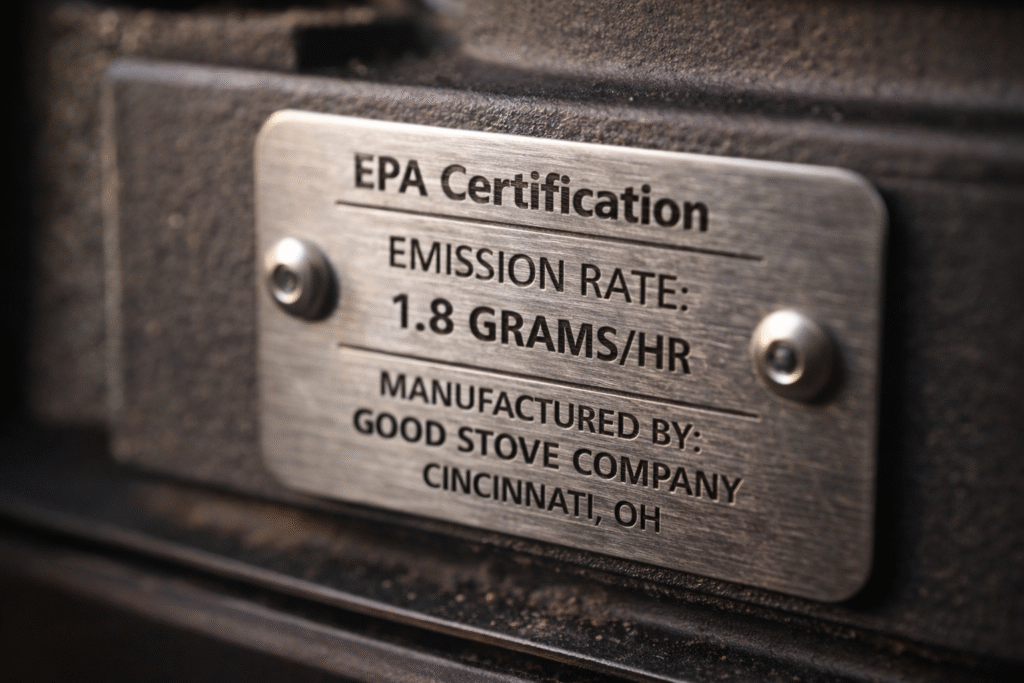
Look for a permanent metal label on the back or side of your stove. EPA-certified models manufactured after 1988 have this certification plate, which includes the emission rate. If your stove shows 2.0 grams per hour or less, you’re good to go. Models showing 2.1 to 4.5 grams per hour meet the older 2015 standards but not the latest requirements.
No label? Your stove is likely non-certified, especially if it was made before 1988 or assembled from a kit. According to the NFPA’s wood heating safety standards, unlabeled stoves pose compliance issues with the 2026 wood stove regulations and often safety risks.
What Wood Stove Emission Numbers Really Mean
Let’s say your stove’s label reads “3.5 g/hr.” That meets 2015 standards but falls short of new requirements. Can you keep using it? Federally, yes, but check local rules. This stove still burns cleaner than old models and might satisfy less restrictive jurisdictions.
If you’re looking at buying used, only purchase stoves with visible certification labels showing 2.0 g/hr or lower. Anything else could become illegal to operate in your area within months or years.
Buying a New Wood Stove Under 2026 Rules
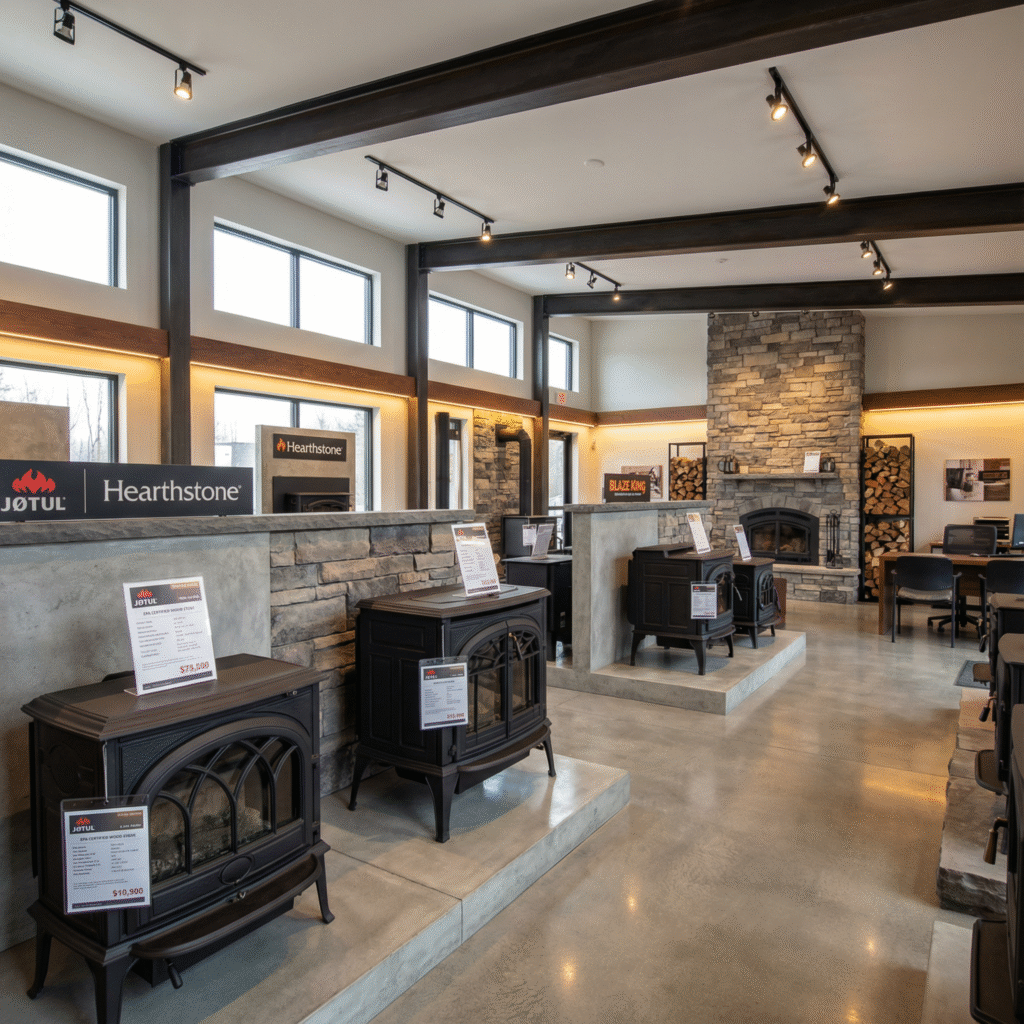
Shopping for a compliant stove is actually easier than navigating the old market where quality varied wildly.
Every new wood stove sold legally in 2026 meets or exceeds the 2.0 g/hr standard automatically. You can focus on size, features, and efficiency ratings instead of worrying about compliance. The Department of Energy’s wood heater information explains how to match stove size to your heating needs.
Pay attention to efficiency ratings alongside emissions. A stove meeting new standards might achieve 70-85% efficiency, meaning most of the wood’s energy heats your home instead of escaping up the chimney. Compare this to old stoves at 40-50% efficiency, and you’ll burn significantly less wood for the same warmth.
Must-Have Features in EPA-Compliant Wood Stoves
Catalytic vs. non-catalytic matters less than overall design quality. Both technologies can meet the new standards under the 2026 wood stove regulations. Catalytic stoves use a honeycomb element to burn smoke at lower temperatures, providing longer burns and steadier heat. Non-catalytic models use advanced airflow engineering to achieve similar results without the maintenance of replacing catalysts.
Size your stove correctly. Too big, and you’ll run it at low temperatures, creating incomplete combustion and more emissions. Too small, and you’ll overfire it trying to heat your space. Most manufacturers provide BTU ratings and square footage recommendations. A typical 1,200-1,800 square foot home needs a medium stove producing 40,000-60,000 BTUs.
Look for air wash systems that keep the glass clean, external air intake options to prevent drafts, and good warranty coverage. When comparing different wood stove types, consider how each design fits your specific needs.
State-Specific Wood Stove Regulations to Know
Federal standards set the baseline, but state and local governments add their own requirements that often exceed EPA minimums.
California: The state’s Air Resources Board enforces strict rules. In many counties, you can’t install any wood-burning appliance, even EPA-certified ones, during new construction. Existing stoves must be removed during major renovations. However, some rural areas receive exemptions.
Washington: Older stoves are banned statewide as of certain dates, with enforcement during property sales. The state offers a wood stove replacement program with rebates up to $3,000 in qualifying areas.
Oregon: Similar to Washington, Oregon has phase-out dates for uncertified stoves. Portland metro area rules are particularly strict, with burn bans during poor air quality days even for certified stoves.
Colorado: Many Front Range communities restrict wood burning during high pollution days. Denver and surrounding counties have mandatory disclosure during home sales and rental agreements.
New York: The DEC enforces outdoor wood boiler regulations tightly, and some counties extend these rules to indoor wood stoves in certain zones.
Rules for Rural and Less-Regulated Areas
- States without specific wood stove programs still enforce federal EPA standards for new sales. Montana, Wyoming, Idaho, and most Midwest and Southern states don’t currently mandate replacing existing stoves, but all new units sold must meet federal requirements.
- Don’t assume rural areas are permanently exempt. Air quality monitoring is improving everywhere, and regulations tend to spread from urban to rural areas over 5-10 year periods.


2026 Compliance Deadlines and Grace Periods
Understanding when rules take effect helps you plan upgrades strategically under the 2026 wood stove regulations.
The federal May 15, 2026 date applies to manufacturing and sales of new stoves. After this date, manufacturers can’t produce units exceeding 2.0 g/hr, and retailers can’t sell them. However, retailers can sell remaining inventory manufactured before the deadline, so you might find some 2.1-4.5 g/hr units on shelves into late 2026.
State and local deadlines vary widely. Some took effect in 2023 or 2024, while others phase in through 2027-2030. The U.S. Forest Service’s wood heating information provides regional breakdowns, though you’ll need to check specific local ordinances.
When to Plan Your Wood Stove Upgrade
If you’re not facing an immediate mandate, consider upgrading anyway. Here’s why: rebate programs won’t last forever. Many states funded these incentives through temporary grants that expire in 2026-2028. Early adopters get financial help; late adopters pay full price.
Wood stove installations take time. Good installers book up months in advance, especially heading into fall. If you wait until you’re forced to upgrade, you might face installation delays during peak season. Plan your purchase for spring or summer when installers have openings and you can test the stove before winter.
Think about proper wood stove installation requirements well before your deadline. Clearances, chimney requirements, and hearth pad specifications haven’t changed, but planning ahead prevents last-minute problems.
Wood Stove Rebates, Tax Credits, and Incentives
Don’t pay full price if you don’t have to when upgrading to meet the 2026 wood stove regulations. Multiple programs help offset upgrade costs.
The federal Inflation Reduction Act includes tax credits for high-efficiency wood and pellet stoves. Qualifying units can receive a 30% tax credit up to $2,000. Your stove must meet 75% efficiency or higher and the 2.0 g/hr emission standard. Keep your receipts and manufacturer documentation for tax filing.
State programs vary dramatically. Washington’s current program offers $500-$3,000 depending on income and location. Oregon provides similar assistance. California focuses rebates on low-income households replacing older stoves. Check your state environmental agency website for current offerings.
Local Utility and Air Quality Incentive Programs
Many areas offer additional local incentives. Air quality management districts in polluted regions sometimes provide extra rebates stacked on top of state programs. Some residents have received $4,000-$5,000 in combined assistance for complete wood stove replacement.
Electric and gas utilities occasionally offer incentives to switch away from wood heat entirely, though these obviously don’t apply if you want to keep burning wood. Compare the total cost of ownership when evaluating options.
Income-qualified programs exist in many states. If you meet certain income thresholds, you might qualify for free stove replacement through weatherization programs. These initiatives prioritize low-income households heating primarily with old, inefficient wood stoves.
Don’t miss our detailed guides about Wood Stove Tax Credit 2026: Get $2,000 Back and Wood Stove Insurance.
Penalties for Non-Compliant Wood Stoves
Ignoring new regulations carries risks that go beyond potential fines.
Federal EPA standards for new stove sales are enforced through manufacturer penalties, not homeowner citations. You won’t get fined for buying a non-compliant used stove from a neighbor. However, state and local rules are different stories.
In jurisdictions with mandatory replacement laws, inspectors can issue citations during routine inspections, code enforcement visits, or home sale contingencies. Fines typically range from $100-$1,000 per violation, and you’ll still need to replace the stove. Some areas impose daily fines until compliance is achieved.
Real estate transactions pose the biggest enforcement mechanism. During disclosure, failing to mention a non-compliant stove can lead to legal liability if discovered post-sale. Buyers increasingly include stove certification in inspection contingencies. Your $800 stove could derail a $400,000 home sale.
Insurance Risks of Non-Compliant Stoves
Here’s something many don’t consider: insurance coverage. Some homeowners insurance policies now require wood-burning appliances to meet current EPA certification. If your uncertified stove causes a fire, your insurer might deny the claim. Even if they pay out, expect non-renewal at your next policy period.
Liability extends to rentals too. Landlords face stricter scrutiny. Renting a property with a non-compliant wood stove violates housing codes in many jurisdictions, exposing you to tenant lawsuits and housing authority penalties.
The Consumer Product Safety Commission’s data on heating fires shows older stoves contribute disproportionately to residential fires. Beyond regulatory concerns, safety provides a compelling upgrade reason.
How to Make an Older Wood Stove Burn Cleaner
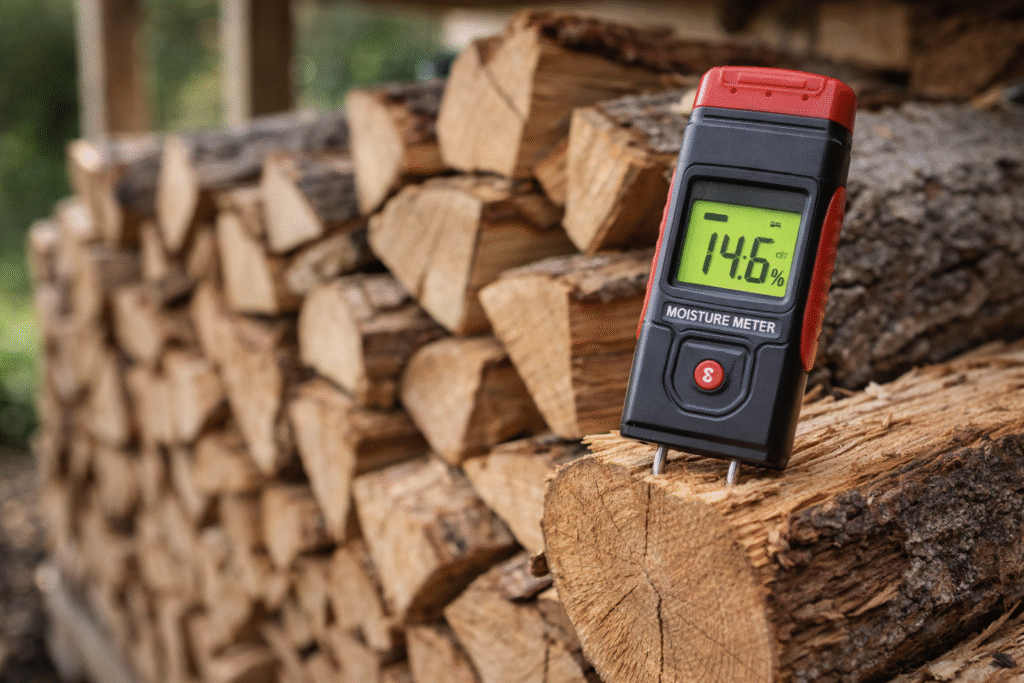
If you’re not ready to upgrade, optimize what you have while planning for eventual compliance with the 2026 wood stove regulations.
Burning technique matters enormously. Dry, seasoned wood is non-negotiable. Wood above 20% moisture content produces excessive smoke and creosote regardless of your stove’s design. Use a moisture meter to verify wood dryness before burning. Hardwoods like oak, maple, and ash should dry for 12-24 months after splitting.
Start fires with small, dry kindling using a top-down method. Place larger logs on the bottom, medium pieces in the middle, and kindling on top. This technique produces less smoke during startup compared to traditional bottom-up fires. Once established, maintain hot fires rather than smoldering ones.
Air control settings affect emissions significantly. Running your stove with air intakes fully closed creates incomplete combustion and heavy smoke. Instead, burn smaller loads more frequently at higher temperatures. Even old stoves burn cleaner when operated hot.
Maintenance Tips to Improve Emissions and Efficiency
Clean your chimney annually, minimum. Creosote buildup restricts airflow and increases fire risk. The Chimney Safety Institute of America recommends professional inspection and cleaning for all wood-burning systems. This matters more with older stoves that produce more creosote.
Check door gaskets regularly. Gaps allow air leaks that disrupt combustion efficiency. Replace worn gaskets immediately. Inspect your chimney cap to ensure it’s not blocked by debris or bird nests. Even minor obstructions affect draft and combustion quality.
Use a stove thermometer to monitor operating temperatures. Ideal burn temperatures sit between 300-500°F in the stovepipe. Below 300°F, you’re creating creosote. Above 600°F, you risk overfiring and damage.
Should You Upgrade or Replace Your Wood Stove?
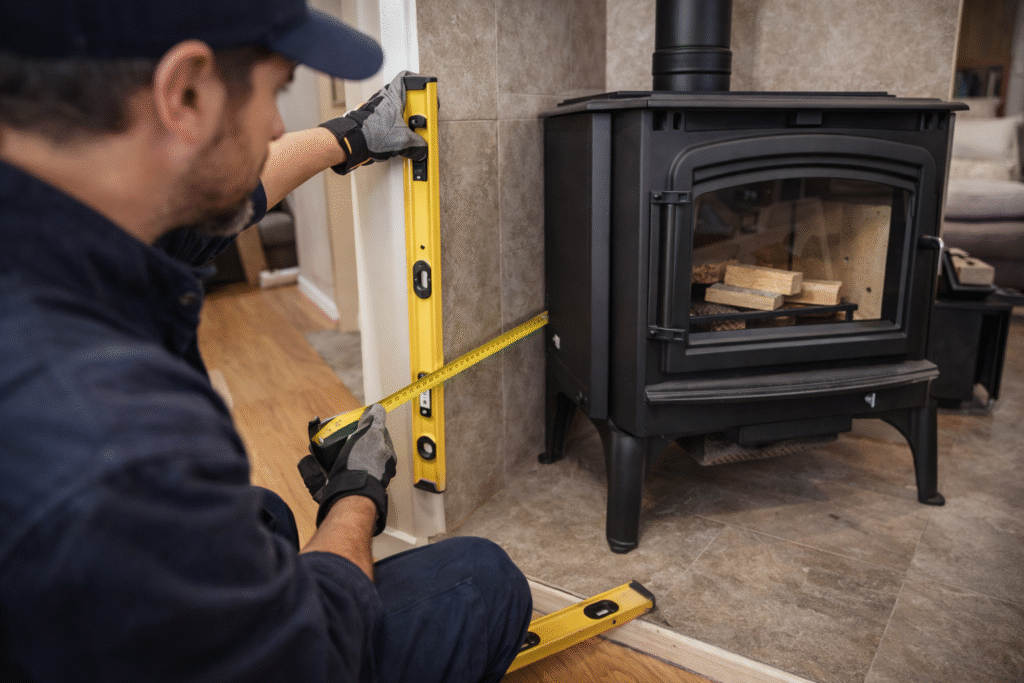
Sometimes the decision isn’t straightforward when it comes to the 2026 wood stove regulations.
Newer EPA-certified stoves from 2015-2025 meeting the 4.5 g/hr standard occupy a gray area. They’re legal federally and in most locations currently, but may not meet future local requirements. If your stove is in this category and working well, replacement depends on local trajectory.
Consider your stove’s age and condition. A 2020 model certified at 3.0 g/hr might serve you another 10-15 years in areas without stricter local rules. However, if your region is trending toward mandatory replacement, upgrading proactively while rebates exist makes financial sense.
Cost-benefit analysis helps. Calculate annual wood consumption savings with a newer, more efficient stove. A 75% efficient modern stove uses roughly 40% less wood than a 50% efficient older unit to produce the same heat. If you burn 3 cords annually at $250 per cord, that’s $300 saved each year. A $2,500 stove upgrade pays for itself in 8-10 years on fuel savings alone, faster with rebates.
When Replacement Makes Sense
Replace if your stove is pre-1988 or shows no EPA certification. These units can’t be upgraded to meet any current standard. They’re inefficient, polluting, and increasingly difficult to insure and sell with your home.
Replace if you’re facing mandatory local deadlines within 1-2 years. Don’t wait until the last minute when rebates might be exhausted and installers are swamped. Early action gives you better selection and professional availability.
Replace if you’re planning to sell your home soon. A new, efficient, compliant stove becomes a selling point rather than a potential deal-breaker. Marketing your home as featuring modern heating systems appeals to environmentally conscious buyers.
Keep your current stove if it’s EPA-certified, meets local requirements, and operates well. There’s no reason to upgrade prematurely unless you want improved efficiency or rebates won’t be available later.
FAQs: The New 2026 Wood Stove Regulations
Do I have to replace my old wood stove immediately in 2026?
No. The 2026 wood stove regulations primarily affect new stove sales, not existing installations. However, many states and localities have mandatory replacement timelines during home sales or in areas with air quality issues. Check your state environmental agency and local air quality district for specific requirements.
How can I tell if my wood stove meets the new emission standards?
Check for an EPA certification label on your stove’s back or side showing the emission rate in grams per hour. If it reads 2.0 g/hr or less, you meet the new standard. Labels showing 2.1-4.5 g/hr meet older standards but not the 2026 requirements. Stoves without EPA labels don’t meet current standards.
Are there financial incentives for upgrading my wood stove?
Yes. The federal Inflation Reduction Act offers a 30% tax credit up to $2,000 for stoves meeting 75% efficiency and 2.0 g/hr emissions. Many states offer $500-$3,000 rebates. Low-income households may qualify for free replacement. Local air quality districts sometimes provide additional stackable rebates. These programs have limited funding through 2026-2028.
What’s the difference between catalytic and non-catalytic stoves?
Both can meet the new standards. Catalytic stoves use a honeycomb catalyst for longer burns and steady heat but require catalyst replacement every 5-8 years. Non-catalytic stoves achieve clean burning through advanced airflow engineering with less maintenance but slightly shorter burn times. Choose based on your maintenance preferences.
Can I install a wood stove myself or do I need a professional?
Professional installation is strongly recommended and often required by local codes. Improper installation creates fire hazards and voids warranties and insurance. Professionals ensure proper clearances, chimney connections, and code compliance. Many jurisdictions require permits and inspections. Tax credits and rebates often require proof of professional installation.
What happens if I sell my home with a non-compliant wood stove?
This varies by location. Many states require disclosing non-compliant stoves during sales. Some jurisdictions require removal before closing. Buyers’ lenders may refuse financing. Non-compliant stoves often become negotiation points with buyers requesting replacement or price reductions. In strict areas like parts of California, Washington, and Oregon, you may not legally transfer property with non-certified stoves.
Will burning dry wood help me comply with regulations?
Burning dry wood (below 20% moisture) significantly reduces emissions but doesn’t change your stove’s certification status. An uncertified stove burning perfect wood still won’t meet EPA certification requirements. However, proper fuel is critical for performance and safety. Compliance is determined by stove design and EPA certification, not just operational practices.
Navigating the Road Ahead with the 2026 Wood Stove Regulations
The 2026 wood stove regulations represent continued evolution toward cleaner, more efficient home heating. While the 2026 wood stove regulations might feel overwhelming, these standards ultimately benefit everyone through improved air quality, reduced fuel consumption, and safer operation.
Start by determining your current stove’s status regarding the 2026 wood stove regulations and local requirements. If you’re facing mandatory replacement under local interpretations of the 2026 wood stove regulations, explore available rebates and tax credits supporting compliance with the 2026 wood stove regulations immediately. These financial incentives make upgrades to meet the 2026 wood stove regulations more affordable but won’t last indefinitely.
Modern EPA-certified stoves meeting the 2026 wood stove regulations deliver genuinely better performance. You’ll burn less wood, clean your chimney less frequently, and enjoy clearer air around your home with units complying with the 2026 wood stove regulations. The initial investment in meeting the 2026 wood stove regulations pays returns through fuel savings and increased property value.
