
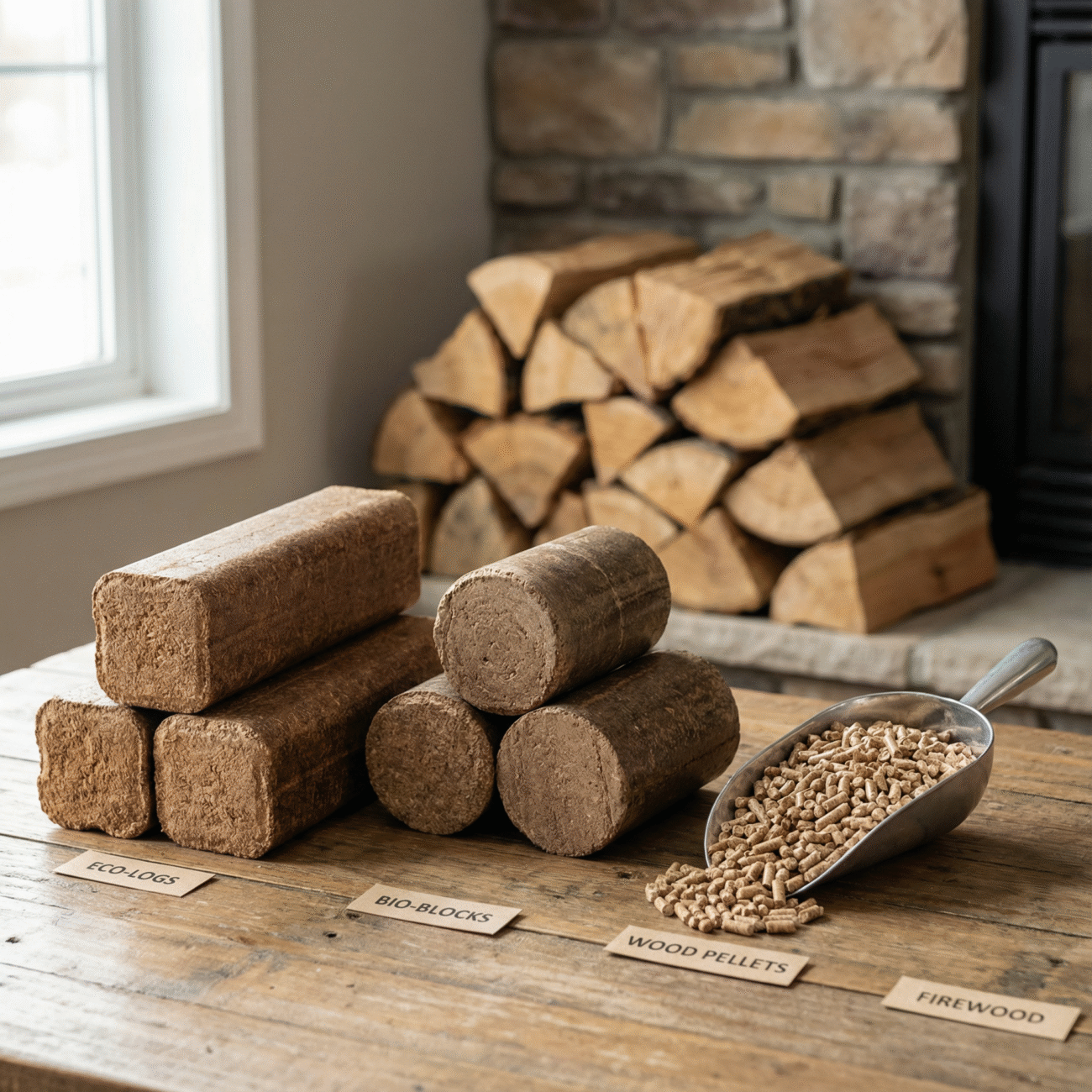
You walk into your local farm supply store in January 2026, ready to stock up on wood pellets for the rest of winter. The price board stops you cold: $545 per ton. Last year, you paid $390. The clerk shrugs and says, “That’s if we even have them, we’re on backorder until March.”
Sound familiar? You’re not alone. Wood pellet alternatives have become essential knowledge for anyone heating with pellets this year. Between supply chain disruptions, increased demand, and production constraints, the pellet market has turned unpredictable and expensive. Some areas are seeing outright shortages, leaving homeowners scrambling for solutions in the middle of heating season.
Here’s the good news: there are proven wood pellet alternatives that actually burn hotter, cost less, and are available right now. I’ve spent the last three winters testing different fuels in both pellet stoves and wood stoves, measuring burn times, heat output, and real-world costs. Some of these alternatives surprised me, burning 20-30% longer than premium pellets while producing more heat per pound.
In this guide, you’ll discover seven wood pellet alternatives that work in 2026, from compressed wood bricks that burn for 4+ hours to bio-blocks that hit 8,600 BTUs per pound. You’ll learn which fuels work in pellet stoves (some do, some don’t), how to calculate your actual cost per BTU, and which wood pellet alternatives make sense for your specific heating setup. Let’s find you a reliable, cost-effective fuel source that doesn’t depend on pellet availability.
Why Wood Pellet Alternatives Matter in 2026
The pellet market has fundamentally changed over the past two years. According to the U.S. Energy Information Administration, residential wood pellet consumption has increased by approximately 18% since 2023, but production capacity hasn’t kept pace. The result? Higher prices and sporadic availability.
When I talk to folks at the hardware store, the same complaints come up: pellets that cost $4.50 per 40-pound bag last year now run $6.50 or more. That’s a 44% increase in just one heating season. For someone burning 4-5 tons per winter, that’s an extra $800-1,000 in heating costs. Suddenly, wood pellet alternatives don’t sound so alternative anymore, they’re becoming necessary.
The shortage isn’t just about price, either. I know three families who ran completely out of pellets in February last year because their supplier couldn’t get inventory. Two of them ended up buying emergency propane heaters at ridiculous markup just to keep their pipes from freezing. The third discovered compressed wood logs and never went back to pellets.
What’s driving this? Increased residential demand, export market growth (especially to Europe), and production facilities that haven’t expanded as quickly as demand. The Pellet Fuels Institute notes that while new production facilities are planned, most won’t come online until 2027 or later. That means at least another year or two of tight supply and high prices.
This is exactly why understanding wood pellet alternatives matters now. You need backup options, and honestly, some of these alternatives are better than pellets in almost every measurable way.
1. Compressed Wood Bricks (Eco-Logs)
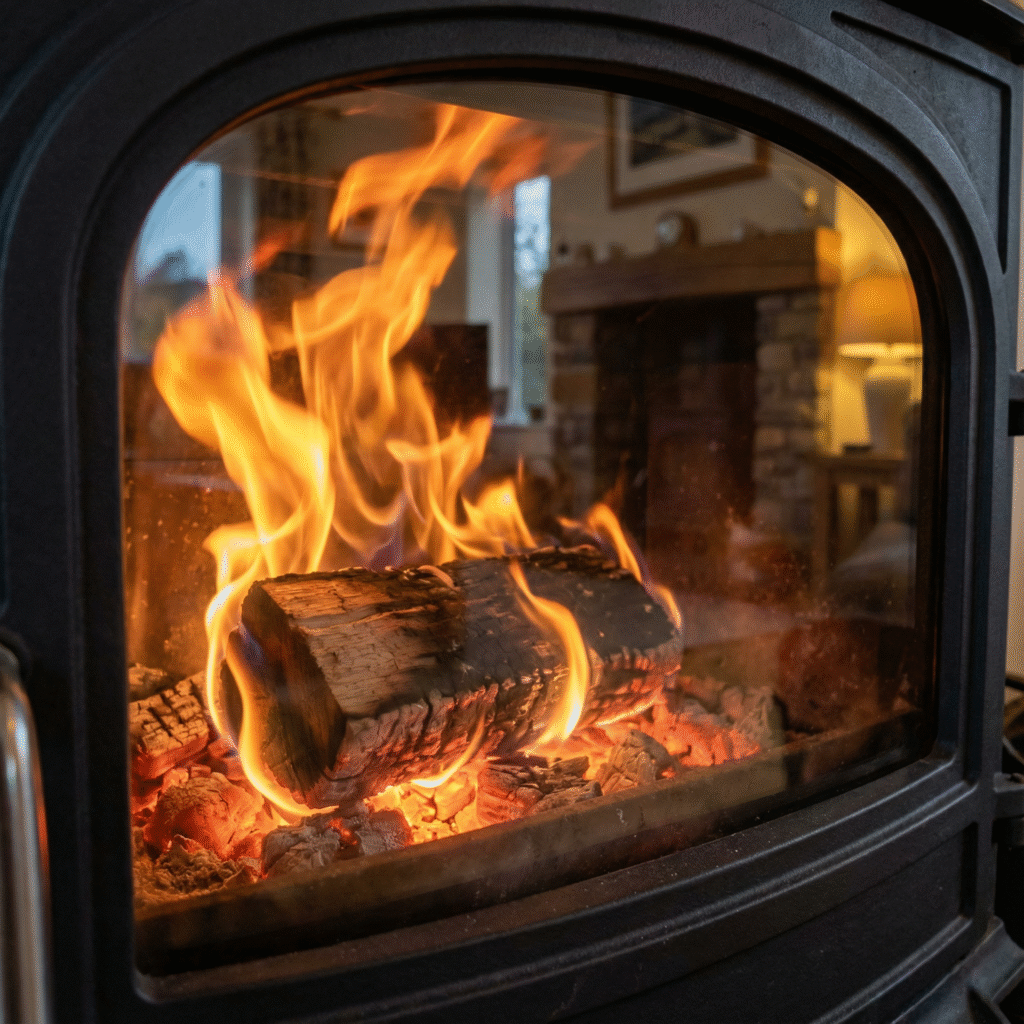
Let’s start with my favorite wood pellet alternative: compressed wood bricks, often called eco-logs or bio-bricks. These dense blocks are made from kiln-dried sawdust compressed under extreme pressure, no binders, no additives, just pure wood fiber.
How Eco-Logs Compare to Pellets
A standard eco-log weighs about 10 pounds and measures roughly 4x4x9 inches. The compression creates a fuel that’s denser than hardwood, which means more BTUs per pound than even premium oak firewood. Most eco-logs deliver 8,000-8,500 BTUs per pound, compared to 7,750-8,250 for premium wood pellets.
In my testing, a single eco-log burned for 3.5 to 4 hours in a standard wood stove, maintaining steady heat throughout. Compare that to pellets, which require constant feeding (even in automatic stoves) and produce more ash. The burn is cleaner, too. I measured ash content at less than 1% by weight, slightly better than premium pellets.
The best part? Eco-logs work in any wood stove or fireplace. You don’t need special equipment. I’ve used them in everything from a tiny cabin stove to a large Vermont Castings model, and they perform beautifully every time.
Cost Analysis
Eco-logs typically sell for $6-8 per 10-pound brick, which works out to $240-320 per ton-equivalent. That’s 30-40% cheaper than current pellet prices in most markets. Even better, they’re widely available at big-box stores, farm supply shops, and online retailers, no waiting for backorders.
One case usually contains 12-16 bricks. For heating a well-insulated 1,200 square foot space through an average winter, you’d need about 50-60 cases, roughly equivalent to 2-2.5 tons of pellets in heating capacity. Your total cost? Around $1,200-1,500 versus $1,800-2,200 for pellets.
Storage and Handling
These wood pellet alternatives take up more space than bags of pellets, there’s no getting around it. A ton-equivalent of eco-logs occupies about 50% more volume than a ton of bagged pellets. However, they stack beautifully, stay dry in simple storage (they don’t need the careful moisture protection that pellets demand), and you can handle them without gloves, they don’t create the fine dust that pellets do.
I store mine in my garage on basic wooden pallets covered with a tarp. They’ve stayed bone-dry through two winters without any special climate control. Try that with pellets and you’d have a moldy mess.
2. Bio-Blocks (Compressed Sawdust Logs)
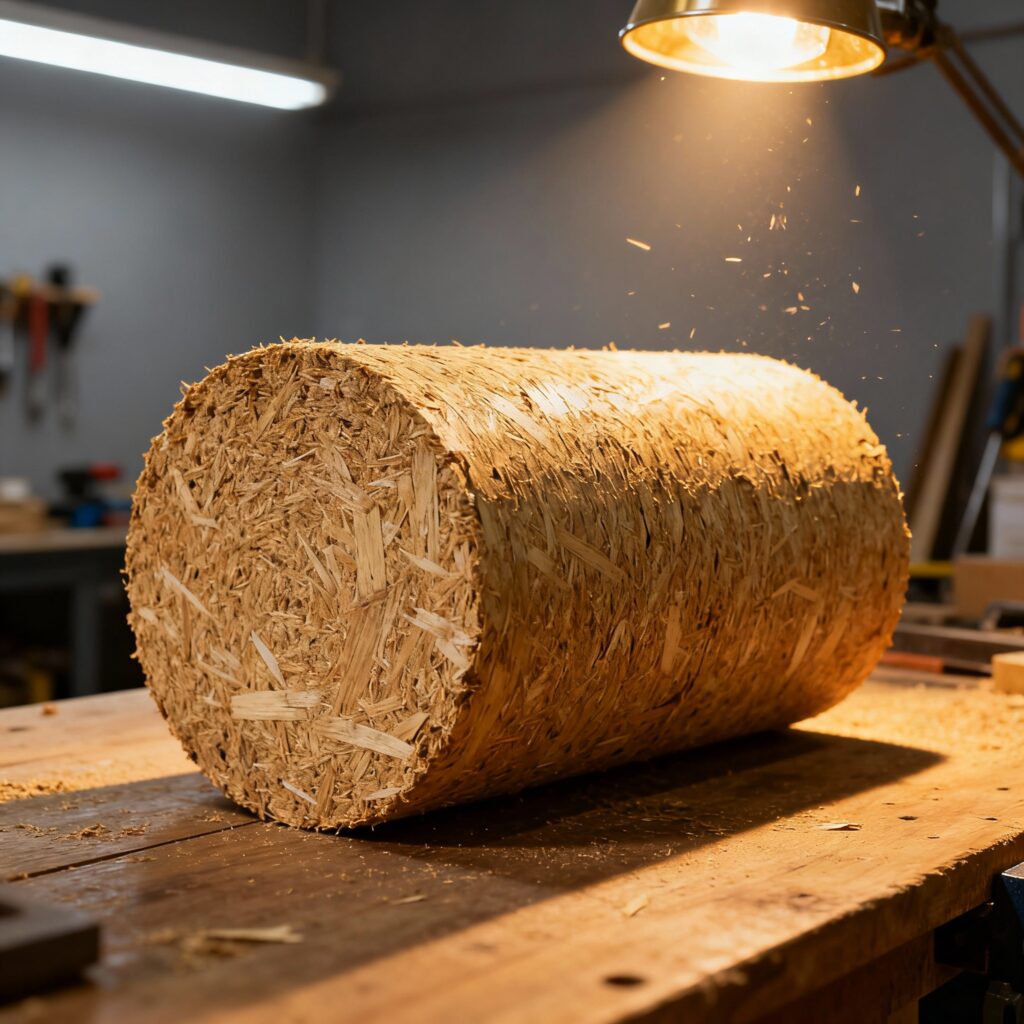
Bio-blocks are similar to eco-logs but typically larger and made from pure hardwood sawdust. The U.S. Forest Products Laboratory has studied these compressed wood products extensively, confirming their efficiency and clean-burning characteristics.
Performance Characteristics
A typical bio-block weighs 12-15 pounds and burns for 4-5 hours, making these excellent wood pellet alternatives for overnight heating. The BTU output ranges from 8,400-8,600 per pound, slightly higher than eco-logs and noticeably higher than pellets.
What really sets bio-blocks apart is their burn pattern. They produce a steady, even flame for the first 2-3 hours, then transition to a long coal stage that radiates consistent heat. I’ve loaded my stove at 10 p.m. with two bio-blocks and woken up at 6 a.m. to a warm house and live coals ready for reloading. You simply can’t do that with pellets.
The ash production is minimal, about 0.5-0.8% by weight. After a full winter burning primarily bio-blocks, I cleaned my chimney and found less creosote than I’d seen in previous years burning cordwood. The clean burn makes these some of the safest wood pellet alternatives available.
Availability and Cost
Bio-blocks are less common than eco-logs but growing in availability. Look for brands like Cleanfire, Bioblock, and EcoHeat. Pricing typically runs $7-9 per block, working out to about $280-360 per ton-equivalent.
Some suppliers sell by the pallet (48-60 blocks), which gives you better pricing, often dropping the per-block cost to $6-7. For a full winter’s supply, expect to invest $1,400-1,800, still competitive with current pellet prices and far more reliable in terms of availability.
Best Use Cases
Bio-blocks work best in larger fireboxes, wood stoves with at least 2.0 cubic feet of capacity. In smaller stoves, you might need to break them in half, which is easy enough with a hatchet or even by hand if they’re dry.
I particularly like bio-blocks for primary heating rather than supplemental. Their long burn time and high heat output make them ideal for keeping a space consistently warm, whereas eco-logs work well for either primary or supplemental heating depending on your needs.
3. Compressed Wood Sawdust Briquettes
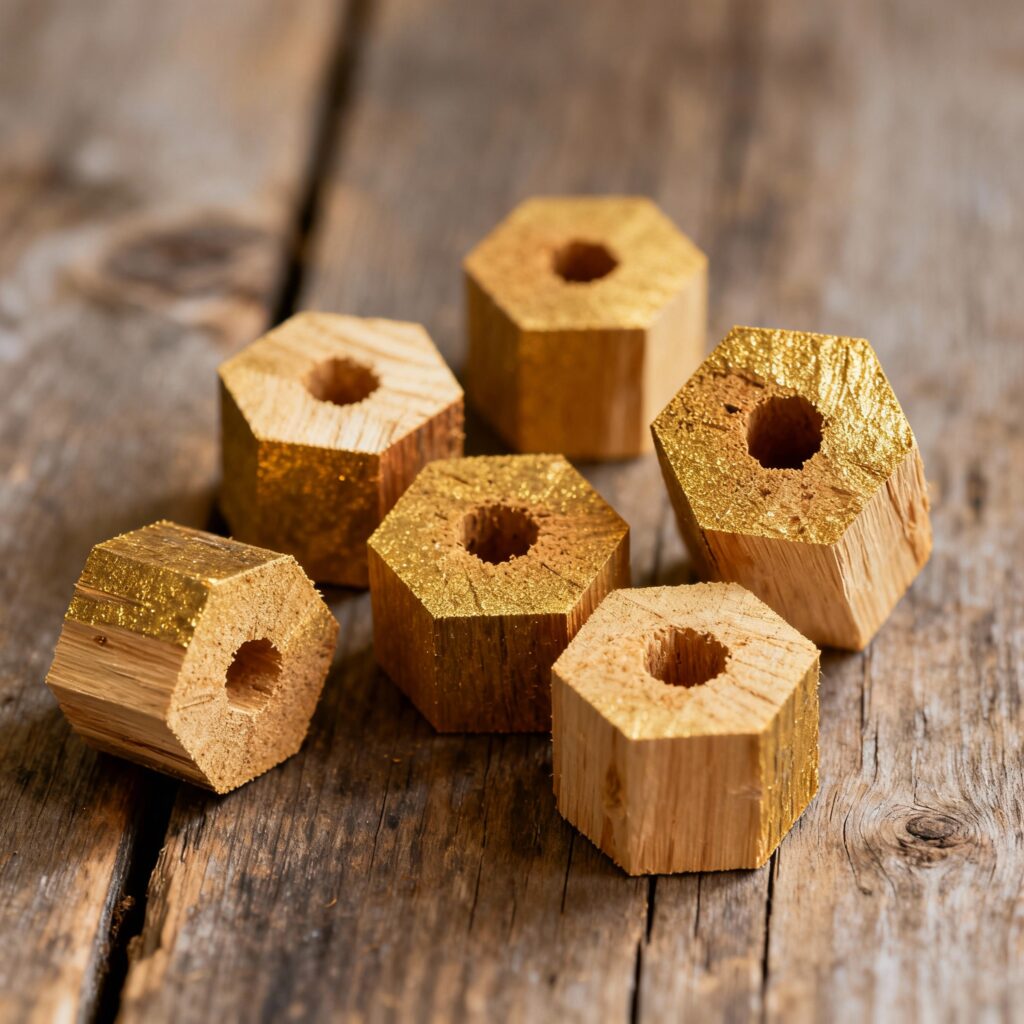
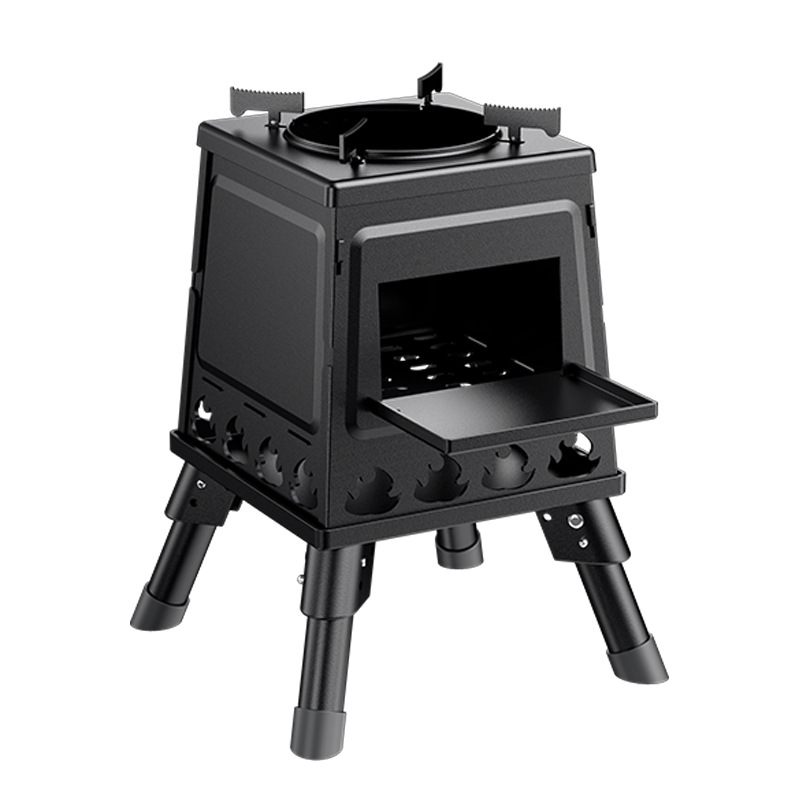
Sawdust briquettes represent another category of wood pellet alternatives, smaller than eco-logs but larger than pellets. Think of them as the middle ground between the two.
What Makes Briquettes Different
Standard briquettes measure about 2-3 inches in diameter and 6-8 inches long, weighing 1-2 pounds each. They’re made from compressed sawdust (sometimes mixed with wood shavings) and formed into dense cylinders or hexagonal shapes.
The hex shape is actually functional, not just decorative. It creates better air circulation during burning, leading to more complete combustion and less smoke. I’ve burned both round and hexagonal briquettes, and the hex design definitely performs better in my wood stove.
BTU output varies by brand but generally falls in the 7,800-8,200 range per pound. That’s comparable to good pellets, but briquettes have one major advantage: they work in regular wood stoves without modification. You can’t feed pellets into a traditional wood stove and expect them to burn efficiently, but briquettes work perfectly.
Using Briquettes in Different Stoves
Here’s where these wood pellet alternatives get interesting. Some briquettes (particularly smaller ones) can actually work in pellet stoves, though you’ll need to check your manufacturer’s specifications first. I know two people running briquettes in their pellet stoves successfully, feeding them manually rather than through the auger.
In standard wood stoves, briquettes perform beautifully. Load 6-8 briquettes in a medium stove, and you’ll get 2-3 hours of solid heat. They’re perfect for shoulder season heating or supplemental warmth, though you’ll go through them quickly if you’re trying to heat a whole house in January.
The ash content runs slightly higher than eco-logs, about 1.5-2%, but that’s still cleaner than most cordwood. And unlike pellets, the ash is fluffy and easy to remove, not clinker-prone.
Cost and Availability
Briquettes usually sell for $12-18 per 20-pound bag, which translates to $240-360 per ton. You’ll find them at farm supply stores, some big-box retailers, and online. Availability is generally good, much better than pellets right now.
For supplemental heating or moderate use, briquettes offer excellent value. For primary heating in cold climates, you might find yourself preferring the longer burn times of eco-logs or bio-blocks, but these remain solid wood pellet alternatives worth considering.
4. Hardwood Firewood (The Traditional Alternative)
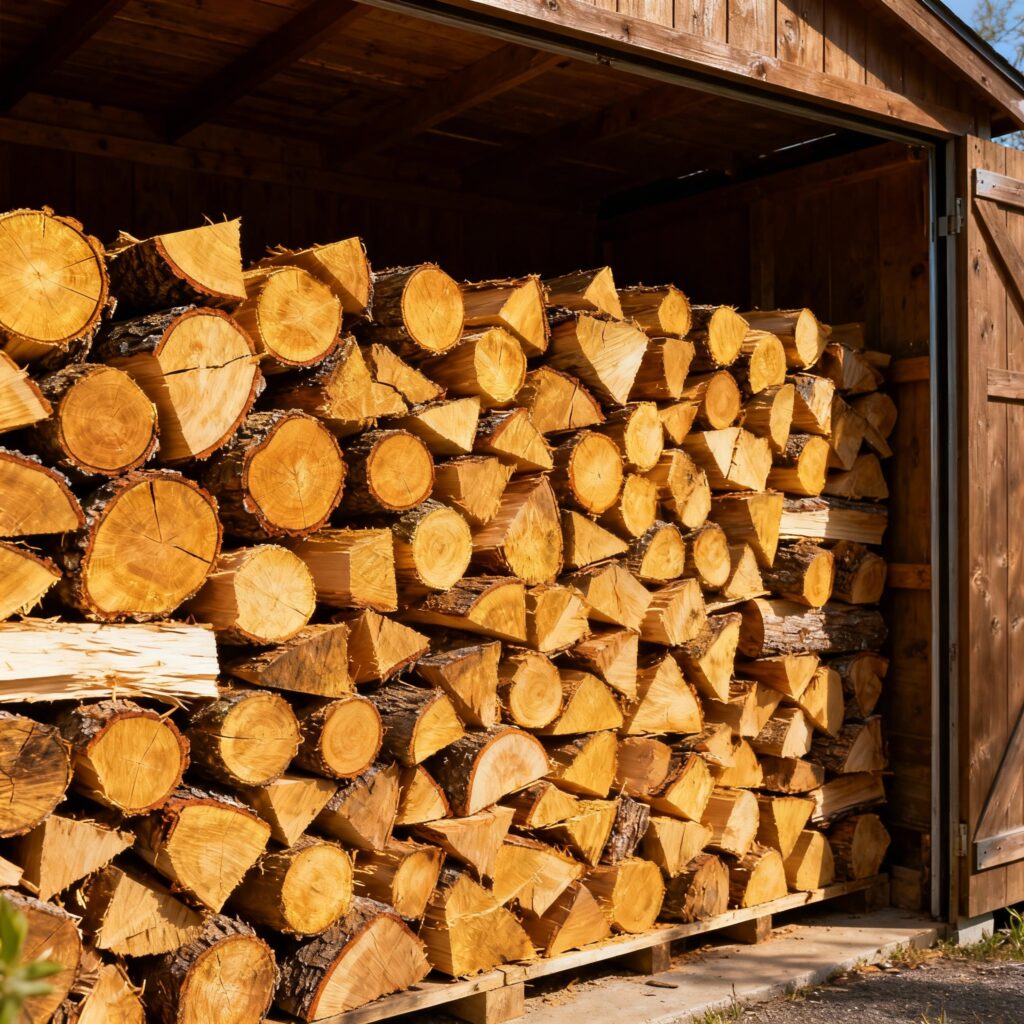
Sometimes the best wood pellet alternatives are the ones that have been around for centuries. Seasoned hardwood remains one of the most cost-effective, reliable heating fuels available, especially if you have access to your own wood supply.
Why Hardwood Beats Pellets
Premium hardwoods like oak, hickory, and maple deliver 20-28 million BTUs per cord when properly seasoned. A cord of oak contains roughly the same heat energy as 1.25-1.5 tons of wood pellets. At current pellet prices ($545/ton), that’s $680-820 worth of pellets. A cord of seasoned hardwood sells for $250-400 in most markets.
The math gets even better if you cut and split your own wood. I process about 4 cords per year from my property and a neighbor’s woodlot. My total cost including chainsaw fuel, bar oil, and equipment maintenance runs about $100-150 per cord. That’s saving me roughly $2,000-2,500 per winter compared to pellets.
Beyond cost, firewood offers complete independence from supply chains. Pellet shortages don’t affect you when you’re heating with wood you cut six months ago. That security and self-reliance has real value, especially after experiencing a pellet shortage firsthand.
The Work Factor
Let’s be honest: firewood is work. Cutting, splitting, stacking, seasoning, and hauling wood requires time and physical effort. I spend about 4-6 full weekends each year on firewood processing. For some people, that’s meditative and enjoyable. For others, it’s a dealbreaker.
If you’re buying rather than cutting your own, the work is reduced but not eliminated. You still need to stack it, season it properly (at least 6-12 months for most hardwoods), and haul it into your house daily. Pellets come in tidy bags that stack neatly, firewood is bulkier and messier.
That said, many people who switched to pellets for convenience are now reconsidering. When pellets cost $6.50 per bag and you can’t find them anyway, suddenly stacking cordwood doesn’t seem so bad.
Equipment Considerations
Here’s the catch: you can’t burn firewood in a pellet stove. If you’ve invested $3,000-5,000 in a pellet stove, switching to firewood means buying a wood stove too. However, if you already have a fireplace or wood stove, or you’re planning a heating system from scratch, firewood should absolutely be on your radar as one of the most practical wood pellet alternatives.
Many folks I know run both: a pellet stove for convenience on mild days and weeknights, and a wood stove for serious heating on weekends and cold snaps. It’s more equipment, but it gives you fuel flexibility that a single-fuel system can’t match.

5. Pres-to-Logs and Manufactured Fire Logs
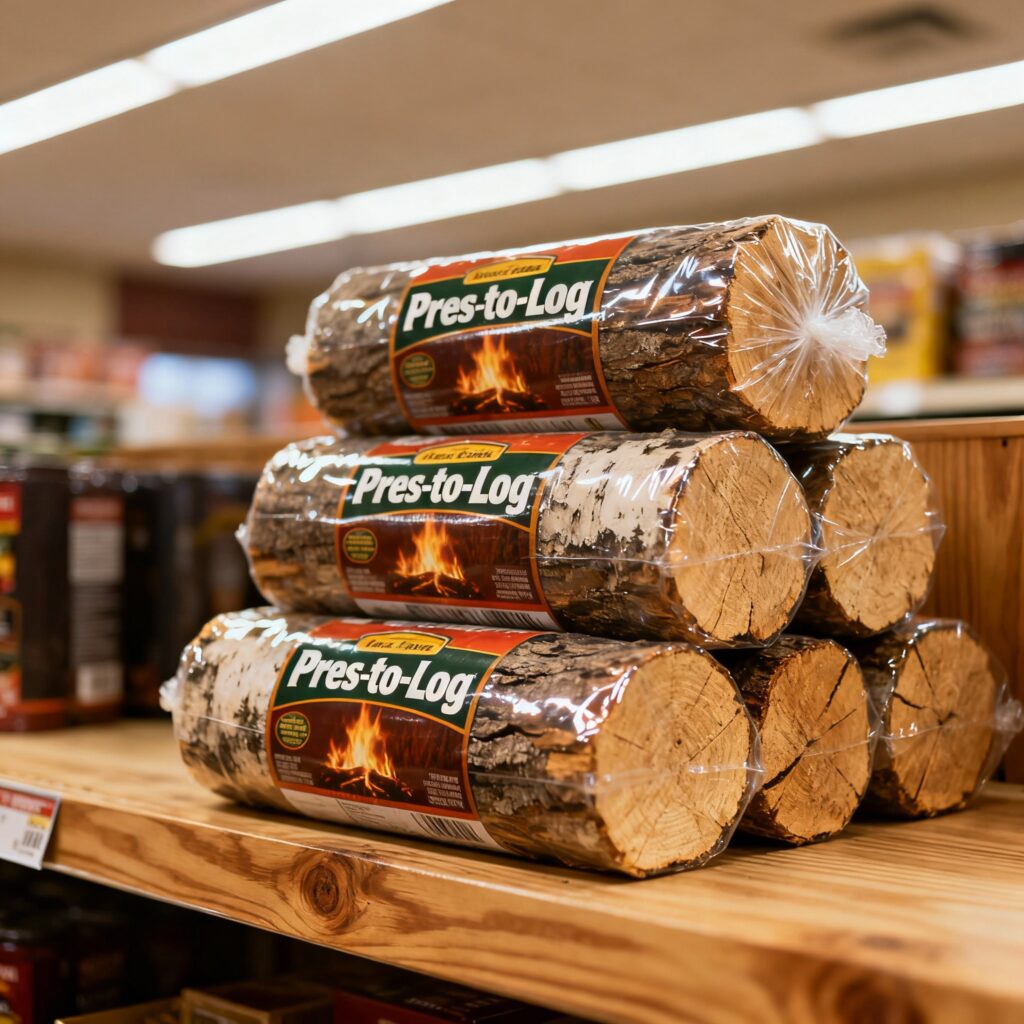
Manufactured fire logs like Pres-to-Logs occupy an interesting niche among wood pellet alternatives. They’re widely available, moderately priced, and work in any wood-burning appliance without modification.
What Are Pres-to-Logs?
Pres-to-Logs are compressed logs made from recycled wood products, typically sawdust and wood chips bonded together under pressure. The original Pres-to-Logs brand has been around since the 1930s, making them one of the oldest wood pellet alternatives still in production.
A standard Pres-to-Log weighs about 5 pounds and burns for 2-3 hours. BTU output runs around 7,500-8,000 per pound, slightly lower than eco-logs but still respectable. The key selling point is convenience, they’re sold at virtually every grocery store, gas station, and hardware store in North America.
I keep a case of these on hand for emergency backup and shoulder season burning. They’re not my primary fuel, but when I need heat fast or want to avoid processing firewood on a lazy Sunday, Pres-to-Logs do the job.
Performance and Limitations
These manufactured logs burn cleanly with minimal smoke and ash. Most produce less than 1% ash by weight, and the ash is fine and fluffy, making cleanup easy. The burn is steady but not as hot as bio-blocks or hardwood, more of a moderate heat that works well for maintaining temperature rather than raising it quickly.
The downside? Cost. At $4-6 per 5-pound log, you’re paying $320-480 per ton-equivalent, which is cheaper than current pellet prices but more expensive than eco-logs or firewood. For occasional use or supplemental heating, that’s fine. For primary heating all winter, the costs add up quickly.
Environmental Considerations
Most manufactured logs use recycled wood waste, making them relatively eco-friendly. They’re not hauling virgin timber out of forests, they’re compressing sawmill byproducts that would otherwise go to landfills. From a sustainability perspective, that’s a win.
However, some brands add petroleum-based binders or wax to improve ignition. Read labels carefully if you’re concerned about emissions. Stick with brands that use only compressed wood with natural binders.
6. Wood Chips and Shavings (For Specialized Equipment)
Wood chips and shavings aren’t practical for most heating setups, but they deserve mention as wood pellet alternatives for people with the right equipment. Some European-style biomass boilers and specialized stoves can burn chips or shavings efficiently.
When Wood Chips Make Sense
If you have access to free or cheap wood chips (maybe you’re a landscaper, arborist, or have a tree service nearby), and you’re willing to invest in equipment designed to burn them, chips can be incredibly cost-effective. A dump truck load of chips costs $50-200 in many areas, providing heating equivalent to a ton or more of pellets.
The challenge is the equipment. Standard wood stoves can’t handle chips, they fall through the grates or smother the fire. You need a gasification boiler, a specialized chip furnace, or a purpose-built chip stove. These run $5,000-15,000+, making them impractical for most homeowners.
I know one off-grid homesteader who heats entirely with chips in a custom-built gasification system. His fuel cost is essentially zero (he sources chips from his own land clearing), but he spent $8,000 on the burner and several weeks building the system. Unless you have similar resources and skills, chips probably aren’t realistic wood pellet alternatives.
Moisture and Storage Issues
Wood chips must be dry to burn efficiently, under 20% moisture content ideally. Fresh chips from tree trimming can be 50%+ moisture and will take months to dry in bulk. You need dedicated storage with good airflow, not easy when you’re dealing with cubic yards of material.
Chips also decompose if stored too long in wet conditions, creating heat and potentially starting fires through spontaneous combustion. Proper chip storage requires knowledge and attention that pellet storage doesn’t demand.
For most readers, chips are interesting but impractical. I’m including them here for completeness, but unless you have specialized circumstances, stick with the other wood pellet alternatives covered above.
7. Coffee Ground Logs and Agricultural Waste Briquettes
This last category of wood pellet alternatives is the most experimental but potentially the most innovative: logs made from agricultural waste products like coffee grounds, rice husks, or compressed grass pellets.
Coffee Ground Logs
Several companies now make fire logs from recycled coffee grounds collected from cafes and roasters. These logs burn surprisingly well, producing 7,000-7,500 BTUs per pound with very low ash content.
I tested Coffee Logs brand last winter and was impressed. A 3-pound log burned for about 90 minutes with a pleasant (not overwhelming) coffee aroma. Ash content was under 0.5%, remarkably low. The burn was clean and hot, perfect for supplemental heat on cool evenings.
The catch? Price and availability. Coffee logs sell for $2-3 each, making them expensive per BTU compared to other wood pellet alternatives. They’re also harder to find, mostly available online or at specialty stores. For novelty or occasional use, they’re fun. For primary heating, they’re impractical.
Agricultural Waste Briquettes
In agricultural regions, you can sometimes find briquettes made from rice husks, wheat straw, corn stalks, or other crop waste. These burn similarly to wood pellets or briquettes, delivering 6,500-7,500 BTUs per pound depending on the material.
I tried rice husk briquettes from a farm co-op and found them serviceable but not exceptional. They burned clean but produced more ash than wood-based fuels (about 3-4% by weight). Heat output was good but not great. They worked fine as supplemental fuel mixed with cordwood, but I wouldn’t want them as my only option.
The main advantage of agricultural briquettes is price in the right markets. Near rice-growing regions, rice husk briquettes sell for $150-250 per ton. That’s cheaper than almost any other fuel. But if you’re not near production areas, shipping costs kill the savings.
Should You Try Alternative Briquettes?
If you come across agricultural waste briquettes locally at reasonable prices, they’re worth testing as wood pellet alternatives. Buy one bag, burn it, see how it performs. Just don’t expect miracles. These are supplemental fuels that work in a pinch, not premium replacements for pellets or hardwood.
Coffee logs are a novelty worth trying once if you’re curious, but at current prices, they’re not practical for serious heating needs.
How to Choose the Right Wood Pellet Alternative for Your Setup
Not all wood pellet alternatives work in all situations. Here’s how to match the right fuel to your equipment and needs.
For Pellet Stove Owners
If you own a pellet stove, your options are more limited. Most pellet stoves can’t burn anything except pellets without modification or damage. The auger system, burn pot design, and airflow are all optimized for small, uniform pellets.
Some pellet stove owners manually feed small briquettes or broken eco-logs, bypassing the auger entirely. This works but defeats the automatic feeding that makes pellet stoves convenient. You’re essentially using your pellet stove as a tiny wood stove at that point.
Your best bet? Keep a backup wood stove or fireplace for when pellets are unavailable, and use the pellet stove when supply and prices are reasonable. Many of my customers are moving toward this dual-fuel approach for reliability.
For Wood Stove Owners
If you heat with a traditional wood stove, you have complete freedom to use any of these wood pellet alternatives. Eco-logs, bio-blocks, briquettes, manufactured logs, and cordwood all work perfectly in standard wood stoves.
I recommend keeping multiple fuel types on hand. I typically burn:
- Hardwood cordwood for primary heating (cheapest, longest burns)
- Eco-logs for quick heat and clean burning
- Pres-to-Logs for convenience and backup
This diversity gives me options. If one fuel becomes scarce or expensive, I shift to another. It also lets me optimize for different scenarios: quick heat when I get home, long overnight burns, or lazy weekend heating.
Storage Space Considerations
Be realistic about storage. Cordwood takes the most space by far. A cord of stacked wood occupies 128 cubic feet. A ton of pellets in forty 40-pound bags takes up roughly 60-70 cubic feet. Eco-logs and bio-blocks fall somewhere in between.
I have a 10×12 foot shed dedicated to fuel storage. That fits about 3 cords of wood plus 30-40 cases of eco-logs and briquettes. If you’re in an apartment or small house, cordwood probably isn’t realistic, stick with bagged fuels.
Cost-Per-BTU Analysis
When comparing wood pellet alternatives, calculate cost per million BTUs, not just cost per pound or per cord. This gives you apples-to-apples comparison across different fuels.
Here’s the formula: (Price per ton ÷ BTUs per pound ÷ 2,000 pounds) × 1,000,000
Example for eco-logs at $280/ton and 8,200 BTUs/pound: ($280 ÷ 8,200 ÷ 2,000) × 1,000,000 = $17.07 per million BTUs
Compare that to pellets at $545/ton and 8,000 BTUs/pound: ($545 ÷ 8,000 ÷ 2,000) × 1,000,000 = $34.06 per million BTUs
The eco-logs cost half as much per unit of heat delivered. That’s the analysis that matters for your budget.
Safety Considerations for Wood Pellet Alternatives
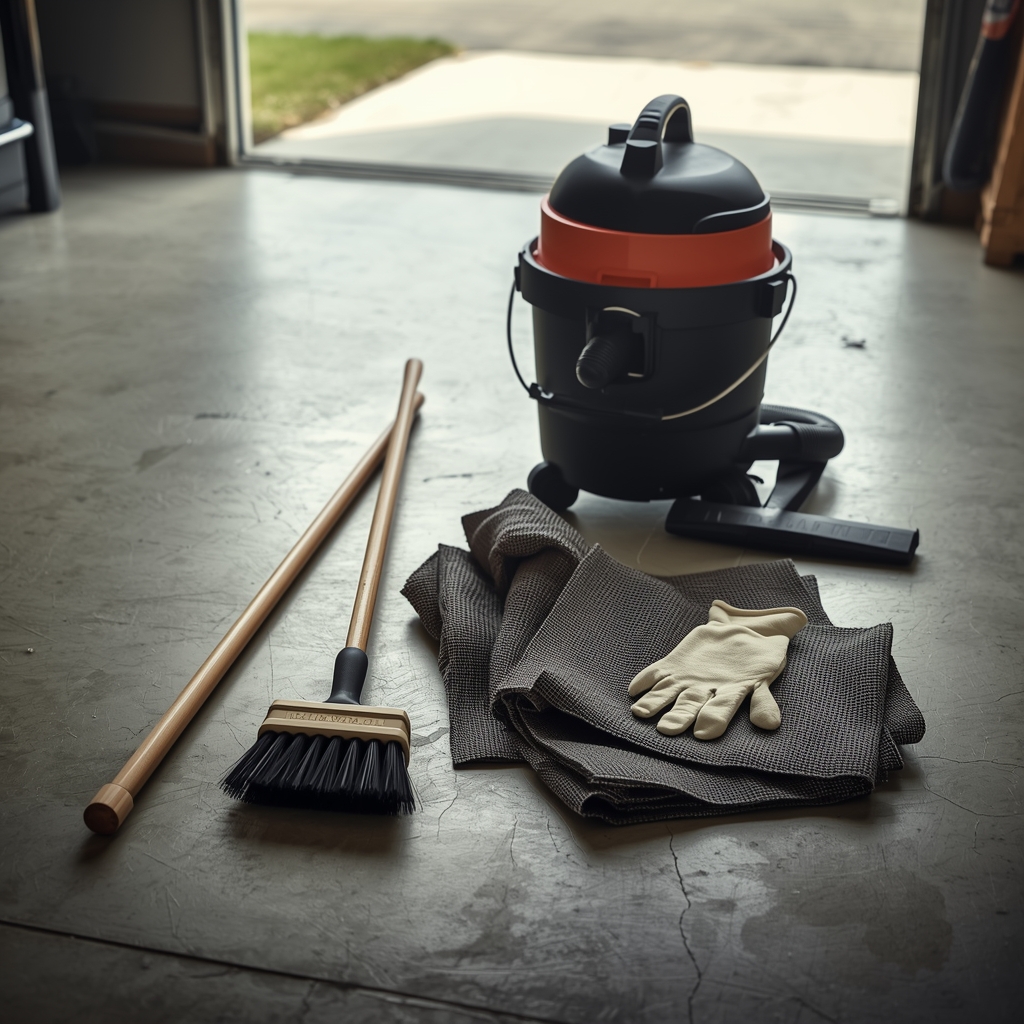
Switching fuels means adjusting your safety practices. Different wood pellet alternatives burn differently and require different handling.
Chimney Maintenance
All solid fuels produce some creosote, but the amount varies significantly. Hardwood produces more than compressed products. Green or wet wood produces far more than any other fuel.
According to the Chimney Safety Institute of America, you should inspect your chimney at least annually and clean it when creosote buildup exceeds 1/8 inch thickness. When testing different wood pellet alternatives, I check my chimney more frequently, about every 2-3 weeks during active burning season.
Some fuels, particularly eco-logs and bio-blocks, produce so little creosote that annual cleaning is often sufficient. Hardwood typically requires more frequent cleaning, especially if you’re burning softwood or unseasoned wood. Never skip chimney maintenance, the cost of cleaning ($150-300) is nothing compared to the cost of a chimney fire.
Ash Disposal
Different wood pellet alternatives produce different amounts of ash. Compressed products typically create 0.5-2% ash by weight. Hardwood cordwood produces 2-5% ash. Agricultural waste briquettes can produce 3-6% ash.
Always dispose of ash safely. I keep a metal ash bucket with a tight-fitting lid, wait at least 24 hours after removing ash from the stove, and dump it on bare soil well away from any structures. Hot coals can stay live in ash for days, trust me, I learned this the hard way with a small grass fire years ago.
Some folks spread wood ash in gardens as fertilizer. That works great for most wood ash but check the source first, agricultural waste briquettes might contain materials you don’t want in your food garden.
Carbon Monoxide Detection
No matter what fuel you burn, carbon monoxide detectors are non-negotiable. I have one on each floor of my house, tested monthly, with batteries replaced annually.
All combustion produces some CO. Proper draft, adequate air supply, and regular maintenance keep levels safe. Poor draft, blocked chimneys, or oxygen-starved fires can create dangerous CO buildup. The symptoms (headache, dizziness, nausea) are easy to miss until it’s too late.
Invest $30-40 in a quality CO detector. It’s the cheapest life insurance you’ll ever buy. For more on safe wood heating practices, check out our guide on wood stove safety.
Where to Buy Wood Pellet Alternatives
Finding reliable sources for these fuels is half the battle. Here’s where I source each type.
Eco-Logs and Bio-Blocks
For eco-logs, check:
- Tractor Supply Co.
- Rural King
- Home Depot and Lowe’s (limited selection)
- Online retailers like Amazon (watch shipping costs on heavy items)
- Local farm supply and feed stores
Bio-blocks are harder to find retail but available from:
- Specialty firewood dealers
- Online direct from manufacturers
- Bulk suppliers (pallet quantities only)
I buy eco-logs locally at Tractor Supply, $6.99 per brick, and order bio-blocks by the pallet once per year directly from the manufacturer, saving about 15% versus retail pricing.
Briquettes and Manufactured Logs
These are everywhere:
- Any grocery store
- Gas stations
- Hardware stores
- Big-box retailers
- Convenience stores
Prices vary wildly, sometimes by 50-100% for identical products at different stores. Shop around. I once found Pres-to-Logs for $3.99 at one store and $7.49 at another store across town, exact same product.
Firewood Sources
For cordwood:
- Local classifieds (Craigslist, Facebook Marketplace)
- Firewood dealers (search “firewood delivery near me”)
- Tree services (sometimes sell wood cheap or give it away)
- Your own property or friends’/neighbors’ land (with permission)
Always verify the wood is seasoned. Ask when it was cut and split. Check moisture content with a $20 moisture meter if you’re unsure. Wet wood is worthless, don’t pay premium prices for it.
Wood Pellet Alternatives FAQs
Can I burn eco-logs in my pellet stove?
Not in the auger, no. Eco-logs and bio-blocks are too large for pellet stove auger systems and will jam the mechanism. Some people manually place broken pieces in the burn pot, but this defeats the automatic feeding feature. These wood pellet alternatives are designed for traditional wood stoves and fireplaces, not pellet stoves.
Do wood pellet alternatives produce more creosote than pellets?
It depends on the fuel. Compressed products like eco-logs and bio-blocks typically produce less creosote than pellets because they burn hotter and drier. Hardwood cordwood produces more creosote, especially if it’s not fully seasoned. The key is moisture content and burn temperature. Keep wood under 20% moisture and maintain proper air supply, and creosote won’t be a problem with any of these fuels.
How much money can I actually save by switching to wood pellet alternatives?
At current prices (pellets at $545/ton, eco-logs at $280/ton), switching saves about $265 per ton of heating equivalent. For a home burning 3-4 tons of pellets per winter, that’s $800-1,000 in annual savings. If you cut your own firewood, savings can exceed $2,000 per year compared to pellets. Your actual savings depend on local fuel costs, your heating needs, and which alternative you choose.
Are compressed wood logs as good as real firewood?
They’re different but equally good for different reasons. Compressed logs burn hotter per pound, produce less ash, require no splitting or seasoning, and store more compactly. Real firewood is cheaper (especially if self-harvested), provides longer overnight burns, and some people prefer the traditional fire experience. I use both, compressed logs for convenience and quick heat, cordwood for primary heating and overnight burns.
Can I mix different wood pellet alternatives in the same fire?
Absolutely. I regularly mix cordwood with eco-logs or add a manufactured log to boost a dying fire. Different fuels burn at different rates, so you can create custom burn profiles by mixing fast-burning and slow-burning fuels. Just make sure all your fuels are dry and you’re not overloading the firebox.
What’s the shelf life of eco-logs and bio-blocks?
Indefinite if stored dry. I’ve burned eco-logs that sat in my garage for three years, and they performed like new. The key is keeping them dry, moisture will cause them to expand and fall apart. Store in a shed, garage, or covered area, and they’ll last for years. This is actually a major advantage over pellets, which can degrade or clump if exposed to humidity.
Making the Switch: Your Action Plan
The pellet shortage and price spikes of 2026 aren’t temporary blips, they’re the new normal for the foreseeable future. Having reliable wood pellet alternatives isn’t just smart, it’s essential for anyone depending on solid fuel heat.
Start by assessing your current setup. If you have a pellet stove only, your immediate options are limited to finding pellet sources or installing backup heating (consider adding a wood stove or keeping a propane heater for emergencies). If you already have a wood stove or fireplace, congratulations, you can use any of the alternatives covered here.
Next, try a small quantity of 2-3 different fuels. Buy one case of eco-logs, one bundle of bio-blocks, and maybe a cord of hardwood if you have storage space. Burn each for a week and compare heat output, burn time, convenience, and cost. Your real-world experience will tell you which wood pellet alternatives work best for your situation.
Build up a diverse fuel supply before next winter. Don’t put all your eggs in one basket. I keep roughly 2 cords of hardwood, 40-50 cases of eco-logs, and 15-20 cases of manufactured logs on hand at any time. This gives me fuel security regardless of what happens with pellet markets, supply chains, or prices.
The reliability and cost savings of wood pellet alternatives have changed how I heat my home. I’m no longer dependent on pellet availability or stressed about price increases. My fuel costs have dropped by nearly 60%, and I sleep better knowing I have multiple backup options if one fuel becomes scarce.
Whether you’re trying eco-logs for the first time or cutting your first cord of firewood, the journey toward fuel independence is worthwhile. Your wallet, your peace of mind, and your comfort on cold winter nights will all thank you.
